Tiny Pea
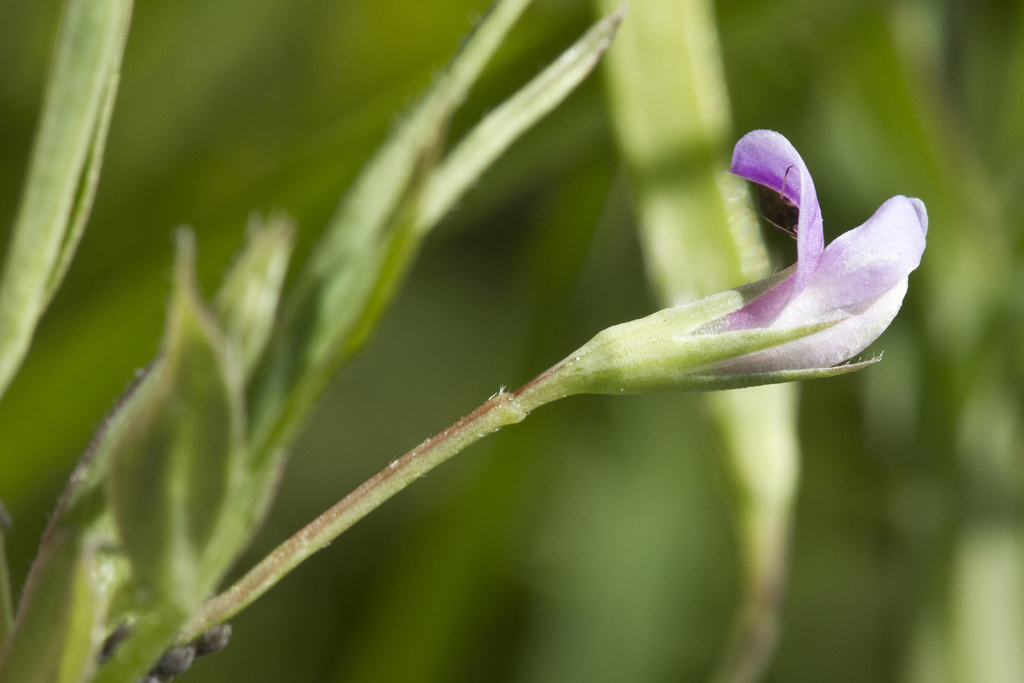
This small, delicate plant is often overlooked due to its diminutive size, but it plays a significant role in its native ecosystems.
Botanical Characteristics
Lathyrus pusillus is an annual herb that typically grows to a height of 10-30 cm. The plant has slender, trailing stems that can spread across the ground or climb nearby vegetation. The leaves are pinnate, with 2-4 pairs of leaflets, and are equipped with tendrils that help the plant cling to supports. The leaflets are small, usually 1-2 cm long, and have a linear to lanceolate shape.
The flowers of the Tiny Pea are one of its most distinctive features. They are small, about 1 cm in diameter, and typically exhibit a pale blue to lavender color, although white variants can also be found. The flowers are borne singly or in pairs on short pedicels. The fruit is a small, flattened pod, usually 2-3 cm long, containing 2-6 seeds. These seeds are round and smooth, with a hard coat that aids in their dispersal and longevity.
Habitat and Distribution
The Tiny Pea is native to North America, where it is found in a variety of habitats. It thrives in open, sunny areas with well-drained soils, such as prairies, meadows, and open woodlands. The plant is particularly common in regions with sandy or rocky soils, where it can often be found growing alongside other native wildflowers and grasses.
Lathyrus pusillus has a wide distribution range, extending from the central United States to parts of Canada and Mexico. It is well-adapted to a range of climatic conditions, from temperate to semi-arid environments. Despite its adaptability, the Tiny Pea is sensitive to habitat disturbance and is often one of the first species to disappear when its native habitat is altered or destroyed.
Ecological Importance
The Tiny Pea plays a crucial role in its ecosystem, contributing to soil health and providing food and habitat for various wildlife species. As a member of the legume family, Lathyrus pusillus has the ability to fix atmospheric nitrogen through a symbiotic relationship with Rhizobium bacteria in its root nodules. This process enriches the soil with nitrogen, an essential nutrient for plant growth, and benefits other plants in the vicinity.
The flowers of the Tiny Pea attract a variety of pollinators, including bees, butterflies, and other insects. These pollinators, in turn, support the reproduction of the plant and contribute to the overall biodiversity of the area. The seeds of Lathyrus pusillus are also an important food source for birds and small mammals, which help disperse the seeds and promote the spread of the plant.
Potential Uses
While the Tiny Pea is not widely known for its economic uses, it has potential applications in various fields. In agriculture, Lathyrus pusillus could be used as a cover crop or green manure to improve soil fertility and structure. Its nitrogen-fixing ability makes it a valuable addition to crop rotations, particularly in organic farming systems.
In horticulture, the Tiny Pea's attractive flowers and delicate foliage make it a potential candidate for native plant gardens and wildflower meadows. Its ability to thrive in poor soils and its low maintenance requirements add to its appeal for gardeners looking to create sustainable and biodiverse landscapes.
Additionally, Lathyrus pusillus has potential medicinal uses, although more research is needed to fully understand its properties. Some species of the Lathyrus genus have been used in traditional medicine for their anti-inflammatory and analgesic effects, and it is possible that the Tiny Pea may possess similar benefits.