Soaptree
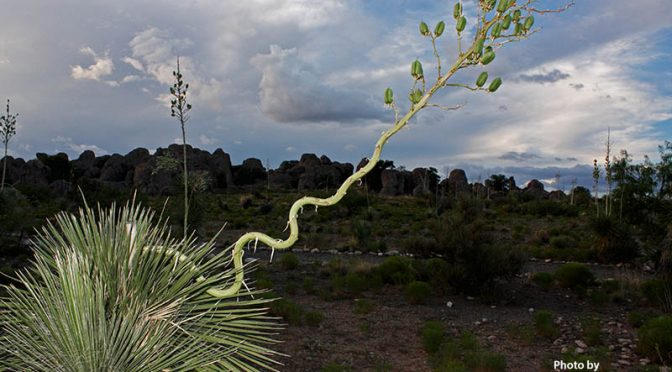
The Soaptree, scientifically known as Yucca elata, is a plant native to the arid regions of the southwestern United States and northern Mexico. This perennial shrub is well-adapted to desert environments and is notable for its unique appearance and various uses by indigenous peoples.
Description
Yucca elata typically grows to a height of 10 to 15 feet, although some specimens can reach up to 20 feet. The plant is characterized by its narrow, sword-like leaves that can be up to 3 feet long. These leaves are arranged in a rosette pattern at the top of the trunk, giving the plant a distinctive, spiky appearance. The leaves are green to blue-green in color and have a fibrous texture.
During the blooming season, which usually occurs in late spring to early summer, the Soaptree produces a tall flower stalk that can add an additional 3 to 5 feet to its height. The stalk is adorned with clusters of creamy white, bell-shaped flowers. These flowers are not only visually striking but also attract a variety of pollinators, including the yucca moth, which has a symbiotic relationship with the plant.
Habitat and Distribution
The Soaptree is predominantly found in desert regions, particularly in the Chihuahuan Desert, which spans parts of Texas, New Mexico, and Arizona in the United States, as well as parts of northern Mexico. It thrives in sandy, well-drained soils and is often found in areas with full sun exposure. The plant is highly drought-tolerant, making it well-suited to the harsh conditions of its native habitat.
Ecological Importance
Yucca elata plays a crucial role in its ecosystem. Its flowers provide nectar for pollinators, while its seeds and fruits serve as a food source for various animals. The plant's fibrous leaves and trunk also offer shelter and nesting sites for birds and small mammals. Additionally, the Soaptree helps to stabilize sandy soils, preventing erosion in its arid environment.
Uses by Indigenous Peoples
The Soaptree has been utilized by indigenous peoples for centuries, thanks to its versatile properties. Some of the traditional uses include:
- Soap Production: The roots of the Soaptree contain saponins, which can be used to create a natural soap. Indigenous peoples would crush the roots and mix them with water to produce a lather for cleaning.
- Fiber: The fibrous leaves of the plant were used to make ropes, baskets, mats, and sandals. The fibers are strong and durable, making them ideal for various practical applications.
- Food: The flowers, fruits, and seeds of the Soaptree are edible. The flowers can be eaten raw or cooked, while the fruits and seeds can be dried and ground into flour.
- Medicinal Uses: Various parts of the plant were used in traditional medicine to treat ailments such as skin conditions, digestive issues, and inflammation.
- The Zuni tribe inhabiting the western New Mexico region used Yucca elata sap as hair growth stimulant.
Cultivation and Care
For those interested in cultivating Yucca elata, it is important to mimic its natural habitat as closely as possible. Here are some tips for successful cultivation:
- Soil: Plant the Soaptree in well-drained, sandy soil. Avoid heavy clay soils that retain moisture, as this can lead to root rot.
- Sunlight: Ensure the plant receives full sun exposure for most of the day. The Soaptree thrives in bright, direct sunlight.
- Watering: While the plant is drought-tolerant, it will benefit from occasional deep watering, especially during prolonged dry periods. However, be careful not to overwater.
- Temperature: The Soaptree is hardy in USDA zones 6-11. It can tolerate high temperatures and is also frost-resistant to some extent.
- Propagation: The plant can be propagated from seeds or offsets. Seeds should be sown in a well-draining soil mix and kept moist until germination. Offsets can be separated from the parent plant and replanted.