Dial Test

Dial Test | Posterolateral Rotatory Instability of the Knee
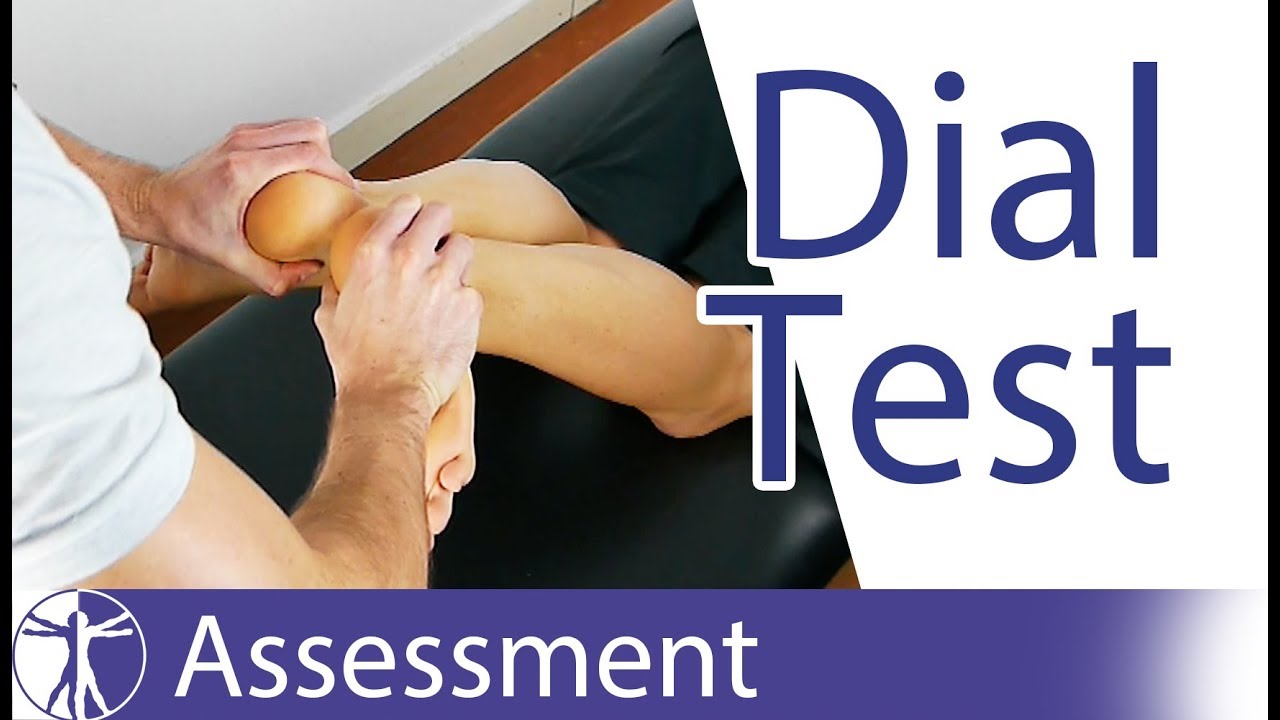
The dial test is a clinical examination technique used primarily to assess injuries related to the knee, specifically focusing on the integrity of the posterolateral corner (PLC) and the posterior cruciate ligament (PCL). This test is crucial for diagnosing rotational instability in the knee, which can be a result of ligamentous injuries.
Anatomy of the Knee
Before delving into the dial test, it's important to have a basic understanding of the knee's anatomy:
- Bones: The knee joint is formed by the femur (thigh bone), tibia (shin bone), and patella (kneecap).
- Ligaments: The knee is stabilized by four main ligaments:
* Anterior Cruciate Ligament (ACL)
* Posterior Cruciate Ligament (PCL)
* Medial Collateral Ligament (MCL)
* Lateral Collateral Ligament (LCL)
- Posterolateral Corner (PLC): This is a complex area of the knee that includes several structures such as the lateral collateral ligament, popliteus tendon, and the arcuate ligament complex. It plays a critical role in stabilizing the knee against varus and external rotational forces.
Purpose of the Dial Test
The dial test is specifically designed to evaluate the integrity of the PLC and the PCL. It helps in identifying:
- Posterolateral Rotational Instability: This occurs when there is excessive external rotation of the tibia relative to the femur, often due to injuries in the PLC.
- PCL Injuries: While the dial test is not primarily for PCL injuries, it can help in differentiating between isolated PCL injuries and combined PLC and PCL injuries.
Performing the Dial Test
The dial test is performed with the patient in a supine position. Here’s a step-by-step guide:
- Positioning: The patient lies on their back with the knees flexed at 30 degrees.
- Stabilization: The examiner stabilizes the patient’s thigh with one hand.
- Rotation: The examiner uses the other hand to externally rotate the foot and tibia.
- Observation: The degree of external rotation is observed and compared to the contralateral (uninjured) knee.
- Repetition at 90 Degrees: The test is repeated with the knee flexed at 90 degrees.
Interpretation of Results
- Increased Rotation at 30 Degrees: Suggests an injury to the PLC.
- Increased Rotation at Both 30 and 90 Degrees: Indicates a combined injury to the PLC and PCL.
- Symmetrical Rotation: Generally considered normal, indicating no significant injury.
Clinical Significance
The dial test is a valuable tool in the clinical setting for several reasons:
- Early Diagnosis: It allows for the early detection of complex knee injuries, which is crucial for effective treatment and rehabilitation.
- Differential Diagnosis: Helps differentiate between isolated and combined ligament injuries, guiding appropriate management strategies.
- Surgical Planning: Accurate diagnosis of PLC injuries can influence surgical decisions, such as the need for reconstruction or repair.
Limitations and Considerations
While the dial test is a useful diagnostic tool, it has its limitations:
- Subjectivity: The test relies on the examiner’s experience and skill, which can lead to variability in results.
- Patient Factors: Factors such as muscle guarding, pain, and previous surgeries can affect the test’s accuracy.
- Complementary Tests: The dial test should be used in conjunction with other clinical tests and imaging studies (e.g., MRI) for a comprehensive assessment.
Rehabilitation and Management
Once a diagnosis is made using the dial test, appropriate management strategies can be implemented:
- Non-Surgical Management: In cases of mild instability, physical therapy focusing on strengthening and proprioception may be sufficient.
- Surgical Intervention: Severe injuries, particularly those involving multiple ligaments, may require surgical repair or reconstruction.
- Rehabilitation: Post-surgical rehabilitation is crucial for restoring function and preventing future injuries. This includes a structured program of exercises to improve strength, flexibility, and stability.