Ganoderma sessile
CHARACTERISTICS
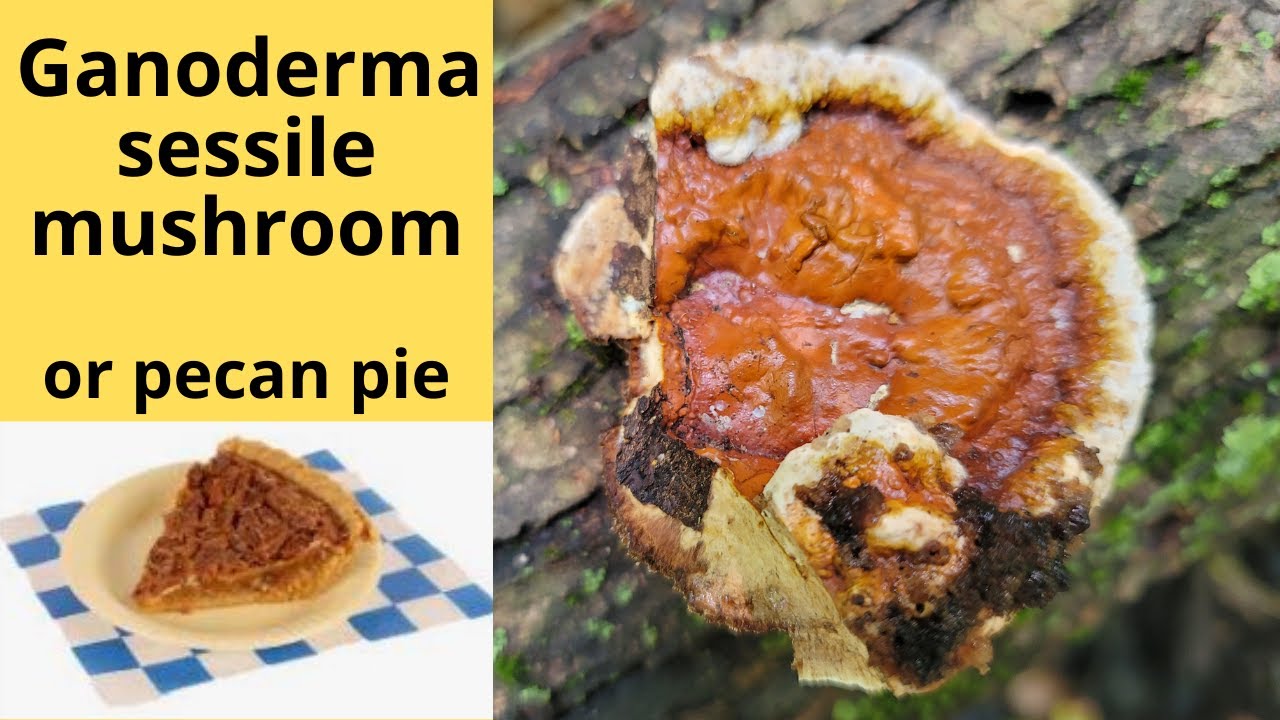
Ganoderma sessile is a polypore fungus, which means it has pores or tubes on the underside of its fruiting body instead of gills. These pores release spores for reproduction. The fruiting body of Ganoderma sessile is typically woody and tough, making it a perennial fungus that can persist for several years. The cap is usually reddish-brown with a varnished appearance, which is a common trait among Ganoderma species.
Morphological Features
- Cap: The cap is semicircular to kidney-shaped, with a varnished, reddish-brown surface.
- Pores: The underside of the cap has small, white to cream-colored pores.
- Stipe: Often absent or very short, giving the appearance that the cap is sessile (directly attached to the substrate).
- Spores: The spores are brown, elliptical, and have a double-walled structure.
Habitat
Ganoderma sessile is commonly found in North America, particularly in the eastern United States. It typically grows on hardwood trees, such as oaks and maples, and can be found on both living and dead trees. This fungus prefers temperate climates and is often observed in forested areas.
Growth Conditions
- Substrate: Prefers hardwoods, especially oaks and maples.
- Climate: Thrives in temperate regions.
- Season: Can be found year-round, but fruiting bodies are most commonly observed in late summer to fall.
Ecological Role
Ganoderma sessile plays a crucial role in forest ecosystems as a decomposer. It breaks down the lignin and cellulose in wood, which helps recycle nutrients back into the soil. This process is essential for the health of forest ecosystems, as it aids in the decomposition of dead trees and the return of nutrients to the soil.
Decomposition Process
- Colonization: Spores land on a suitable substrate and germinate.
- Hyphal Growth: Hyphae penetrate the wood, breaking down complex organic compounds.
- Fruiting Body Formation: Under favorable conditions, the fungus forms a fruiting body to release spores.
- Nutrient Cycling: Decomposition of wood releases nutrients back into the soil, supporting plant growth.
Medicinal and Economic Uses
Ganoderma sessile, like other Ganoderma species, has been studied for its potential medicinal properties. While it is not as well-known as Ganoderma lucidum (Reishi), it shares many of the same bioactive compounds that are believed to have health benefits.
Potential Health Benefits
- Antioxidant Properties: Contains compounds that can neutralize free radicals.
- Anti-inflammatory Effects: May help reduce inflammation in the body.
- Immune System Support: Contains polysaccharides that can boost immune function.
- Antimicrobial Activity: Exhibits properties that can inhibit the growth of certain bacteria and fungi.
Economic Importance
- Medicinal Products: Used in the production of supplements and herbal remedies.
- Bioremediation: Potential use in breaking down pollutants in the environment.
- Wood Decay Research: Studied for its role in the decomposition of wood and potential applications in waste management.