Apricot Kernels
Indigenous to the Korean peninsula and to China, India and Japan . Cultivated in Asia, North Africa and United States of America.
Videos
Do Apricot Seeds Work as an Alternative Cancer Cure?
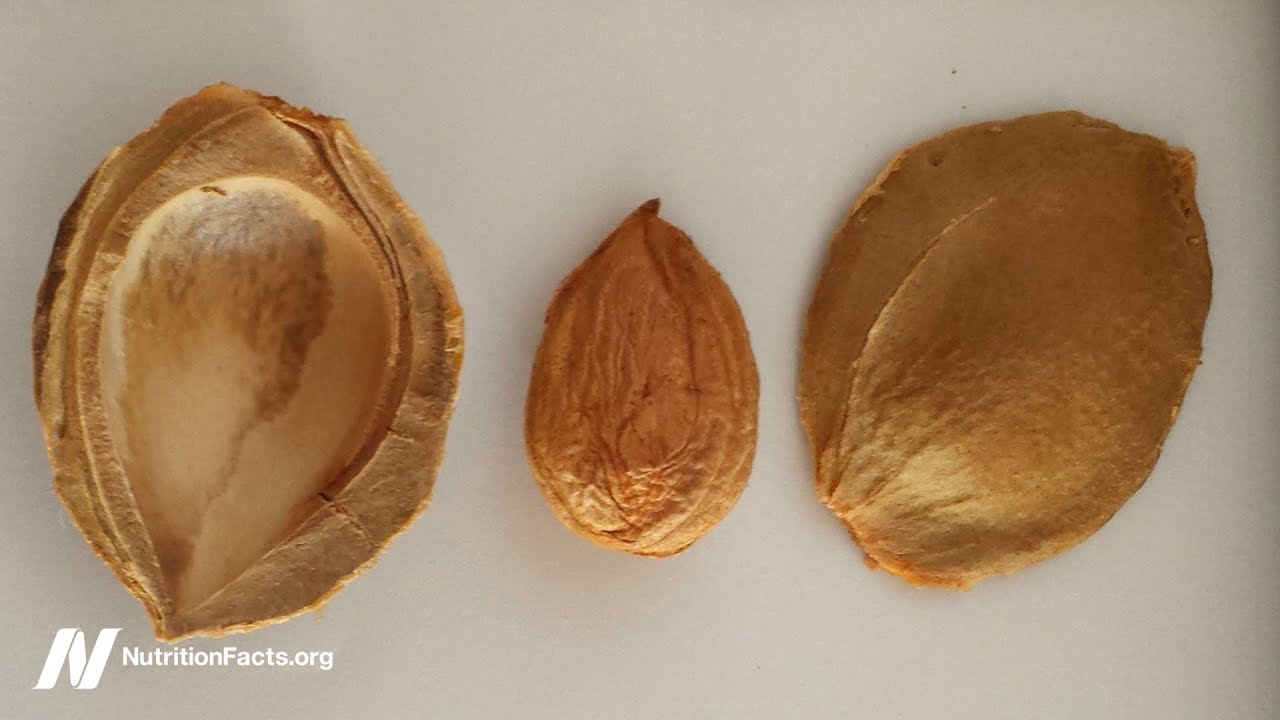
CONSTITUENTS
The major constituent is amygdalin (up to 4.9%), a cyanogenic glycoside (a plant compound that contains sugar and produces cyanide). Other cyanogenic compounds present are prunasin and mandelonitrile. Also present are the amygdalin-hydrolysing enzyme, emulsin, and fatty acids and sitosterols.
Clinical pharmacology
Antitumor activity
The term “laetrile” is an acronym used to describe a purified form of amygdalin, a cyanogenic glucoside found in the pits of many fruits and raw nuts and in other plants, such as lima beans, clover and sorghum. However, the chemical composition of a proprietary laetrile preparation patented in the United States of America (Laetrile®), which comprises mandelonitrile-β-glucuronide, a semisynthetic derivative of amygdalin, is different from that of natural laetrile/amygdalin, which consists of mandelonitrile β-d-gentiobioside and is made from crushed apricot pits. Mandelonitrile, which contains cyanide, is a structural component of both products. It has been proposed that the cyanide is an active anticancer ingredient in laetrile, but two other breakdown products of amygdalin, prunasin (which is similar in structure to the proprietary product) and benzaldehyde, have also been suggested. The studies discussed in this summary used either Mexican laetrile/amygdalin or the proprietary formulation. Laetrile can be administered orally as a pill, or it can be given by injection (intravenous or intramuscular). It is commonly given intravenously over a period of time followed by oral maintenance therapy. The incidence of cyanide poisoning is much higher when laetrile is taken orally because intestinal bacteria and some commonly eaten plants contain enzymes (β-glucosidases) that activate the release of cyanide following laetrile ingestion. Relatively little breakdown to yield cyanide occurs when laetrile is injected.
Laetrile has been used as an anticancer treatment in humans worldwide. While many anecdotal reports and case reports are available, results from only two clinical trials have been published. No controlled clinical trial (a trial including a comparison group that receives no additional treatment, a placebo, or another treatment) of laetrile has ever been conducted. Case reports and reports of case series have provided little evidence to support laetrile as an anticancer treatment. The absence of a uniform documentation of cancer diagnosis, the use of conventional therapies in combination with laetrile, and variations in the dose and duration of laetrile therapy complicate evaluation of the data. In a published case series, findings from ten patients with various types of metastatic cancer were reported. These patients had been treated with a wide range of doses of intravenous proprietary laetrile (total dose range 9–133 g). Pain relief (reduction or elimination) was the primary benefit reported. Some responses, such as decreased adenopathy (swollen lymph nodes) and decreased tumor size, were noted. Information on prior or
concurrent therapy was provided; however, patients were not followed long-term to determine whether the benefits continued after treatment ceased.
Another case series, published in 1953, included 44 cancer patients and found no evidence of objective response that could be attributed to laetrile . Most patients with reported cancer regression in this series had recently received or were receiving concurrent radiation therapy or chemotherapy. Thus, it is impossible to determine which treatment produced the positive results.
In 1978, the United States National Cancer Institute (NCI), at the National Institutes of Health, requested case reports from practitioners who believed their patients had benefited from laetrile treatment. Of the 93 cases submitted, 67 were considered suitable for evaluation. An expert panel concluded that only two of the 67 patients had complete responses, and that four others had partial responses while using laetrile. On the basis of these six responses, NCI agreed to sponsor phase I and phase II clinical trials. The phase I study was designed to test the doses, routes of administration and schedule of administration. Six patients with advanced cancer were treated with amygdalin given intravenously at 4.5 g/m2 per day. The drug was largely excreted unchanged in the urine and produced no clinical or laboratory evidence of a toxic reaction. Amygdalin given orally, 0.5 g three times daily, produced blood cyanide levels of up to 2.1 μg/ml. No clinical or laboratory evidence of toxic reaction was seen in the six patients taking the drug at this dosage. However, two patients who ate raw almonds while undergoing oral treatment developed symptoms of cyanide poisoning.
In the phase II clinical trial, 175 patients with various types of cancer (breast, colon, lung) were treated with amygdalin plus a “metabolic therapy” program consisting of a special diet, with enzymes and vitamins. The great majority of these patients were in good general condition before treatment. None was totally disabled or in a preterminal condition. One-third had not received any previous chemotherapy. The amygdalin preparations were administered by intravenous injection for 21 days, followed by oral maintenance therapy, dosages and schedules being similar to those evaluated in the phase I study. Vitamins and pancreatic enzymes were also administered as part of a metabolic therapy program that included dietary changes to restrict the use of caffeine, sugar, meats, dairy
products, eggs and alcohol. A small subset of patients received higher dose amygdalin therapy and higher doses of some vitamins as part of the trial. Patients were followed until there was definite evidence of cancer progression, elevated blood cyanide levels or severe clinical deterioration. Among 175 patients suitable for assessment, only one met the criteria for response. This patient, who had gastric carcinoma with cervical lymph node metastasis, experienced a partial response that was maintained for 10 weeks while on amygdalin therapy. In 54% of patients there was measurable disease progression at the end of the intravenous course of treatment, and all patients had progression 7 months after completing intravenous therapy; 7% reported an improvement in performance status
(ability to work or to perform routine daily activities) at some time during therapy, and 20% claimed symptomatic relief. In most patients, these benefits did not persist. Blood cyanide levels were not elevated after intravenous amygdalin treatment; however, they were elevated after oral therapy. On the basis of this phase II study, NCI concluded that no further investigation of laetrile was warranted.
Experimental pharmacology
Analgesic and antipyretic activity
Intragastric administration of 46.32 mg/kg body weight (bw) of amygdalin to rats induced a small increase in body temperature, and prevented ephedrine-induced hyperthermia. In the hot plate and acetic acid induced writhing tests in mice, the analgesic median effective doses (ED50) were 457.0 mg/kg and 288.0 mg/kg bw, respectively. However, at these doses, amygdalin could not substitute for morphine in morphine-addicted rats in relieving withdrawal syndrome. No anti-inflammatory effects were observed in the animals treated with amygdalin.
Antitumor activity
Intragastric administration of 200.0 mg/kg–2.0 g/kg bw of amygdalin to mice with P388 lymphocytic leukaemia or P815 mast-cell leukaemia on days 1 and 5, or days 1, 5 and 9. Despite treatment with high doses of amygdalin there was no prolongation in the lifespan of mice in either group.
Antitussive activity
Amygdalin, 30.0 mg, had antitussive effects in the sulfur dioxide gas induced cough model in mice. The enzymes amygdalase and prunase, along with gastric juice, hydrolyse amygdalin to form small amounts of hydrocyanic acid, thereby stimulating the respiratory reflex and producing antitussive and antiasthmatic effects.
Metabolism and pharmacokinetics
After intragastric administration of 30.0 mg of amygdalin or prunasin to rats, capacity for hydrolyzing these compounds was greatest in the organs of 15-day-old animals, most of the activity being concentrated in the tissues of the small and large intestines. The activity decreased with age. In adult rats, hydrolysis of prunasin was greater than that of amygdalin and was concentrated in the spleen, large intestine and kidney (35.0 μg, 15.0 μg and 8.9 μg of prunasin hydrolyzed per hour per gram of tissue, respectively). Minced liver, spleen, kidney and stomach tissue had a greater hydrolytic capability than the homogenate of these organs, while the reverse was the case with the small and large intestines. Following oral administration of 30.0 mg of amygdalin to adult rats, distribution after the first hour was as follows: stomach 0.89 mg, small intestine 0.78 mg, spleen 0.36 mg, large intestine 0.30 mg, kidney 0.19 mg, liver 0.10 mg and serum 5.6 μg/ml. At the end of the second hour, the highest amygdalin content, 0.79 mg, was found in the large intestine.
Toxicology
Intragastric administration of 125.0 mg/kg bw of powdered defatted Apricot seed per day for 7 days to mice or rabbits produced no behavioral, histological or microscopic toxic effects. Intragastric administration of 250.0 mg/kg bw of an aqueous suspension of the powdered defatted seeds to mice had no toxic effects within a 24-hour period.
The median lethal dose (LD50) of amygdalin in rats was 880.0 mg/kg bw after intragastric administration. However, when a dose of 600.0 mg/kg bw was administered by the same route, together with β-glucosidase, all animals died. Total and magnesium adenosine triphosphatase activities in the heart decreased with increasing levels of administered amygdalin.
Diets containing 10% ground seeds were fed to young and breeding male and female rats. The seeds were obtained from 35 specific apricot cultivars and divided into groups containing low amygdalin (cyanide< 50.0 mg/100 g), moderate amygdalin (cyanide 100–200.0 mg/100 g), or high amygdalin (cyanide > 200.0 mg/100 g). Growth of young male rats was greatest in the low and moderate amygdalin groups, indicating that the animals were more sensitive to the bitter taste of the kernels with high amygdalin content. In female rats, but not males, liver rhodanase activity and blood thiocyanate levels were increased with the high-amygdalin diet, but both males and females effi ciently excreted thiocyanate, indicating efficient detoxifi cation and clearance of cyanide hydrolyzed from the dietary amygdalin. No other changes in blood chemistry were observed.
Toxic amounts of cyanide were released into the blood of rats following intragastric administration of amygdalin (proprietary laetrile) (dose not specified); cyanide blood concentrations and toxicity were lower when amygdalin was given intravenously (dose not specified). Analysis of the time course of cyanogenesis suggests that cyanide could accumulate in blood after repeated oral doses of amygdalin. Following intraperitoneal administration of 250.0 mg/kg bw, 500.0 mg/kg bw or 750.0 mg/kg bw of amygdalin per day to rats for 5 days, mortalities were 30.8%, 44.1% and 56.8%, respectively. The mode of death and the elevated serum cyanide levels in the dying animals strongly suggested cyanide poisoning as the cause of death.
The systemic effects of an oil prepared from the seeds containing 94% unsaturated fatty acids, and oleic and linoleic acids were assessed in a 13-week feeding study in rats. The animals were fed a diet containing 10% oil. No toxic effects were observed and no macroscopic or microscopic lesions in any of the organs were found. External applications of 0.5 ml of the seed oil to rabbits did not produce any observable toxic effects.
Adverse reactions
The side-effects associated with amygdalin treatment are the same as the symptoms of cyanide poisoning. Cyanide is a neurotoxin that initially causes nausea and vomiting, headache and dizziness, rapidly progressing to cyanosis (bluish discoloration of the skin due to oxygen-deprived hemoglobin in the blood), liver damage, marked hypotension, ptosis (droopy upper eyelid), ataxic neuropathies (difficulty in walking due to damaged nerves), fever, mental confusion, convulsions, coma and death. These side-effects can be potentiated by the concurrent administration of raw almonds or crushed fruit pits, eating fruits and vegetables that contain β-glucosidase, such as celery, peaches, bean sprouts and carrots, or high doses of vitamin C.
Numerous cases of cyanide poisoning from amygdalin have been reported. After ingestion, amygdalin is metabolized in the gastrointestinal tract to produce prunasin and mandelonitrile, which are further broken down to benzaldehyde and hydrocyanic acid, the latter of which is highly toxic. Overdose causes dizziness, nausea, vomiting and headache,
which may progress to dyspnoea, spasms, dilated pupils, arrhythmias and coma. A 65-year-old woman with cirrhosis and hepatoma lapsed into deep coma, and developed hypotension and acidosis after ingestion of 3 g of amygdalin. After initial treatment, the patient regained consciousness, but massive hepatic damage led to her death . A 67-yearold
woman with lymphoma suffered severe neuromyopathy following amygdalin treatment, with elevated blood and urinary thiocyanate and cyanide levels. Sural nerve biopsy revealed a mixed pattern of demyelination and axonal degeneration, the latter being prominent. Gastrocnemius muscle biopsy showed a mixed pattern of denervation and myopathy with type II atrophy.
Warnings
Overdose may cause fatal intoxication . The lethal dose is reported to be 7–10 kernels in children and 50–60 kernels (approximately 30 g) in adults.
Do not use in pregnancy or breast feeding
Dosage:
Average daily dose: 3.0–9.0 g of dried ripe seeds processed by breaking into pieces, rinsing in boiling water and stir-frying until yellow, then adding to a decoction when nearly finished.
(WHO-VOL3 pg 72- 81)
Articles/Studies
- In vitro antioxidant, antimicrobial, and antitumor activities of bitter almond and sweet apricot (Prunus armeniaca L.) kernels
- Apricot kernel flour and its use in maintaining health
Antimicrobial/Antioxidant
Antioxidant and antimicrobial activities of bitter and sweet apricot (Prunus armeniaca L.) kernels
Cancer
- The anti-proliferative effect of apricot and peach kernel extracts on human colon cancer cells in vitro
- Forbidden Medicine: The Buried Potential of Apricot Seeds for Cancer
- Phenolic composition, antioxidant and antibacterial properties, and in vitro anti-HepG2 cell activities of wild apricot (Armeniaca Sibirica L. Lam) kernel skins
Other Effects
Consumption of bitter apricot seeds affects lipid and endocrine profile in women.