Laurel Greenbrier
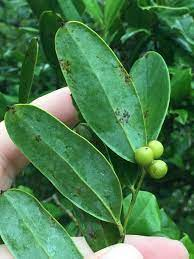
Field ID checklist (quick reference)
- Evergreen to semi-evergreen woody vine with tendrils
- Forms dense, thorny thickets that are hard to pass through
- Prickly stems: green to brown, with scattered sharp prickles
- Leaves: thick, leathery, laurel-like; entire margins; alternate; parallel veins
- Typically in wet, acidic habitats (swamps, bogs, wet woods) in the southeastern U.S.
- Check against local guides to distinguish from other Smilax species before harvest
Botanical overview
- Scientific name: Smilax laurifolia (and close relatives in the greenbrier group)
- Family: Smilacaceae
- Growth form: Evergreen to semi-evergreen woody vine with tendrils and prickles; often forms dense, almost impenetrable thickets.
- Leaves: Thick, leathery, often evergreen, resembling small laurel leaves (hence the common name). Alternate, with parallel venation typical of Smilax.
- Stems: Green to brown, often armed with prickles along the length, used traditionally as a rubbing counter-irritant.
- Habitat: Wet woods, bog margins, swamps, and other acidic, poorly drained soils in the southeastern United States.
Identification notes
- Evergreen, laurel-like leaves on a climbing, prickly vine.
- Tends to form dense, tangled masses that can be difficult to walk through.
- Check carefully against local field guides to distinguish from other Smilax species if you are harvesting for food or medicine.
⚠️ Foraging caution
- Always confirm identification with multiple sources (field guide, local expert, herbarium photos) before internal use.
- Avoid harvesting from roadsides, polluted water edges, or sprayed areas.
MEDICINAL USES
Actions (reported): Astringent; birthing aid; poultice; rubefacient; tonic.
- Counter-irritant for pain and cramps
Stem prickles have been rubbed on the skin as a counter-irritant to relieve localized pains, muscle cramps, and twitching.
- Tea of leaves and stems
A tea made from the leaves and stems has been used in the treatment of:
- Rheumatism and joint aches
- General stomach discomfort and digestive upset
- Poultice of leaves
Wilted leaves are applied as a poultice to:
- Boils
- Localized skin irritations or sores
- Root tea (birthing aid)
A tea made from the roots is reported to:
- Help in expelling afterbirth (traditional use as a birthing aid)
- Root bark wash
The root bark is described as astringent and slightly tonic. An infusion of the root bark has been used externally as a wash for:
- Burns
- Sores
- Pox and eruptive skin conditions
- Constituents (unconfirmed report)
Reports that the roots contain the hormone testosterone have not been confirmed; they may contain steroid precursors, but this has not been well established in modern research.
⚕️ Safety & usage notes (traditional use, not medical advice)
- Internal use (teas, decoctions) should be approached cautiously and in small amounts until individual tolerance is known.
- Avoid in pregnancy unless under the guidance of a qualified practitioner, especially given traditional use affecting the uterus and afterbirth.
- External washes and poultices are generally considered lower-risk but can still cause skin irritation or allergy in sensitive individuals.
- This information reflects traditional and ethnobotanical reports and is not a substitute for professional medical advice.
Edibility
Edible parts: Leaves; root; young shoots.
Roots
- Root (cooked)
- Rich in starch; roots can be quite thick (up to ~15 cm).
- Can be dried and ground into a flour or powder to:
- Thicken soups and stews
- Be mixed with other flours for breads or cakes
- Gel-like thickener from roots (common greenbrier example – Smilax rotundifolia)
Although the detailed method below references common greenbrier (Smilax rotundifolia), the process illustrates how starchy, gelatinous material can be extracted from Smilax roots for use as a thickening agent:
- Harvesting the roots
- Carefully dig out the roots, selecting thick, healthy portions.
- Harvest sustainably: take only a portion of the root from any one plant and leave enough for regrowth.
- Cleaning and preparation
- Thoroughly wash the roots to remove soil and debris.
- Trim off side roots and very fibrous portions, focusing on the dense, starchy core.
- Extraction
- Cut the roots into small pieces.
- Place in a blender or food processor with enough clean water to cover.
- Blend until a thick, slurry-like or gel-like consistency is reached.
- Straining
- Pour the blended mixture through a fine mesh sieve, cloth, or cheesecloth.
- Press and squeeze well to separate liquid/gel from the fibrous pulp.
- Settling / use
- The liquid/gel can be used directly as a thickener in soups, stews, or sauces.
- If allowed to settle, the starch may concentrate at the bottom and can be used similarly to other root starches.
- Storage
- Store the extracted gel or starchy liquid in a clean, airtight container in the refrigerator.
- Use within a few days for best quality.
- Harvesting the roots
Young shoots
- Young shoots (cooked)
- Tender young shoots can be harvested in spring.
- Traditionally cooked and eaten as an asparagus substitute.
- Can be lightly steamed, boiled, or sautéed; often best when harvested while still tender and before they toughen.
Practical harvesting notes
- Choose vigorous plants away from polluted areas.
- When harvesting roots, take only what you need and re-cover disturbed soil.
- For edible shoots, harvest sparingly from each plant to avoid weakening the root system.
Summary
Laurel greenbrier provides both food (starchy roots, edible young shoots) and medicine (root bark washes, leaf poultices, teas from stems and foliage).
It is a resilient, thicket-forming vine of wet habitats whose traditional uses center around:
- Supporting recovery after childbirth
- Treating skin complaints (boils, sores, burns, pox)
- Relieving localized pain and cramps
- Providing starchy nourishment and a natural thickening agent from its roots.