L5 Nerve Root
Return to Nervous System Menu
Return to Nervous System Menu

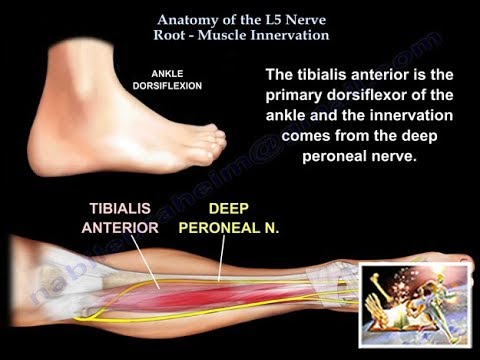
The L5 nerve root is a critical component of the lumbar spine, playing a significant role in the function and sensation of the lower extremities. Understanding its anatomy, function, and potential issues is essential for both medical professionals and individuals experiencing related symptoms.
Anatomy of the L5 Nerve Root
The L5 nerve root is part of the lumbar spine, which consists of five vertebrae labeled L1 through L5. The L5 nerve root emerges from the spinal cord at the L5 vertebra, located in the lower back. It exits the spinal column through the intervertebral foramen, a small opening between the vertebrae, and extends down into the leg.
Function of the L5 Nerve Root
The L5 nerve root is primarily responsible for motor and sensory functions in the lower extremities. It innervates several muscles, including:
- The extensor hallucis longus, which helps lift the big toe.
- The tibialis anterior, which assists in dorsiflexion of the foot.
- The peroneal muscles, which aid in foot eversion.
In terms of sensory function, the L5 nerve root provides sensation to the outer part of the leg, the top of the foot, and the inner part of the sole. This nerve root is crucial for activities such as walking, running, and maintaining balance.
Common Issues Affecting the L5 Nerve Root
Several conditions can affect the L5 nerve root, leading to pain, weakness, or sensory disturbances. Some common issues include:
Herniated Disc
A herniated disc occurs when the soft inner material of a spinal disc protrudes through its outer layer, potentially compressing the L5 nerve root. This can cause symptoms such as:
- Lower back pain
- Sciatica, characterized by pain radiating down the leg
- Numbness or tingling in the foot or toes
- Weakness in the leg or foot
Spinal Stenosis
Spinal stenosis is the narrowing of the spinal canal, which can compress the L5 nerve root. Symptoms may include:
- Pain or cramping in the legs, especially when standing or walking
- Numbness or weakness in the legs
- Relief of symptoms when sitting or bending forward
Spondylolisthesis
Spondylolisthesis occurs when one vertebra slips forward over the one below it, potentially compressing the L5 nerve root. This condition can lead to:
- Lower back pain
- Leg pain or weakness
- Difficulty walking or standing for long periods
Diagnosis and Treatment
Diagnosing issues with the L5 nerve root typically involves a combination of medical history, physical examination, and imaging studies such as MRI or CT scans. These tools help identify the underlying cause of symptoms and guide treatment.
Conservative Treatments
For many individuals, conservative treatments can effectively manage symptoms related to the L5 nerve root. These may include:
- Physical therapy to strengthen muscles and improve flexibility
- Nonsteroidal anti-inflammatory drugs (NSAIDs) to reduce pain and inflammation
- Epidural steroid injections to alleviate nerve root irritation
Surgical Interventions
In cases where conservative treatments are ineffective, surgical intervention may be necessary. Common surgical procedures include:
- Microdiscectomy to remove herniated disc material
- Laminectomy to relieve pressure on the nerve root
- Spinal fusion to stabilize the spine in cases of spondylolisthesis