Bloating
Return to Gastrointestinal Disorders Menu
See also: Gallbladder & Bloating ; Digestive Gas Production ; Bifidobacterium (genus)
ABOUT
Although the terms bloating and abdominal distention are often used interchangeably, these symptoms likely involve different pathophysiologic processes, both of which are still not completely understood.
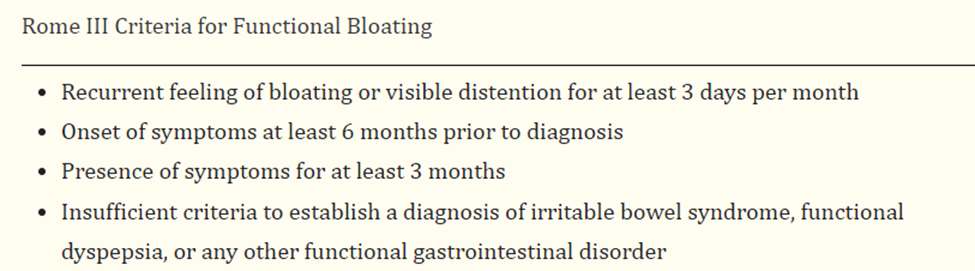
Bloating can be defined as a sense of gassiness or a sense of being distended; measurable distention does not have to occur. Rome III diagnostic criteria for functional bloating are listed below. The term abdominal distention should be reserved for patients who show a visible increase in abdominal girth. Ambulatory monitoring using abdominal inductance plethysmography has shown that abdominal girth increases in healthy volunteers during the course of the day, particularly in the postprandial period, and decreases overnight to values that are comparable to those from the previous morning. Changes in girth are greater in patients with IBS, and these patients are more likely to be symptomatic
Burping and belching, which are other common gastrointestinal (GI) complaints, reflect the expulsion of excess gas from the stomach. These complaints may or may not be related to bloating and abdominal distention. Women typically had higher rates of bloating than men. Constipation-predominant IBS patients tend to have a higher prevalence of bloating than patients with diarrhea-predominant IBS. Eating disorders and aerophagia may be associated with symptoms of gas and bloating, and these conditions should also be considered in the differential diagnosis .
Even minor disturbances in gut microflora can lead to significant changes in gut function, including gas production. Although the overall volume of gas production may not significantly change from individual to individual, the content (methane [CH4], hydrogen [H2], or carbon dioxide [CO2]) may vary greatly, potentially leading to changes in intestinal transit and visceral sensation..
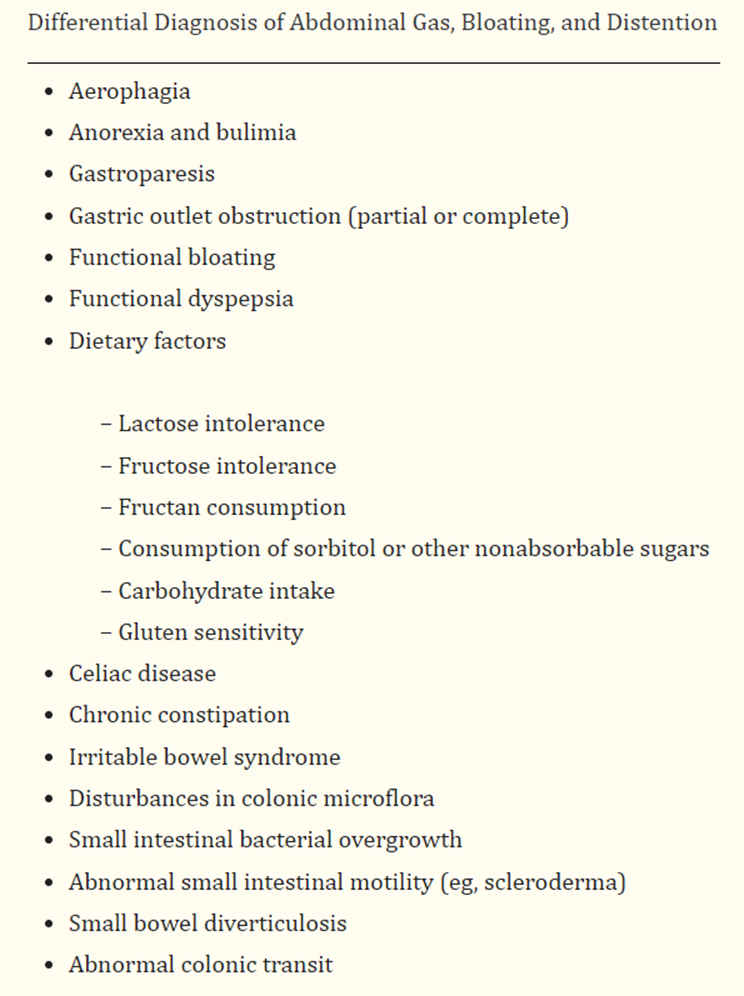
(Source)
Most of the time HCL is going to help bloating because with added acidity it helps enzymes like pepsin
to break down protein. You can also take enzymes. Taking a look at Fodmaps may be useful and make sure things are cooked well.
Concomitant Symptoms of Bloating and Abdominal Distention
(Source)
Healthy subjects generally tolerate intestinal gas quite well because they can propel and evacuate gas efficiently. A number of theories have been offered to explain why patients may have symptoms of both bloating and abdominal distention.
- Increased Gas Production This theory has been largely discredited for a number of reasons.
- Impaired Gas Transit Over 20 years ago, Kellow and colleagues demonstrated that some patients with IBS have abnormalities in intestinal transit, which could contribute to symptoms of gas and bloating. This finding makes clinical sense, particularly in IBS patients with constipation, who have an increased prevalence of bloating and abdominal distention.
- Impaired Evacuation Some patients cannot effectively evacuate gas, resulting in prolonged intestinal gas retention and symptoms of bloating and pain. Patients with IBS, functional bloating, and constipation are less able to effectively evacuate infused gas and are much more likely to develop symptoms of abdominal distention. Some of these patients appear to have a deficiency in a normal rectal reflex involved in intestinal gas propulsion.
- Abnormal Abdominal-Diaphragmatic Reflexes Over 60 years ago, Alvarez raised the possibility of an abnormal abdominal wall reflex in patients with symptoms of bloating. In healthy adults, intestinal gas infusion increases muscle activity in the abdominal wall.41 Gas infusion in bloating patients leads to decreased contraction of the abdominal wall muscles concurrent with inappropriate relaxation of the internal oblique muscles. This abnormal viscerosomatic reflex activity in patients with bloating means that abdominal wall muscles relax, rather than contract, with gaseous distention of the GI tract, emphasizing luminal gas. In contrast to healthy volunteers, the diaphragms of bloating patients descend while the ventral abdominal wall muscles relax, leading to an increase in abdominal girth.
- Abnormalities in Posture Some clinicians have reported that patients with significant complaints of bloating and abdominal distention appear to unconsciously change their body position and adopt a more lordotic position. Although this issue has not been well studied, patients with IBS do not generally appear to adopt a more lordotic position compared to other patients.
- Abnormal Sensation or Perception Patients with IBS are more sensitive to stretch and distention of the GI tract compared to healthy volunteers. In a study of 58 patients with IBS (based on Rome II criteria), those with bloating alone had lower thresholds for abdominal pain compared to those who also had symptoms of abdominal distention. Clinically, impaired transit of gas and ineffective evacuation of gas could lead to distention of the intestine in a hypersensitive patient, thereby causing significant bloating and pain out of proportion to the amount of gas trapped within that segment of the intestine.
- Psychosocial Distress Psychosocial distress may contribute to the perceived severity of bloating. Women with moderate-to-severe bloating more frequently report a history of major depression and more severe depression and anxiety.
Bloating and Associated Conditions
Abdominal bloating is a common symptom in functional gastrointestinal disorders (FGIDs), often accompanied by distension. It is considered a subjective sensation, while abdominal distension is an objective increase in abdominal girth. Bloating can occur with other symptoms or in isolation, and its severity may worsen throughout the day. While the exact mechanisms of bloating are not fully understood, potential factors include gut hypersensitivity, impaired gas handling, altered gut microbiota, and abnormal abdominal-phrenic reflexes. Bloating is reported by 10-30% of the general population and is a common manifestation of Irritable Bowel Syndrome (IBS).
Hormonal Influences on Related Conditions
Several studies examine the impact of hormones in contexts that may be related to conditions where bloating is prevalent:
- Menstrual Cycle and Food Intake: Food intake fluctuates during the menstrual cycle, being higher in the early follicular and luteal phases than in the late follicular phase. Ovarian steroids can affect brain areas that process food-related information. A study found that estradiol may reduce food intake by decreasing sensitivity to food cues in the ventral visual pathway under conditions of energy deprivation.
- Obesity and Stress Hormones: Women with abdominal obesity exhibit hyperactivation of the hypothalamic-pituitary-adrenal (HPA) axis. The HPA axis's response to meals with different macronutrient proportions can depend on the pattern of body fat distribution. For instance, cortisol response to a high-carbohydrate meal was significantly higher in women with abdominal obesity compared to those with peripheral fat distribution.
- Sex Hormones and Body Composition: In men, testosterone, calculated free testosterone, and sex hormone-binding globulin (SHBG) are inversely correlated with fat mass, weight, body mass index, and waist/hip circumference. Calculated free estradiol is positively correlated with percentage total and trunk fat mass, and the estradiol/testosterone ratio is positively correlated with all body composition measures examined. Longitudinal analyses suggest that body composition influences hormone levels rather than the reverse.
- Premenstrual Symptoms: Abdominal bloating is a common premenstrual symptom experienced by young women with primary dysmenorrhea. However, a study found no association between premenstrual symptoms and vitamin D or parathyroid hormone levels.
- Other Hormonal Changes: Hormones like estrogen can influence the growth and virulence of microorganisms like Trichomonas vaginalis. Critical illnesses like sepsis can disrupt endocrine systems, leading to increased cortisol, hyperglycemia, relative vasopressin deficiency, and euthyroid sick syndrome. Hypotension can cause significant increases in plasma antidiuretic hormone (ADH) levels. Hormonal changes also occur in conditions like intracranial hemorrhage, affecting thyroid hormone levels. Changes in hormonal levels are considered crucial for female reproductive system physiology, suggesting that the dynamics of hormone concentrations carry significant biological messages.
VIDEOS
Overview

Don’t Ignore

The root cause of bloating

Bloating: The Ultimate Indicator of the Right Diet
Digestive Bloat vs. Hormonal Bloat: Symptoms, Causes, and Relief Strategies Explained
Low Acidity & Adrenal Stress Causing Bloating
Digestive Bloat? Here's Why
How to STOP Bloating Instantly: Fixing the Root Cause
I Look Pregnant After Each Meal (documentary)
Bloating especially after meals, how to correct
Bloating & Constipation On Plant Based Diet? FODMAP Diet? Dr Greger
Still Bloated Even with Apple Cider Vinegar?
Best Functional Lab Tests to Get to the Root Cause of Bloating & Abdominal Distension
3 Tips for BLOATING that Works…shorts
5 Solutions for Bloating After Meals, IBS and SIBO
No More Gas Pains: Add These Foods to Your Anti-Bloat Arsenal
5 Healthy Habits for Bloating & Belly Fat
6 Proven Ways To Eliminate Bloating – Saturday Strategy
How to Stop Bloating: Expert Tips With Dr. Alan Desmond | Exam Room LIVE: Health All-Stars
CAUSES:
Bad foods
Bad Bugs
Inadequate Digestive Juices
Bad toxins & Gases
Lectins in Vegetables Causing Bloating
Microbiome deficiency, lack of "good gut flora"
Inadequate good food and fiber intake
ROLE OF ADAPTIVE IMMUNE SYSTEM
The adaptive immune system may play a significant role in bloating through several mechanisms:
T Cell Involvement
- Increased T cell infiltration: Higher counts of CD3+, CD4+, and CD8+ T cells have been found in the intestinal mucosa of patients with irritable bowel syndrome (IBS), a condition often associated with bloating1.
- T cell activation: Increased CD25 marker staining in the colonic mucosa suggests enhanced T cell activation in IBS patients1.
Cytokine Production
- Th2 cytokine release: Stimulated blood T cells from IBS patients show increased production of Th2 cytokines like IL-5 and IL-13, which are involved in allergic-type responses1.
- Pro-inflammatory cytokines: Higher levels of IL-1β, TNF-α, IL-6, and IL-8 have been detected in the plasma/serum of IBS patients1.
B Cell and Antibody Responses
- Increased IgG+ B cells: A higher frequency of IgG+ B cells has been reported in the blood of IBS patients1.
- Antibodies to bacterial flagellin: Circulating antibodies against bacterial flagellin have been detected in IBS, suggesting an adaptive immune response to gut microbiota1.
Interaction with Gut Microbiota
- Microbiota-immune system crosstalk: Disruption of the balance between host and intestinal microbiota can lead to changes in the mucosal immune system, affecting gut sensory-motor function2.
- Altered fermentation: Changes in gut microbiota composition may result in differences in fermented gas type and volume, contributing to bloating symptoms2.
Mast Cell Activation
While primarily part of the innate immune system, mast cells can be influenced by adaptive immune responses:
- Increased mast cell counts: Higher numbers of mast cells have been found in both the large and small intestine mucosa of IBS patients1.
- Mast cell degranulation: Activated mast cells release mediators like histamine and proteases, which can affect gut function and potentially contribute to bloating1.
The adaptive immune system's involvement in bloating appears to be part of a complex interplay between immune activation, gut microbiota alterations, and sensory-motor dysfunction in the gastrointestinal tract. This immune activation may contribute to increased intestinal permeability, altered gut motility, and hypersensitivity, all of which can manifest as bloating symptoms12.
WIKIPEDIA:
Bloating is any abnormal general swelling, or increase in diameter of the abdominal area. As a symptom, the patient feels a full and tight abdomen, which may cause abdominal pain, and sometimes accompanied by increased stomach growling, or more seriously, the total lack of it.
The most common symptom associated with bloating is a sensation that the abdomen is full or distended. Rarely, bloating may be painful or cause shortness of breath.
Pains that are due to bloating will feel sharp and cause the stomach to cramp. These pains may occur anywhere in the body and can change locations quickly. They are so painful that they are sometimes mistaken for heart pains when they develop on the upper left side of the chest. Pains on the right side are often confused with problems in the appendix or the gallbladder.
One symptom of gas that is not normally associated with it is the hiccup. Hiccups are harmless and will diminish on their own; they also help to release gas that is in the digestive tract before it moves down to the intestines and causes bloating. Important but uncommon causes of abdominal bloating include ascites and tumors.
Causes
There are many causes of bloating, including: diet, irritable bowel syndrome, lactose intolerance, reflux, and constipation.
Specific medical conditions like Crohn's Disease or bowel obstruction can also contribute to the amount of stomach bloating experienced.
Gas and bloating is a sign that food is not being digested correctly by the body. An inadequate intake of water will cause excessive stomach bloating. Water benefits the body by aiding with digestion because it supports a majority of the body's daily functions. A buildup of fat cells slows down the body's ability to empty the stomach. Dairy products also contribute to excessive cramps, gas, and bloating. Persons who are intolerant to lactose products experience this effect more than others. Once these foods are digested, the bloating will fade.
Common causes of abdominal bloating are:
- Overeating
- Gastric distension
- Lactose intolerance, fructose intolerance and other food intolerances
- Food allergy
- Aerophagia (air swallowing, a nervous habit)
- Irritable bowel syndrome
- Partial bowel obstruction
- Gastric dumping syndrome or rapid gastric emptying
- Gas-producing foods
- Constipation
- Visceral fat
- Menstruation, dysmenorrhea
- Polycystic ovary syndrome and ovarian cysts
- Alvarez' syndrome, bloating of unknown or psychogenic origin without excess of gas in the digestive tract
- Massive infestation with intestinal parasites (e.g., Ascaris lumbricoides)
- Diverticulosis
- Celiac Disease
- Certain Medications, such as phentermine
- Occurs in some due to salivary hypersecretion and dehydration.
- Ovarian cancer
Important but uncommon causes of abdominal bloating include
- large intra-abdominal tumors, such as those arising from cancers of the ovarian, liver, uterus and stomach
- megacolon, an abnormal dilation of the colon caused by some diseases, such as Chagas disease, a parasitic infection
- cardiopulmonary resuscitation procedures, due to the artificial mouth-to-mouth insufflation of air.
In some animals, like cats, dogs and cattle, gastric dilatation-volvulus, or bloat also occurs when gas is trapped inside the stomach and a gastric torsion or volvulus prevents it from escaping.
Irritable bowel syndrome
Bloating from irritable bowel syndrome (IBS) is of unknown origin but often results from an insult to the gut, and as such can overlap with infective diarrhea, celiac, and inflammatory bowel diseases (Crohn's disease and ulcerative colitis). IBS is a brain-gut dysfunction that causes visceral hypersensitivity and results in bloating in association with recurrent diarrhea (or constipation) and abdominal pain. While there is no direct treatment for the underlying pathology of IBS, the symptom of bloating can be well managed through dietary changes that prevent the over-reaction of the gastrocolic reflex. Having soluble fiber foods and supplements, substituting dairy with soy or rice products, being careful with fresh fruits and vegetables that are high in insoluble fiber, and eating regular small amounts can all help to lessen the symptoms of IBS (Van Vorous 2000). Foods and beverages to be avoided or minimized include red meat, oily, fatty and fried products, dairy (even when there is no lactose intolerance), solid chocolate, coffee (regular and decaffeinated), alcohol, carbonated beverages, especially those also containingsorbitol, and artificial sweeteners (Van Vorous 2000). IBS is most commonly found in patients around the age of 20 and is found more often in women than men. In people with IBS, the intestines squeeze too hard or not hard enough and cause food to move too quickly or too slowly through the intestines.[4] Other terms used to describe this condition include spastic bowel, spastic colon, and irritable colon. Symptoms of the condition will worsen as a person is placed under stress, during travel, and at other times when the daily routine is tampered with. Common symptoms include bloating, constipation, abdominal cramp or pain after bowel movement, or feeling like a movement is required even after one has been completed.
Fiber
Most cases of stomach bloating are due to improper diet. Gas occurs because of the bacteria in the colon and is a by-product of soluble fiber digestion. Inadequate or irregular intake of fiber and water will cause a person to experience bloating or constipation. The most common natural sources of fiber include fruits and vegetables as well as wheat or oat bran. These fibers are most likely to cause flatulence.[5] Fiber is made by plants and is not easily digested by the human gastrointestinal tract. There are two main types of dietary fiber: soluble and insoluble fiber. Soluble fiber is prebiotic and readily fermented in the colon into gases, while insoluble fiber is metabolically inert and absorbs water as it moves through the digestive system, aiding in defecation. Most types of fiber (insoluble) are attached to body water in the intestine and increase the volume of stools.
Belching and flatulence
Gas in the gastrointestinal tract has only two sources. It is either swallowed air or is produced by bacteria that normally inhabit the intestines, primarily the colon.[6]
Belching or burping is a universal ability that works by removing gas from the stomach through the mouth. The stomach can become bloated when too much air is swallowed during eating and drinking too quickly. As the stomach swells, belching removes the gas and alleviates the pain associated with it. Burping can also be used as a form of relief from abdominal discomfort other than too much gas in the stomach.
Flatulence or farting works much like burping, but helps the body pass gas through the anus instead of the mouth. Bacteria present in the intestinal tract cause gas to be expelled from the anus. They produce the gas as food is digested and moved from the small intestine. This gas builds up and causes swelling or bloating in the abdominal area before it is released.
Constipation
A common gastrointestinal problem is constipation — infrequent bowel movements, hard stools, and/or strain during the movements — which causes serious cases of bloating. Since most cases of constipation are temporary, simple lifestyle changes, such as getting more exercise and increasing one's intake of fiber, can go a long way toward alleviating constipation.[7] Some cases of constipation will continue to worsen and require unconventional methods to release the feces and reduce the amount of stomach bloating. Blood in the stool, intense pain in the abdomen, rectal pain, and unexplained weight loss should be reported to a doctor. Bloating consistently accompanies constipation, and they will not develop without an underlying cause.
Heartburn and acid reflux
Painful burning sensations in the chest that is caused by gastroesophageal reflux is known as heartburn. Reflux is the back flow of gastric acid juices from the stomach into the oesophagus. Heartburn has different triggers, including certain foods, medications, obesity, and stress. These triggers are different for each individual. Gastroesophageal reflux disease or GERD is a chronic condition that can lead to more serious complications like esophageal cancer. Treatment options are available to treat the symptoms and the condition, but there is no cure for the disease. Symptoms include burping, abdominal and stomach bloating, along with pain and discomfort. Heavy meals, lying down or bending over after eating should be avoided to help prevent reflux from occurring. The stomach bloating experienced with reflux is intense and will remain until the food is digested all the way.
Postmortem bloating occurs in cadavers, due to the formation of gases by bacterial action and putrefaction of the internal tissues of the abdomen and the inside of the intestines.
Related conditions
Conditions that are related to bloating include constipation, lactose intolerance, and acid reflux disease. All of these conditions share the same symptoms and can share the same causative agents. These causes include unhealthy diet, smoking, alcohol consumption, low amount of exercise, and overall health. Each of these conditions can be experienced as a symptom of the others and is also a cause for each of them. In most cases where one of the conditions is present, there is at least one if not two of the others. Treatment for each condition is performed using the same medications and recommended dietary changes like increased fiber intake and reduced fat intake. If the conditions develop into disease such as gastrointestinal reflux disease (GERD) or chronic constipation, additional medications will be required. Bloating and flatulence are sometimes related to constipation, and treating the underlying condition may be helpful.[8]
Treatment
There is no evidence-based algorithm for treating patients with bloating and abdominal distention; thus, each patient requires an individualized treatment plan. Gastroenterologists generally follow a stepwise approach, formulating the treatment plan with the patient in order to improve compliance. The first step is to identify the chief symptom(s): bloating, abdominal distention, or both. This step may provide some insight into the underlying pathophysiologic mechanism. The next step is to educate the patient regarding the possible pathophysiologic processes that might produce these symptoms. Gastroenterologists then try to reassure the patient that these symptoms, although uncomfortable and frustrating, are usually benign. Finally, specific and reasonable goals are identified. No large, randomized, controlled studies have been performed in patients with functional bloating; thus, much of the data have been obtained from patients with IBS.
Diet
A careful dietary history should be taken from each patient, with an emphasis on food products that readily ferment within the colon (eg, dairy, fructose, fructans, fiber, and sorbitol).63 A recent study showed that bloating improved in IBS patients who avoided these fermentable oligosaccharides, disaccharides, monosaccharides, and polyols. Gastroenterologists usually direct patients to remove one possible offending substance at a time (ie, dairy first, then fructose-containing liquids, then fiber, and so on); however, some patients with severe bloating and abdominal distention prefer to begin with a strict elimination diet consisting of only water, broth, boiled chicken, and egg whites, and then they slowly add in different food groups. Some patients have noted symptom improvement after minimizing carbohydrates and gluten, although this approach has not been well studied.
Probiotics
Although probiotics are commonly used, most have not been adequately evaluated in randomized, placebo-controlled trials. A recent prospective study of the probiotics Lactobacillus acidophilus and Bifidobacterium lactis in patients with nonconstipated functional bowel disorders (n=60) found an improvement in bloating severity during an 8-week trial period. A prospective trial of 77 patients with IBS compared Bifidobacterium infantis 35624, Lactobacillus, and placebo. The authors found that patients randomized to B. infantis 35624 experienced improvement in abdominal pain/discomfort and bloating in the setting of a normalized interleukin (IL)-10/IL-12 ratio.
Lifestyle changes
There are several things that can be done to relieve the pressure in the stomach. Taking a walk after eating a meal is a good way to nudge the contents of the bowels along. Exercising releases hormones that work to encourage activity in the bowels. Foods like bubble gum or bubbly beverages also cause a buildup of air that results in excessive gas and bloating, as does smoking. There are also certain types of vegetables and fruits that contain types of starches which are poorly digested by people but well digested by bacteria.
Exercise & Posture
A study of 8 patients with bloating found that physical exercise (ie, using a stationary bike) improved intestinal gas clearance and reduced symptoms of bloating. As gas retention is worse in the supine position than the upright position, patients should be counseled to exercise and minimize recumbent periods during the day to reduce symptoms of gas and bloating.
Anti-bloat drink
Sip this to reduce bloating, support digestion & get a natural glow
Recipe: pineapple,ginger,turmeric, celery & water
Tip: add ice or a pinch of black pepper for an extra boost
Apigenin
Apigenin could potentially affect bloating through several mechanisms:
1. Gut Microbiota Modulation: Apigenin remodels the gut microbiota, increasing beneficial bacteria like Akkermansia and reducing harmful ones. This balanced microbiome may help reduce gas production and bloating_2_6.
2. Anti-Inflammatory Effects: Apigenin inhibits pro-inflammatory cytokines (TNF-α, IL-6, IL-1β) and increases anti-inflammatory IL-10 in the gut. Reducing inflammation may alleviate bloating associated with inflammatory conditions_1_2.
3. Gut Barrier Function: Apigenin improves gut barrier integrity by increasing tight junction proteins (ZO-1, claudin-1, occludin). A stronger gut barrier may prevent bacterial overgrowth and reduce bloating_2_.
4. Smooth Muscle Relaxation: Apigenin may induce muscle relaxation, potentially easing intestinal spasms that contribute to bloating_7_.
5. Antioxidant Properties: As an antioxidant, apigenin may protect the gut from oxidative stress, which could contribute to improved digestive function and reduced bloating_1_2.
6. Short-Chain Fatty Acid Production: Apigenin-treated gut microbiota produces more butyrate, a short-chain fatty acid that supports gut health and may help reduce bloating_6_.
While these mechanisms suggest potential benefits, direct studies on apigenin's effect on bloating are limited. More research is needed to confirm its efficacy for this specific symptom.
Apple Cider Vinegar
Apple cider vinegar (ACV) is often touted as a natural remedy for bloating, but the evidence supporting its effectiveness is mixed. Here's what we know about the potential benefits and drawbacks:
Potential benefits:
- Acid content: ACV is naturally acidic, and some theorize it can help promote digestive enzyme production and break down food more efficiently, potentially reducing bloating caused by indigestion.
- Prebiotic properties: ACV contains small amounts of acetic acid bacteria, which are considered prebiotics and may act as food for beneficial gut bacteria. This could theoretically improve gut health and potentially reduce bloating associated with imbalances in the gut microbiome.
- Water intake boost: Drinking ACV diluted in water can increase your overall water intake, which is crucial for good digestion and can help prevent constipation and bloating.
Drawbacks and considerations:
- Limited evidence: Despite its popularity, strong scientific evidence supporting ACV's effectiveness for bloating is limited. Most studies have been small or inconclusive.
- Potential side effects: ACV is acidic and can irritate the esophagus, stomach lining, and teeth. It can also interfere with certain medications. Consult your doctor before using ACV, especially if you have any underlying health conditions.
- Individual variability: What works for one person may not work for another. Bloating can have various causes, and ACV may not address the underlying cause in all cases.
In conclusion:
- While ACV may offer some potential benefits for bloating, the evidence is limited and individual results may vary.
- It's important to prioritize a healthy diet, adequate water intake, and good dietary habits like portion control and mindful eating for managing bloating.
Glucosamine
Less Bloating, Better Nutrient Absorption - The Overlooked Digestive Perks of Glucosamine
Mugwort
Potential mechanisms for reducing bloating:
- Antispasmodic properties: Mugwort contains components like sesquiterpene lactones and thujone, which may have muscle-relaxing properties and help alleviate abdominal cramps and spasms that contribute to bloating.
- Digestive enzyme stimulation: Some studies suggest mugwort may stimulate the production of digestive enzymes, potentially aiding in food breakdown and absorption, reducing bloating caused by indigestion.
- Carminative effect: Mugwort may help expel gas from the digestive system, potentially helping relieve bloating symptoms.
- Anti-inflammatory properties: Mugwort possesses anti-inflammatory compounds that might be beneficial for reducing inflammation in the gut, which can contribute to bloating.
Limitations of available evidence:
- Most research on mugwort's effects on bloating is limited to traditional use and animal studies. Clinical trials in humans are scarce and generally small-scale, making it difficult to draw definitive conclusions about its effectiveness.