Austroboletus mutabilis
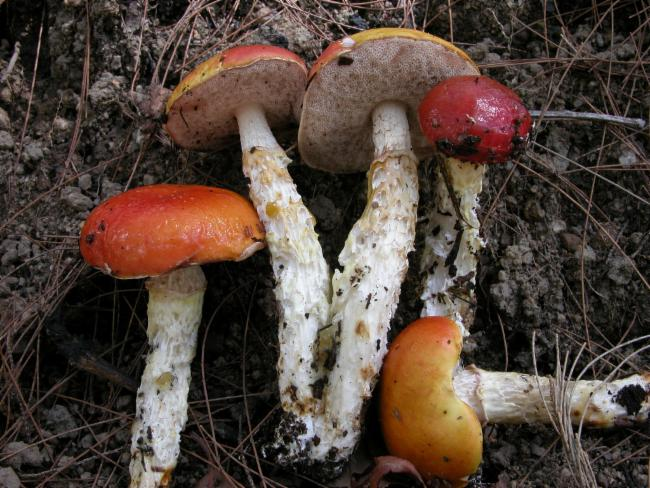
Found primarily in Australia.
Taxonomy and Nomenclature
The scientific classification of Austroboletus mutabilis is as follows:
- Kingdom: Fungi
- Phylum: Basidiomycota
- Class: Agaricomycetes
- Order: Boletales
- Family: Boletaceae
- Genus: Austroboletus
- Species: A. mutabilis
The species name mutabilis is derived from Latin, meaning "changeable" or "variable," which reflects the mushroom's variable appearance.
Morphological Characteristics
Cap
The cap of Austroboletus mutabilis is one of its most distinguishing features. It typically measures between 5 to 15 centimeters in diameter. The cap surface is dry and can range in color from pale brown to reddish-brown. As the mushroom matures, the cap often becomes cracked or scaly, adding to its unique appearance.
Pores and Tubes
Unlike gilled mushrooms, Austroboletus mutabilis has a pore surface underneath the cap. The pores are initially white but can turn yellowish or brownish with age. The tubes are relatively long and can be easily separated from the cap.
Stipe (Stem)
The stipe of Austroboletus mutabilis is robust and can grow up to 10 centimeters in height and 2 to 3 centimeters in thickness. It is typically pale to reddish-brown and may exhibit a reticulate (net-like) pattern near the apex.
Spore Print
The spore print of Austroboletus mutabilis is brown, which is a common characteristic among members of the Boletaceae family.
Habitat and Distribution
Austroboletus mutabilis is predominantly found in Australia, particularly in regions with temperate climates. It forms mycorrhizal associations with various tree species, including Eucalyptus and Acacia. These symbiotic relationships are crucial for nutrient exchange between the fungus and its host plants.
The mushroom typically fruits in the late summer to autumn months, often appearing after periods of rainfall. It can be found growing singly or in small groups on the forest floor, particularly in areas with well-drained, sandy soils.
Ecological Role
As a mycorrhizal fungus, Austroboletus mutabilis plays a vital role in forest ecosystems. Mycorrhizal fungi form mutualistic relationships with the roots of plants, aiding in the absorption of water and essential nutrients such as phosphorus and nitrogen. In return, the fungus receives carbohydrates produced by the plant through photosynthesis.
This symbiotic relationship enhances the health and growth of both the fungus and its host plants, contributing to the overall stability and productivity of the ecosystem.
Edibility and Uses
The edibility of Austroboletus mutabilis is not well-documented, and it is generally not considered a choice edible mushroom. Some sources suggest that it may be edible when cooked, but caution is advised due to the potential for misidentification with other, possibly toxic, species.
In addition to its ecological importance, Austroboletus mutabilis is of interest to mycologists for its unique morphological features and its role in mycorrhizal associations. It is also appreciated by mushroom enthusiasts and photographers for its distinctive and variable appearance.