Choledocolithasis
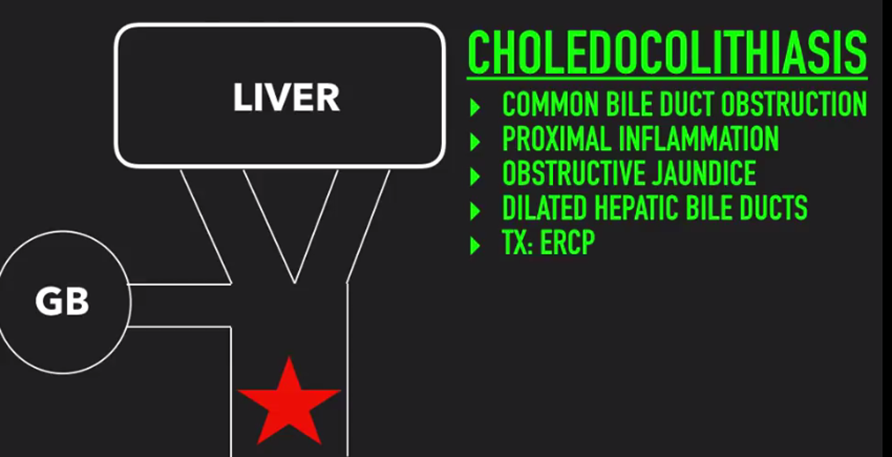
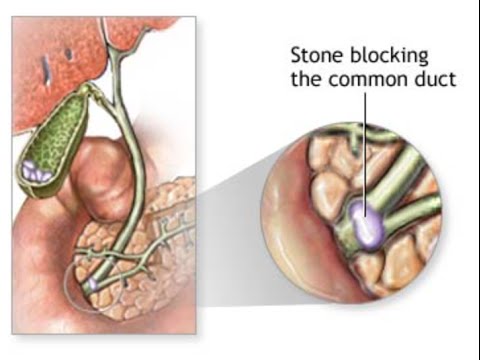
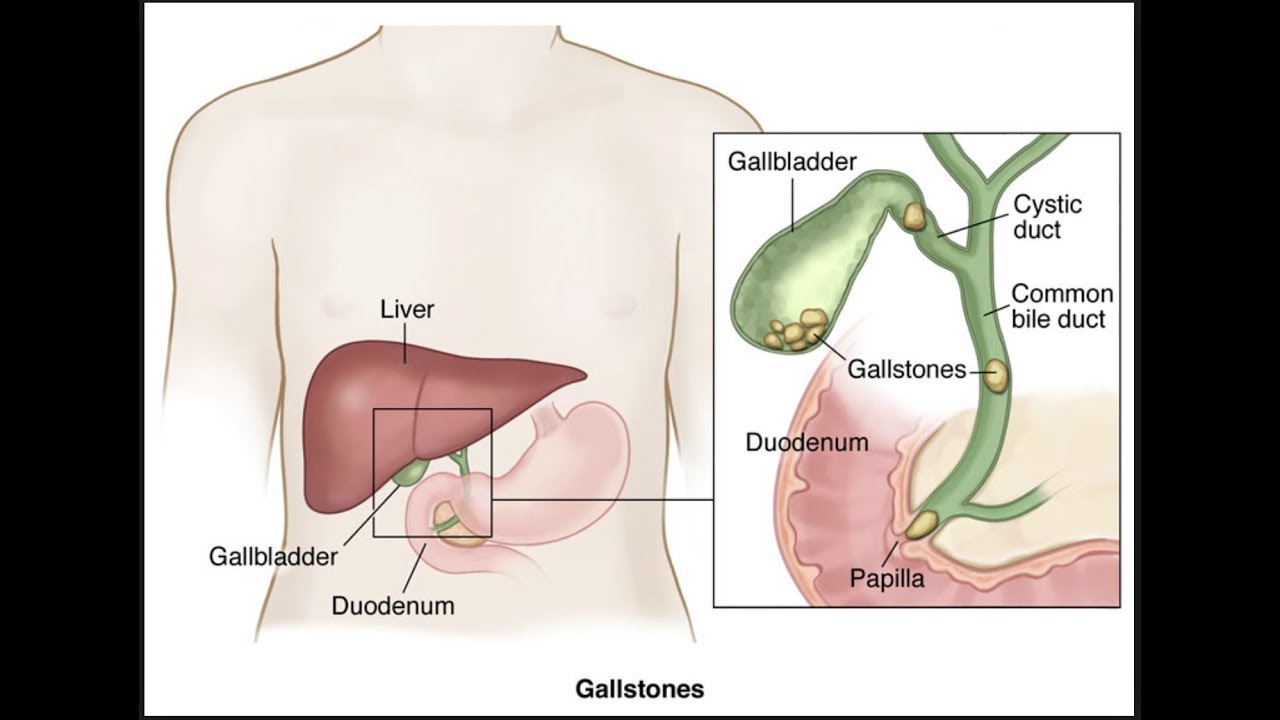
Can follow cholelithiasis, now the stone has broken free and moved down into the common bile duct.
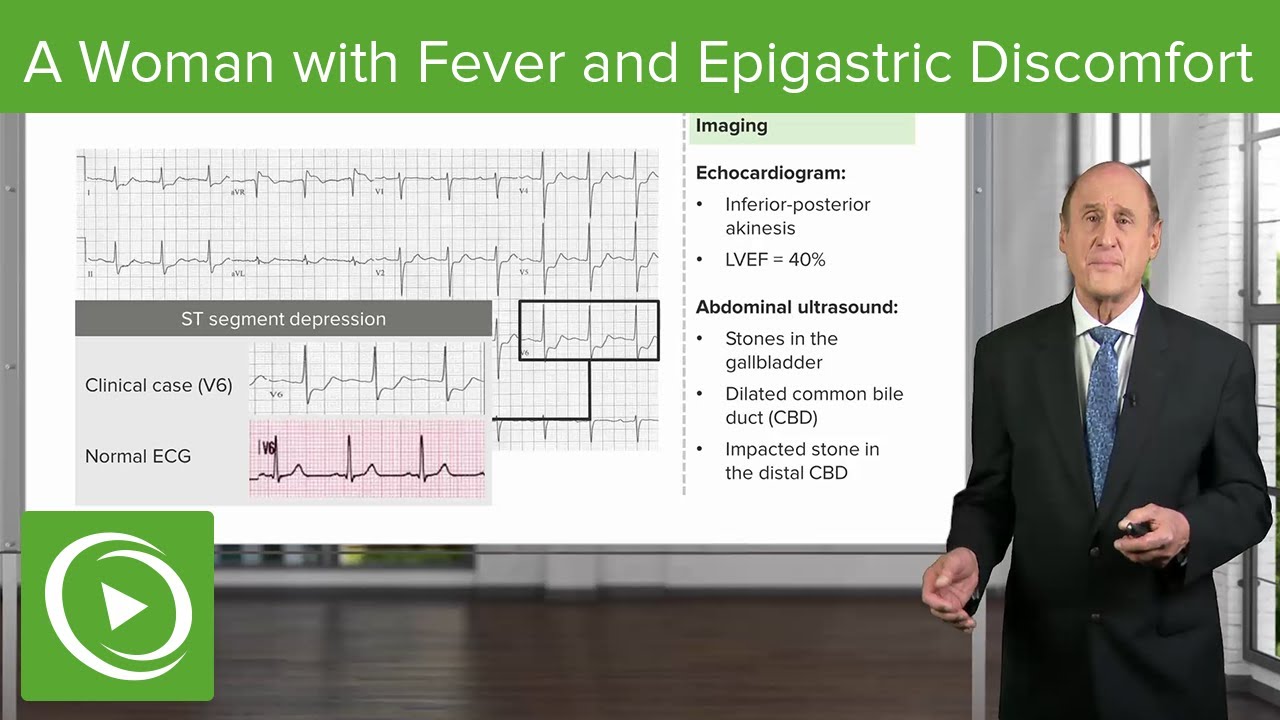
Case: 62-year-old Woman with Fever & Epigastric Discomfort
Treatment
The liver processes bilirubin (a pigment found in red blood cells, when they die, the bilirubin goes to the liver processing). The bilirubin travels into the gallbladder, but if there’s a stone obstructing the common bile duct, it backs up into the liver and out through the central vein out into the bloodstream. When the blood gets to the kidneys there’s dark colored urine. If there’s a fever it takes us down a different path.
Right upper quadrant pain, also in scapular area and epigastric pain, eyes are yellow, nausea & vomiting. Clay colored stool (bilirubin and bile acids give the stool its brown color). Dark colored urine. The bilirubin and bile salts cause the skin to itch.
Labs
- Liver Function Tests – AST/ALT
- GGT (extremely specific to the gallbladder) & ALP
- CBC to check white count
Diagnosis and treatment are the same. They send a scope down through the stomach into the intestine, turn it up towards to common bile duct and into the duct…if they see the stone, they can pluck it out. This is called ERCP + Sphincterotomy.
COMPLCATIONS
- Ascending cholangitis – This is an infectious process creeping up from the intestines into the common bile duct. This presents with something called the Charcot’s Triad: fever – right upper quadrant pain – jaundice. The fever is the big sign, and this is an emergency.
- SIRS; When this bacteria gets into the blood stream it results in systemic inflammatory response syndrome (SIRS). Heart rate is tachycardic , heart rate 90+, fever, white count over 12,000, hyperventilation, skin is warm to the touch, you go into septic shock with altered mental status. Diagnosis is the Raynold’s Triad (the extreme of Charcot’s Triad). In labs, conjugated bilirubin is going to be high. Liver function tests are done.