Spiny Pigweed
Constituents
Spiny Pigweed, scientifically known as Amaranthus spinosus, is a species of flowering plant in the amaranth family. This plant is notable for its spiny stems and leaves, which can make it a troublesome weed in agricultural settings. Despite its reputation as a weed, Spiny Pigweed has various uses and ecological roles.
Identification
Spiny Pigweed is easily recognizable by its distinctive features:
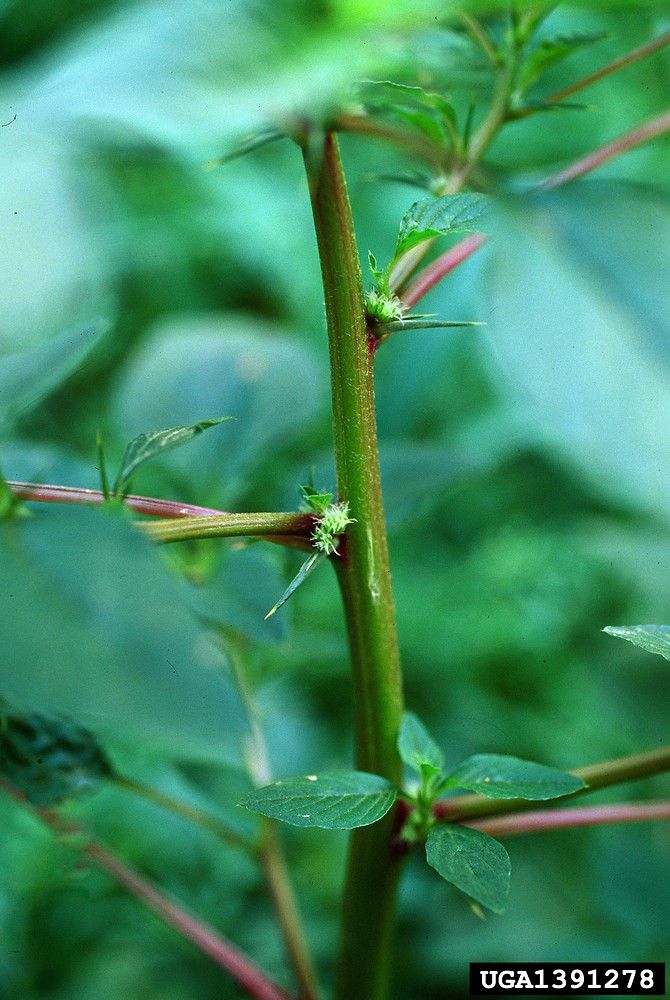
- Stems: The stems are erect, branched, and can grow up to 1.5 meters tall. They are often green or reddish and are covered with sharp spines.
- Leaves: The leaves are simple, alternate, and lance-shaped, with a prominent midrib. They are typically green and can be up to 15 cm long.
- Flowers: The plant produces small, greenish flowers that are clustered in dense, spiny inflorescences. These flowers are unisexual, with male and female flowers on the same plant.
- Seeds: The seeds are small, black, and shiny, and are produced in large quantities, contributing to the plant's ability to spread rapidly.
Habitat and Distribution
Spiny Pigweed is a highly adaptable plant that can thrive in a variety of environments. It is commonly found in:
- Agricultural fields: It often invades crops such as corn, soybeans, and cotton, where it competes for resources.
- Disturbed areas: It is frequently found in areas that have been disturbed by human activity, such as roadsides, construction sites, and waste areas.
- Natural habitats: It can also grow in natural settings, including grasslands and open woodlands.
The plant is native to tropical regions of the Americas but has spread to many parts of the world, including Africa, Asia, and Australia, where it is considered an invasive species.
Ecological Impact
Spiny Pigweed can have significant ecological impacts, particularly in agricultural settings:
- Competition: It competes with crops for light, water, and nutrients, which can reduce crop yields.
- Allelopathy: The plant produces chemicals that can inhibit the growth of other plants, further enhancing its competitive advantage.
- Habitat alteration: In natural settings, it can alter habitats by outcompeting native vegetation, which can affect local biodiversity.
Control and Management
Managing Spiny Pigweed can be challenging due to its rapid growth and prolific seed production. Effective control strategies include:
- Cultural practices: Crop rotation, cover cropping, and maintaining healthy soil can help reduce the establishment of Spiny Pigweed.
- Mechanical control: Regular mowing, tilling, and hand-pulling can be effective, especially when done before the plant sets seed.
- Chemical control: Herbicides can be used, but care must be taken to select appropriate products and apply them correctly to avoid resistance and environmental harm.
- Biological control: Research is ongoing into potential biological control agents, such as insects or pathogens that specifically target Spiny Pigweed.
USES AND BENEFITS
Despite its status as a weed, Spiny Pigweed has several uses and benefits:
- Nutritional value: The leaves and seeds are edible and are rich in vitamins, minerals, and protein. They are used as a food source in some cultures.
- Medicinal properties: The plant has been used in traditional medicine to treat various ailments, including digestive issues, respiratory problems, and skin conditions.
- Ecological role: It can provide habitat and food for wildlife, including insects and birds.