White Knight
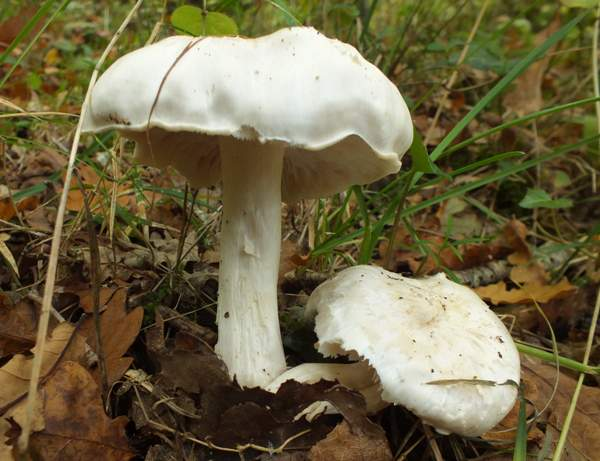
This mushroom is notable for its distinctive white appearance and its association with certain types of trees.
Identification
Identifying the White Knight involves examining several key characteristics:
- Cap: The cap of the White Knight is typically white to off-white and can range from 5 to 10 cm in diameter. It starts out convex and flattens with age, often developing a slightly depressed center. The surface is smooth and may become slightly sticky when wet.
- Gills: The gills are white, crowded, and attached to the stem. They may turn yellowish with age or when bruised.
- Stem: The stem is also white, measuring 5 to 10 cm in length and 1 to 2 cm in thickness. It is solid and firm, with a slightly bulbous base.
- Spore Print: The spore print of Tricholoma album is white.
- Odor and Taste: This mushroom has a distinctive, unpleasant odor often described as farinaceous (mealy) or like old flour. The taste is similarly unpleasant, which is a key factor in its identification.
Habitat
The White Knight is typically found in temperate regions of Europe and North America. It forms mycorrhizal associations with various types of trees, particularly:
- Beech (Fagus spp.)
- Oak (Quercus spp.)
- Pine (Pinus spp.)
These mushrooms are usually found growing on the ground in deciduous and mixed forests. They prefer well-drained, acidic soils and are often seen in the autumn months.
Edibility
Despite its appealing appearance, the White Knight is considered inedible due to its unpleasant taste and odor. Some sources even suggest that it may be mildly toxic, causing gastrointestinal distress if consumed. Therefore, it is not recommended for culinary use.
Ecological Significance
The White Knight plays a crucial role in forest ecosystems through its mycorrhizal relationships. These symbiotic associations benefit both the mushroom and the host tree:
- Nutrient Exchange: The fungus helps the tree absorb water and essential nutrients like phosphorus and nitrogen from the soil. In return, the tree supplies the fungus with carbohydrates produced through photosynthesis.
- Soil Health: By decomposing organic matter, the White Knight contributes to soil health and nutrient cycling, which supports overall forest vitality.
Similar Species
Several other white mushrooms can be confused with Tricholoma album. It is important to distinguish between them to avoid potential health risks:
- Tricholoma columbetta: This species is also white but has a more pleasant odor and taste. It is considered edible.
- Clitocybe dealbata: Known as the Ivory Funnel, this mushroom is toxic and can cause severe gastrointestinal symptoms. It has a similar white appearance but can be distinguished by its funnel-shaped cap and decurrent gills.
- Amanita virosa: Also known as the Destroying Angel, this highly toxic mushroom is pure white and can be deadly if ingested. It has a volva (a cup-like structure at the base of the stem) and free gills, which are key identifying features.