Lanceleaf Buckthorn
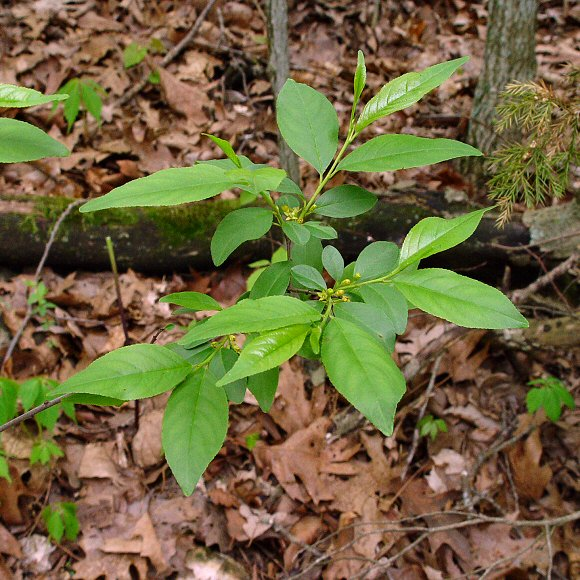
Rhamnus lanceolata, commonly known as the lanceleaf buckthorn, is a species of flowering plant in the buckthorn family, Rhamnaceae. This deciduous shrub or small tree is native to North America, particularly found in the central and eastern United States. It is known for its distinctive lance-shaped leaves and small, greenish-yellow flowers.
Botanical Characteristics
Leaves
The leaves of Rhamnus lanceolata are one of its most distinguishing features. They are:
- Lance-shaped, hence the name "lanceolata"
- Simple and alternate
- Typically 2-4 inches long
- Glossy green on the upper surface and paler underneath
- Margins are finely serrated
Flowers and Fruits
Rhamnus lanceolata produces small, inconspicuous flowers that are:
- Greenish-yellow in color
- Arranged in clusters
- Blooming in late spring to early summer
The fruit of the lanceleaf buckthorn is a small drupe:
- Initially green, turning black when mature
- About 1/4 inch in diameter
- Contains 2-3 seeds
Bark and Twigs
The bark of Rhamnus lanceolata is:
- Smooth and gray when young
- Developing shallow fissures and a darker color as it ages
Twigs are:
- Slender and grayish-brown
- Often have small, thorn-like projections
Habitat and Distribution
Rhamnus lanceolata thrives in a variety of habitats, including:
- Woodlands
- Prairies
- Rocky slopes
- Stream banks
It prefers well-drained soils and can tolerate both full sun and partial shade. This adaptability allows it to occupy a wide range of ecological niches.
Ecological Importance
Rhamnus lanceolata plays a significant role in its native ecosystems. It provides:
- Food for wildlife: The fruits are consumed by birds and small mammals.
- Habitat: Dense thickets offer shelter for various animals.
- Soil stabilization: Its root system helps prevent soil erosion, particularly on slopes and stream banks.
Cultivation and Uses
Ornamental Use
Due to its attractive foliage and adaptability, Rhamnus lanceolata is sometimes used in landscaping. It can be planted as:
- A hedge or screen
- A specimen plant in gardens
Medicinal Use
Historically, various parts of the plant have been used in traditional medicine. The bark and leaves were sometimes used for their:
- Laxative properties
- Treatment of skin ailments
However, it is important to note that the use of Rhamnus lanceolata for medicinal purposes should be approached with caution and under professional guidance, as some species in the Rhamnus genus can be toxic.
Conservation Status
Rhamnus lanceolata is not currently listed as threatened or endangered. However, like many native plants, it faces challenges from habitat loss and competition with invasive species. Conservation efforts focus on:
- Protecting natural habitats
- Promoting the use of native plants in landscaping
Potential Issues
While Rhamnus lanceolata is beneficial in its native range, it is important to manage its growth to prevent it from becoming invasive. In some areas, related species of buckthorn have become problematic, outcompeting native vegetation and altering ecosystems. Proper identification and management practices are essential to ensure that Rhamnus lanceolata remains a positive component of its environment.