CADASIL
The most common form of hereditary stroke disorder, and is thought to be caused by mutations of the Notch 3 gene on chromosome 19. The disease belongs to a family of disorders called the leukodystrophies. The most common clinical manifestations are migraine headaches and transient ischemic attacks or strokes, which usually occur between 40 and 50 years of age, although MRI is able to detect signs of the disease years prior to clinical manifestation of disease

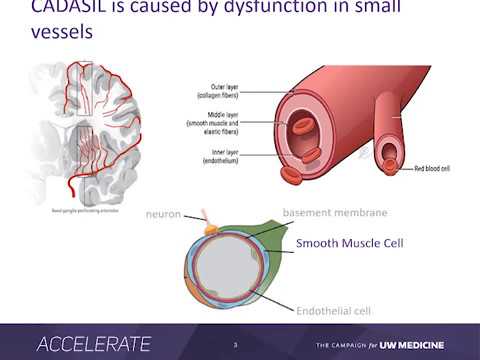
Cerebral Autosomal Dominant Arteriopathy with Subcortical Infarcts and Leukoencephalopathy (CADASIL) is a rare genetic disorder that affects the small blood vessels in the brain. This condition is characterized by a range of neurological symptoms and is primarily caused by mutations in the NOTCH3 gene.
Genetic Basis
CADASIL is an autosomal dominant disorder, meaning that a single copy of the mutated gene inherited from either parent can cause the disease. The NOTCH3 gene, located on chromosome 19, is responsible for encoding a protein that plays a critical role in the development and function of vascular smooth muscle cells. Mutations in this gene lead to the accumulation of abnormal proteins in the walls of small blood vessels, particularly in the brain, resulting in the characteristic symptoms of CADASIL.
Symptoms and Clinical Features
The symptoms of CADASIL can vary widely among individuals, even within the same family. Common clinical features include:
- Migraine with aura: Often one of the earliest symptoms, migraines in CADASIL patients are frequently accompanied by visual disturbances or other sensory phenomena.
- Recurrent strokes or transient ischemic attacks (TIAs): These events typically begin in mid-adulthood and can lead to progressive neurological decline.
- Cognitive impairment: Many individuals with CADASIL experience gradual cognitive decline, which can progress to dementia.
- Mood disturbances: Depression and mood swings are common, potentially exacerbating the cognitive and physical challenges faced by patients.
- Motor and gait disturbances: As the disease progresses, individuals may develop difficulties with movement and balance.
Diagnosis
Diagnosing CADASIL can be challenging due to its varied presentation and overlap with other neurological conditions. A combination of clinical evaluation, family history, and specialized tests is often required. Key diagnostic tools include:
- Genetic testing: Identifying mutations in the NOTCH3 gene is the definitive method for diagnosing CADASIL.
- Magnetic Resonance Imaging (MRI): Brain MRIs typically reveal characteristic white matter changes and subcortical infarcts, which are indicative of the disease.
- Skin biopsy: In some cases, a skin biopsy may be performed to detect the presence of granular osmiophilic material (GOM) deposits, which are a hallmark of CADASIL.
Management and Treatment
Currently, there is no cure for CADASIL, and treatment focuses on managing symptoms and preventing complications. Strategies include:
- Stroke prevention: Controlling risk factors such as hypertension, diabetes, and hyperlipidemia is crucial. Antiplatelet therapy may be recommended to reduce the risk of stroke.
- Migraine management: Medications such as beta-blockers, antiepileptics, or antidepressants may be used to prevent or alleviate migraine symptoms.
- Cognitive and psychological support: Cognitive rehabilitation and psychological counseling can help manage cognitive decline and mood disturbances.
- Physical therapy: Tailored exercise programs can assist in maintaining mobility and balance.
Prognosis
The progression of CADASIL varies significantly among individuals. While some may experience a relatively mild course, others may face severe disability. Early diagnosis and proactive management of symptoms can improve quality of life and potentially slow disease progression.
Research and Future Directions
Ongoing research aims to better understand the pathophysiology of CADASIL and develop targeted therapies. Advances in genetic research and molecular biology hold promise for future treatments that could modify the disease course or prevent its onset.