Common Ragweed
See also: Ambrosia (genus)


Edibility:
The seeds contain an oil resembling soybean oil and has been suggested for food use.
RAGWEED: THIS FOE MAY BE A FRIEND TOO
Constituents
- Listing on Duke's Database
- Sequence polymorphism of Amb a I and Amb a II, the major allergens in *Ambrosia artemisiifolia*(short ragweed)
- Sesquiterpene Lactones of *Ambrosia artemisiifolia* L. and *Ambrosia trifida* L. Species
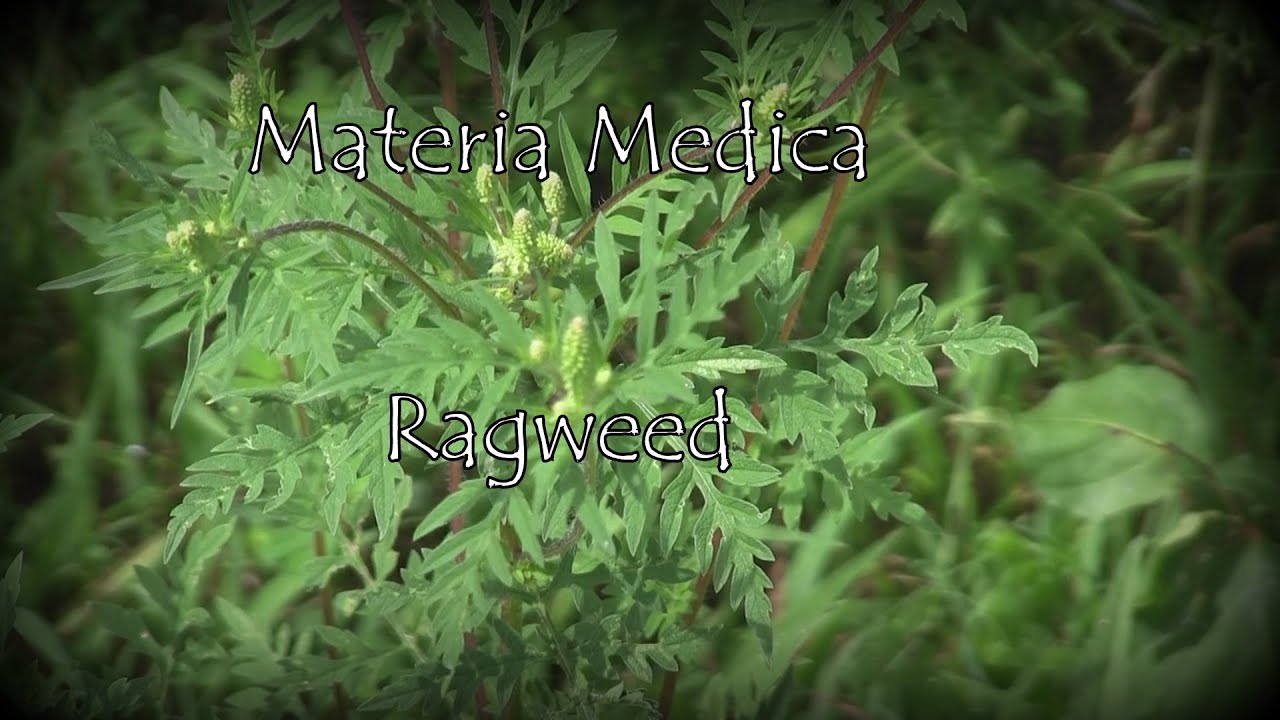
Ambrosia artemisiifolia, common ragweed, is the most widespread plant of the genus Ambrosia in North America. It has also been called annual ragweed, bitterweed, blackweed, carrot weed, hay fever weed, Roman wormwood,stammerwort, stickweed, tassel weed, and American wormwood. It is native to North America but a widespread and common invasive weed in much of South America, Australia, and Eurasia.
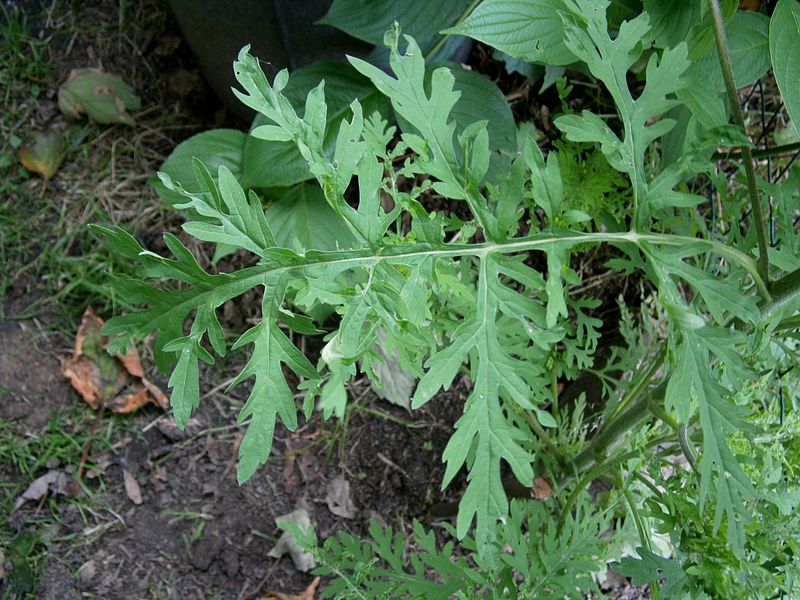
The species name, artemisiifolia, is given because the leaves were thought to bear a resemblance to the leaves of Artemisia, the true wormwoods.
Ambrosia artemisiifolia is used in phytoremediation projects, removing heavy metals such as Lead from the soil
A tincture of this ragweed makes a good remedy against ragweed allergies. Be sure to use flowering tops full of pollen for the tincture.
Constituents
- Isolation and identification of psilostachyin B from *Ambrosia artemisiifolia*L.
- *Ambrosia artemisiifolia* as a Source of Biologically Active Substances
- Pharmacologically active substances from *Ambrosia artemisiifolia*. Part 2
Ambrosia artemisiifolia, also known as common ragweed, has various medicinal properties. It can be used as an astringent, antiseptic, emetic, emollient, and febrifuge (or fever reducer). Some people use it as a homeopathic remedy for hay fever and other symptoms, taking it as pellets or tea¹.
Early Native American healers valued this plant for medicinal uses and took advantage of its topical and internal applications. Herbalists use ragweed to relieve nausea, menstrual discomfort, and fever, and some Native American tribes have used the root of the ragweed plant to make tea that works as a laxative. The juice from crushed ragweed leaves can be applied to insect bites or poison ivy rashes to soothe irritation.
Physio-Medical Therapeutics, Materia Medica and Pharmacy BY T. J. LYLE, A.M.M. 1897
This herb is a mild, stimulating, astringent tonic. A hot infusion relieves the circulation, giving a good outward flow of blood, and gives very favourable results in dysentery, diarrhoea, and in feverish conditions where the bowels fire too lax. A strong infusion makes an excellent wash in case of relaxed vagina, prolapsus uteri and leucorrhoea. It is the equal if not the superior of hamamelis virgo in a case of weakened digestion with laxity of the bowels ambrosia is a good tonic to the mucous membrane throughout. Zingiber renders it of more importance to the circulation, and taraxacum or euonymous renders it of more importance to the hepatic apparatus and alvine canal in chronic dysentery and diarrhoea. It is claimed that during the season of the wafting on the breezes of the pollen of ambrosia that hay fever is more prevalent. The fresh juice of the ambrosia gives good results in cases of rhus poisoning. Dr. F. G. Hoener recommends the ambrosia as a good tonic, and for the removal of the after effects of quinine
The Physiomedical Dispensatory by William Cook, M.D., 1869
Properties and Uses: The leaves are stimulating and astringing, bitter, and permanent in action. An infusion is useful in diarrhea and dysentery of a passive character; in uterine, gastric, and pulmonic hemorrhages; and in degenerate leucorrhea as an injection and drink. It is also a valuable local styptic; and may be applied to bleeding surfaces, as in piles, epistaxis, wounds, etc., either in powder or infusion. A use of a strong decoction influences the kidneys considerably, sustains the tone of the stomach, and slowly elevates the circulation; and these actions render it useful in the treatment of chronic dropsies, especially when combined with hepatics and stimulating diaphoretics. A very strong decoction, used freely, is reputed among the people in some sections to be a reliable antiperiodic; and many of the actions of the agent certainly suggest properties analogous to cinchona. It is said to be useful in poultices to phagedaenic ulcers– checking putrescence; and I do not doubt but such is the case. The article is too much overlooked by the profession.
Ambrosia Trifida is probably similar in properties to the above species.
Pharmaceutical Preparations: I. Infusion. Macerate an ounce of ambrosia and one drachm of zingiber in a quart of hot water. Dose, one to two fluid ounces every two, three, or four hours, pro re nata. II. Compound decoction. Ambrosia, four ounces; fraxinus acuminata, two ounces; liatris spicata, two ounces. Macerate in four pints of water, strain and reduce to two pints. Dose, a fluid ounce four or five times a day. Useful in dropsies, in conjunction with baths, and with physic if the case should need it. The same article may be formed into a sirup in the usual manner.
Phytoremediation
Ambrosia artemisiifolia is used in phytoremediation projects remediating soil pollution, for removing heavy metals such as Lead from contaminated soil.
Studies
Allergies
- Modifiable Risk Factors for Common Ragweed (*Ambrosia artemisiifolia*) Allergy and Disease in Children: A Case-Control Study
- Production of allergenic pollen by ragweed (*Ambrosia artemisiifolia*L.) is increased in CO2-enriched atmospheres
- Efficacy and safety of subcutaneous immunotherapy with a biologically standardized extract of *Ambrosia artemisiifolia* pollen: a double‐blind, placebo‐controlled …
Cancer
- Antiproliferative and cytotoxic effects of sesquiterpene lactones isolated from *Ambrosia artemisiifolia* on human adenocarcinoma and normal cell lines
- Isolation of compounds from the roots of *Ambrosia artemisiifolia* and their effects on human cancer cell lines