Maltodextrin
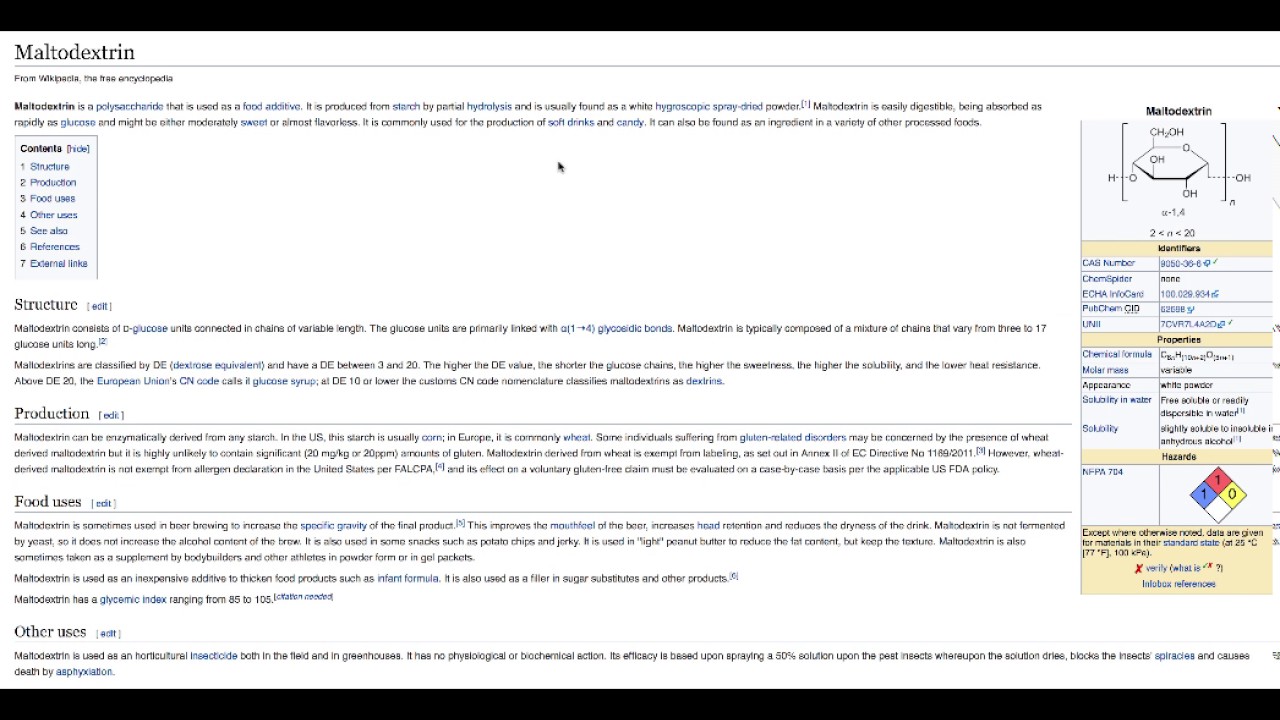
Maltodextrin is a white powder made from corn, rice, potato starch, or wheat. Even though it comes from plants, it’s highly processed. To make it, first the starches are cooked, and then acids or enzymes such as heat-stable bacterial alpha-amylase are added to break it down further. The resulting white powder is water-soluble and has a neutral taste. Maltodextrins are closely related to corn syrup solids, with the one difference being their sugar content. Both undergo hydrolysis, a chemical process involving the addition of water to further assist breakdown. However, after hydrolysis, corn syrup solids are at least 20 percent sugar, while maltodextrin is less than 20 percent sugar.
Maltodextrin is generally used as a thickener or filler to increase the volume of a processed food. It’s also a preservative that increases the shelf life of packaged foods. It’s inexpensive and easy to produce, so it’s useful for thickening products such as instant pudding and gelatins, sauces, and salad dressings. It can also be combined with artificial sweeteners to sweeten products such as canned fruits, desserts, and powdered drinks. It’s even used as a thickener in personal care items such as lotion and hair care products.
The high GI of maltodextrin means it can cause spikes in your blood sugar level, especially if it’s consumed in large amounts. Because of this, you may want to avoid or limit it if you have diabetes or insulin resistance. It should also be avoided if you’re predisposed to developing diabetes. Another reason to limit maltodextrin is to keep your gut bacteria healthy. According to a 2012 study published in PLoS ONE, maltodextrin can change your gut bacteria composition in a way that makes you more susceptible to disease. It can suppress the growth of probiotics in your digestive system, which are important for immune system function. The same study showed that maltodextrin can increase the growth of bacteria such as E. coli, which is associated with autoimmune disorders like Crohn’s disease. If you’re at risk for developing an autoimmune or digestive disorder, then avoiding maltodextrin may be a good idea. (source)