Largeleaf Pondweed
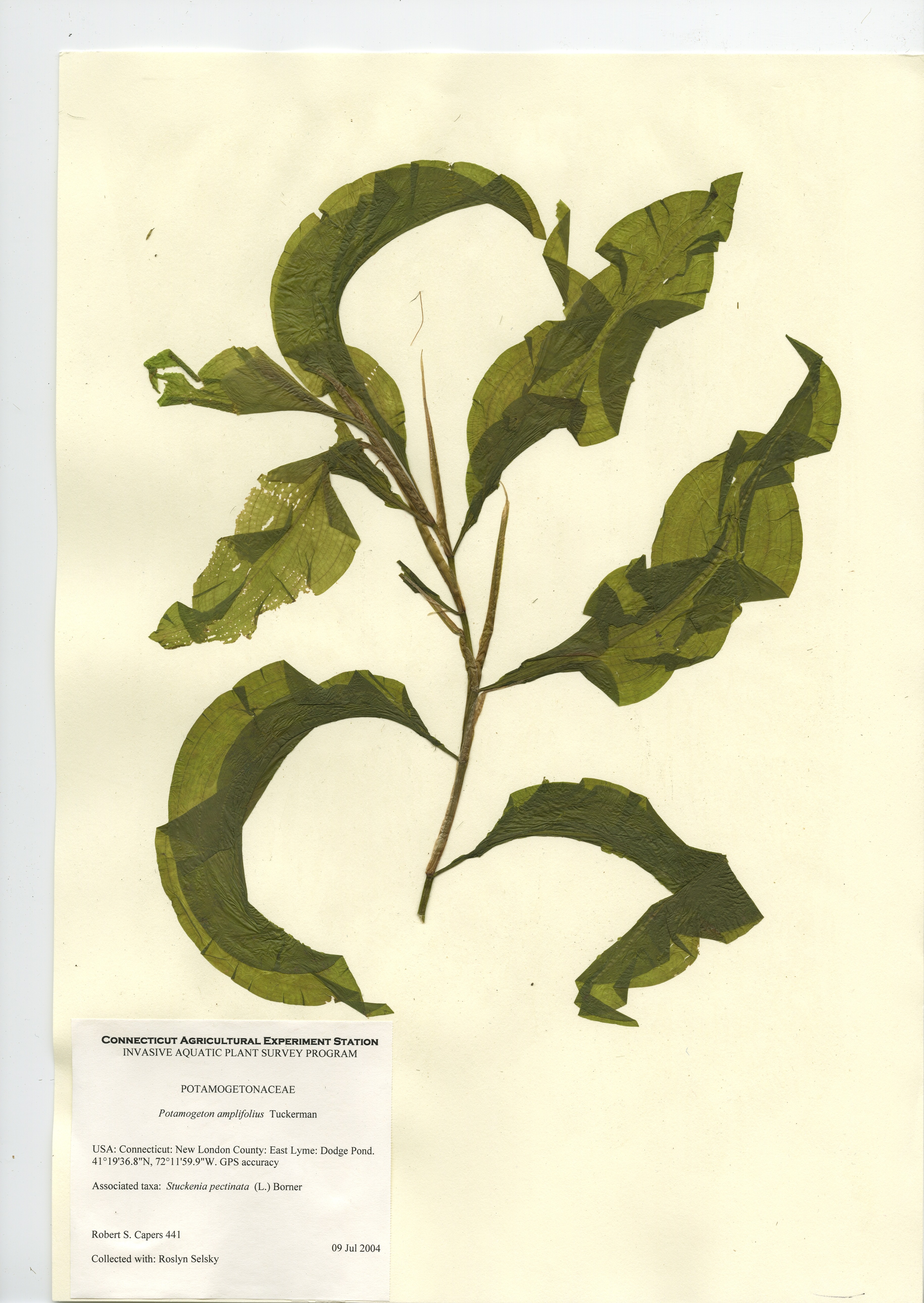
Largeleaf Pondweed, scientifically known as Potamogeton amplifolius, is a perennial aquatic plant that is commonly found in freshwater environments such as lakes, ponds, and slow-moving rivers. This species is notable for its broad, wavy leaves and its role in aquatic ecosystems. Below, we delve into various aspects of this fascinating plant, including its identification, habitat, ecological importance, and management.
Identification
Largeleaf Pondweed is easily recognizable due to its distinctive features:
- Leaves: The leaves are large, broad, and wavy, typically ranging from 10 to 20 cm in length and 2 to 5 cm in width. They are usually submerged but can sometimes float on the water surface.
- Stem: The stem is robust and can grow up to 2 meters in length. It is often branched and supports the large leaves.
- Flowers: The plant produces small, inconspicuous flowers that are arranged in spikes. These spikes emerge above the water surface and are typically greenish-brown.
- Fruits: The fruits are small, hard, and nut-like, containing seeds that help in the propagation of the species.
Habitat
Largeleaf Pondweed thrives in a variety of freshwater habitats:
- Lakes and Ponds: It is commonly found in the shallow areas of lakes and ponds where the water is clear and nutrient-rich.
- Rivers and Streams: The plant can also grow in slow-moving rivers and streams, particularly in areas with a soft, muddy substrate.
- Depth: It generally prefers water depths ranging from 0.5 to 3 meters but can sometimes be found at greater depths.
Ecological Importance
Largeleaf Pondweed plays a crucial role in aquatic ecosystems:
- Habitat: It provides habitat and shelter for a variety of aquatic organisms, including fish, invertebrates, and amphibians.
- Food Source: The plant is a vital food source for many species of waterfowl and fish. The leaves, stems, and seeds are consumed by ducks, geese, and other water birds.
- Water Quality: By stabilizing the sediment and reducing erosion, Largeleaf Pondweed helps maintain water clarity and quality. It also absorbs nutrients, which can help prevent algal blooms.
Reproduction and Growth
The reproduction and growth of Largeleaf Pondweed involve both sexual and asexual methods:
- Sexual Reproduction: The plant produces flowers and seeds, which are dispersed by water currents and animals. The seeds germinate and grow into new plants.
- Asexual Reproduction: Largeleaf Pondweed can also reproduce vegetatively through rhizomes and fragments. Rhizomes are underground stems that produce new shoots, while fragments of the plant can take root and grow into new individuals.
Management and Conservation
Managing Largeleaf Pondweed involves balancing its ecological benefits with the need to control its growth in certain situations:
- Invasive Potential: While not typically considered invasive, Largeleaf Pondweed can become problematic in some areas where it grows excessively, potentially interfering with recreational activities such as boating and swimming.
- Control Methods: Various methods can be used to manage its growth, including mechanical removal, herbicides, and biological control. Mechanical removal involves cutting and harvesting the plants, while herbicides can be used to reduce their abundance. Biological control involves introducing natural predators or competitors to keep the plant population in check.
- Conservation: In areas where Largeleaf Pondweed is declining due to habitat loss or water pollution, conservation efforts may be necessary. These efforts can include habitat restoration, pollution control, and the protection of water quality.