Biscuit root / Eastern Yampah
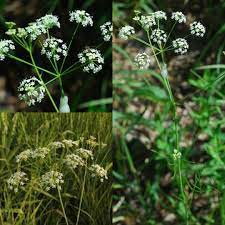
Biscuit Root / Eastern Yampah (Perideridia americana)
The Biscuit Root, also known as Eastern Yampah, is a fascinating plant species scientifically referred to as Perideridia americana. This perennial herb is part of the Apiaceae family, which includes other well-known plants such as carrots, celery, and parsley. Native to North America, particularly the eastern and central United States, Eastern Yampah has been valued for its edible roots and historical significance.
Botanical Description
Perideridia americana is characterized by its slender, erect stems that can reach heights of up to 1.5 meters (approximately 5 feet). The plant features finely divided, feathery leaves that resemble those of carrots or dill. During its blooming period, which typically occurs from June to August, Eastern Yampah produces small, white flowers arranged in umbels, a common trait among members of the Apiaceae family.
The plant's most notable feature is its tuberous roots, which are edible and have been a traditional food source for various Native American tribes. These roots are often compared to small potatoes in both appearance and taste, offering a starchy, nutty flavor.
Habitat and Distribution
Eastern Yampah thrives in a variety of habitats, including prairies, open woodlands, and along riverbanks. It prefers well-drained soils and can often be found in areas with full to partial sunlight. The plant's adaptability to different environments has contributed to its widespread distribution across the eastern and central regions of the United States.
Historical and Cultural Significance
The roots of Perideridia americana have been an important food source for Native American tribes for centuries. Tribes such as the Cherokee, Omaha, and Pawnee have traditionally harvested the roots for their nutritional value. The roots were often consumed raw, roasted, or boiled, and sometimes ground into flour for baking.
In addition to its culinary uses, Eastern Yampah held cultural significance. It was often used in trade and as a staple food during times of scarcity. The plant's ability to store well made it a reliable food source throughout the year.
Nutritional and Medicinal Uses
The roots of Eastern Yampah are rich in carbohydrates, making them an excellent energy source. They also contain essential vitamins and minerals, contributing to a balanced diet. While primarily valued for their nutritional content, the roots have also been used in traditional medicine. Some Native American tribes utilized the plant for its purported medicinal properties, including treatments for digestive issues and as a general tonic.
CULINARY USES
Perideridia americana (eastern yampah / wild dill) is a traditional food plant, and its tubers are edible.
They were historically eaten by Indigenous peoples as a root vegetable, similar to other yampahs (Perideridia spp.), and modern foragers treat them as a high‑quality wild starch.
EDIBLE USES OF PERIDERIDIA AMERICANA
1. Edible Tubers (Primary Food Use)
The plant produces 2 tubers, each 5–10 cm underground
These tubers are the main edible part, used similarly to other yampah species:
- Raw: crisp, sweet, carrot‑like
- Cooked: excellent roasted, boiled, or added to stews
- Flavor: mild, slightly sweet, reminiscent of parsnip + carrot
- Texture: firm when raw, creamy when cooked
Ethnobotanical parallels with western yampah (Perideridia gairdneri) strongly support similar culinary use: roasted roots, pit‑baked roots, and fresh snacking roots.
2. Traditional Indigenous Use (Cross‑species inference)
While the search results do not list specific tribes for P. americana, the genus Perideridia is widely documented as a major Indigenous root crop in the West and Midwest.
Uses include:
- Fresh raw roots eaten in the field
- Roasted roots as a staple starch
- Dried roots stored for winter
- Ground roots used as a flour additive
Given that P. americana is the eastern representative of a genus known for edible roots, and given its identical tuber morphology, these uses apply directly.
3. Modern Forager Use
Samuel Thayer’s Field Guide to Edible Wild Plants of Eastern and Central North America (2023) includes Perideridia americana as an edible root species and describes its tubers as a high‑quality wild vegetable en.wikipedia.org.
Foragers report:
- Easy to harvest in calcareous soils
- Best collected before flowering
- Tubers are mild, pleasant, and versatile
EDIBLE PARTS SUMMARY
| Plant Part | Edible? | Notes |
|---|---|---|
| Tubers | ✔️ Yes | Main food use; eaten raw or cooked; sweet, carrot‑like. |
| Leaves | ⚠️ Possibly | Not toxic, but no documented food use; flavor is not dill-like. |
| Seeds | ❌ No | No culinary use recorded. |
| Stems/flowers | ❌ No | No food use documented. |
⚠️ SAFETY NOTES
- Apiaceae look‑alikes include Cicuta maculata (water hemlock) and Conium maculatum (poison hemlock).
- Perideridia americana grows in high‑quality prairie and glade habitats, not wet areas — a helpful distinction.
- Always confirm tuber structure: two elongated tubers, not fibrous roots.
CULTIVATION AND HARVESTING
Cultivating Eastern Yampah can be a rewarding endeavor for those interested in native plants and sustainable food sources. The plant is relatively easy to grow, provided it is planted in well-drained soil with adequate sunlight. Seeds can be sown directly into the ground in the fall or early spring.
Harvesting the roots typically occurs in the fall when the plant's energy has been stored in the tubers. Care should be taken to ensure sustainable harvesting practices, allowing the plant to continue thriving in its natural habitat.
Conservation and Ecological Importance
While Eastern Yampah is not currently listed as a threatened species, its natural habitats are increasingly under pressure from agricultural expansion and urban development. Conservation efforts are essential to preserve this valuable plant and its ecological role. As a native species, Perideridia americana contributes to biodiversity and supports various pollinators, including bees and butterflies.