Arp2/3 complex
The Arp2/3 Complex: Branching Out in Cell Biology
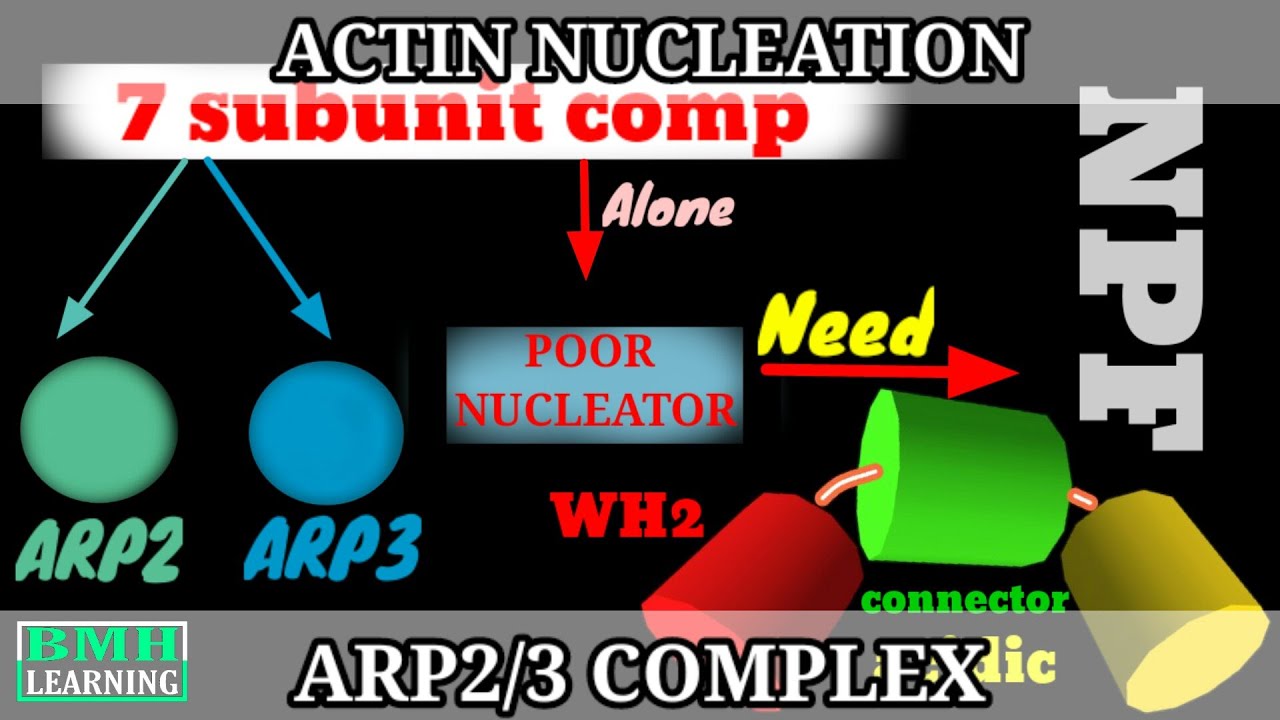
- Structure: The Arp2/3 complex is a seven-protein complex, a molecular machine that assembles and organizes actin filaments, the backbone of the cytoskeleton.
- Function: It acts as a nucleation site for actin polymerization, meaning it promotes the formation of new actin filaments.
- Branching Activity: Its unique ability is to create branched actin networks, where new filaments sprout at an angle from existing ones. This branching is essential for various cellular processes.
Key Processes Dependent on Arp2/3:
- Cell motility and migration: Branched actin networks generated by Arp2/3 drive cell movement, enabling cells to crawl, squeeze through tight spaces, and chase after targets.
- Endocytosis: Cells use Arp2/3 to create actin-rich structures that engulf and internalize molecules or particles from their surroundings.
- Cell division: Arp2/3 is involved in forming the actin cytoskeleton during cell division, ensuring proper chromosome segregation and cell separation.
- Cell shape changes: Branched actin networks help cells adopt diverse shapes, crucial for functions like immune cell movement and nerve cell communication.
Regulation and Mechanisms:
- The Arp2/3 complex doesn't work alone. It's activated by special proteins called nucleation-promoting factors (NPFs) that initiate branching at specific locations and times.
- This precise regulation ensures that actin branching occurs only when and where it's needed, maintaining cytoskeleton integrity and function.
Significance in Research:
- Understanding the Arp2/3 complex is crucial for:
- Deciphering how cells move and change shape.
- Understanding cell division and endocytosis.
- Developing potential therapies for diseases involving cytoskeleton dysfunction, such as cancer and immune disorders.
Videos
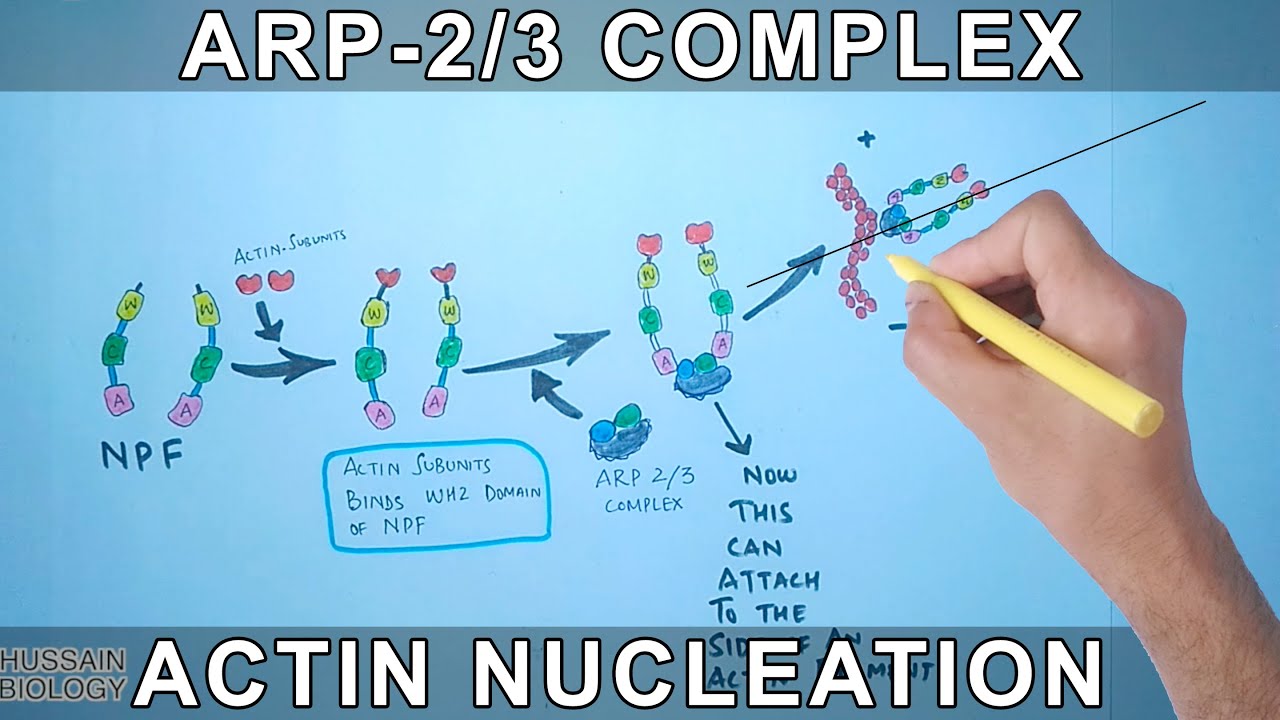
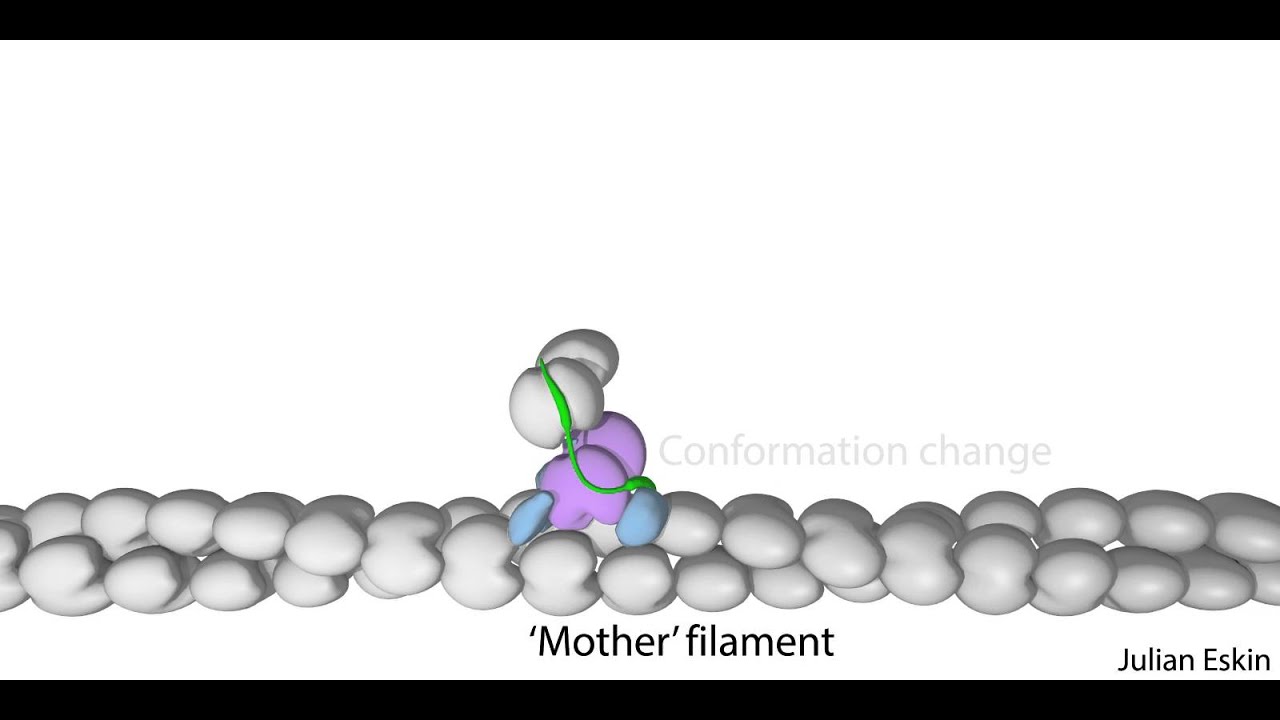
Arp2/3 complex mediated actin nucleation
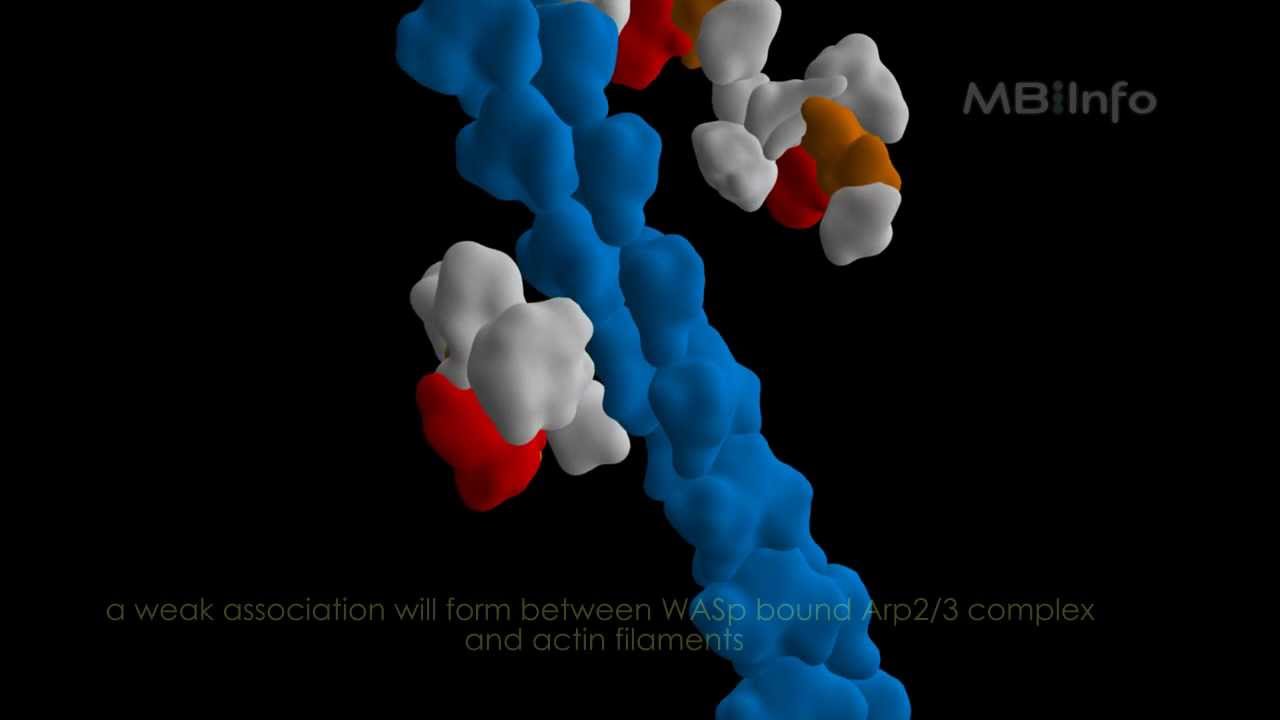
Actin Nucleation By ARP2/3 Complex | ARP2/3 Mediated Actin Nucleation | Actin Binding Proteins|
Study revealing structure of a protein complex may open doors to better disease research More than two decades ago scientists discovered the Arp2/3 complex, an actin (cellular protein) cytoskeketal nucleator which plays a crucial role in cell division, immune response, neurodevelopment other biological processes. But there has been no determined structure of the activated state of the complex until now, an achievement that may lay the foundation for uncovering its role in biology and in the development of disease. Researchers at Stony Brook University led by Saikat Chowdhury, PhD, determined the structure of Arp2/3 and describe it in a paper published in Nature Structural and Molecular Biology.