Phospholipids
PHOSPHOLIPIDS: THE TINY ARCHITECTS OF LIFE


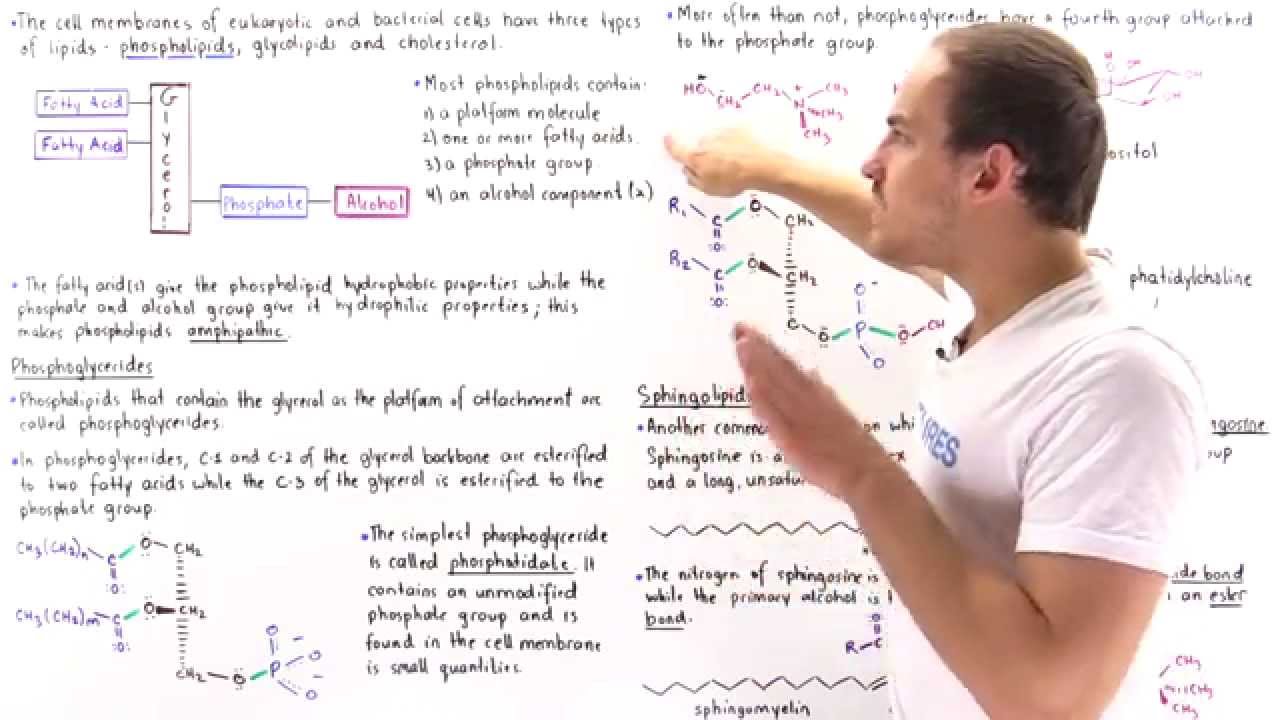
Phospholipids are molecules that act as the building blocks of cell membranes, those thin but essential barriers that enclose all living things! Imagine them as tiny bricks, neatly arranged to form the walls of every cell in your body and countless other organisms. But these "bricks" are far more than just structural elements; they play a crucial role in various cellular functions, making them vital for life as we know it.
Structure and Composition:
- Phospholipids consist of a glycerol backbone, two fatty acid tails, and a phosphate group linked to a head.
- The fatty acid tails, like oily chains, are hydrophobic (water-fearing) and form the interior part of the cell membrane.
- The phosphate group and head region are hydrophilic (water-loving) and face the outer and inner sides of the membrane, interacting with water and other molecules.
Key Roles:
- Building and maintaining cell membranes: Phospholipids join forces, with their tails tucked together and heads facing outwards, creating a stable and flexible bilayer, the foundation of cell membranes.
- Controlling what enters and leaves cells: The unique arrangement of hydrophobic and hydrophilic regions allows cells to selectively pass nutrients, signals, and waste products while keeping unwanted things out.
- Supporting cellular processes: Phospholipids participate in various processes like signal transduction, cell movement, and enzyme activity by influencing membrane flexibility and fluidity.
The phospholipid membrane of the cell is used for production of eicosanoids.
Beyond Cells:
- Phospholipids aren't just confined to cell membranes. They play a role in other vital functions like:
- Aiding digestion: They emulsify fats in food, helping your body absorb them.
- Lung function: They contribute to the surfactant that keeps alveoli in your lungs open for efficient gas exchange.
- Blood clotting: They're involved in the cascade of reactions that forms blood clots when needed.