Red Root / New Jersey Tea
See also: Ceanothus (genus)
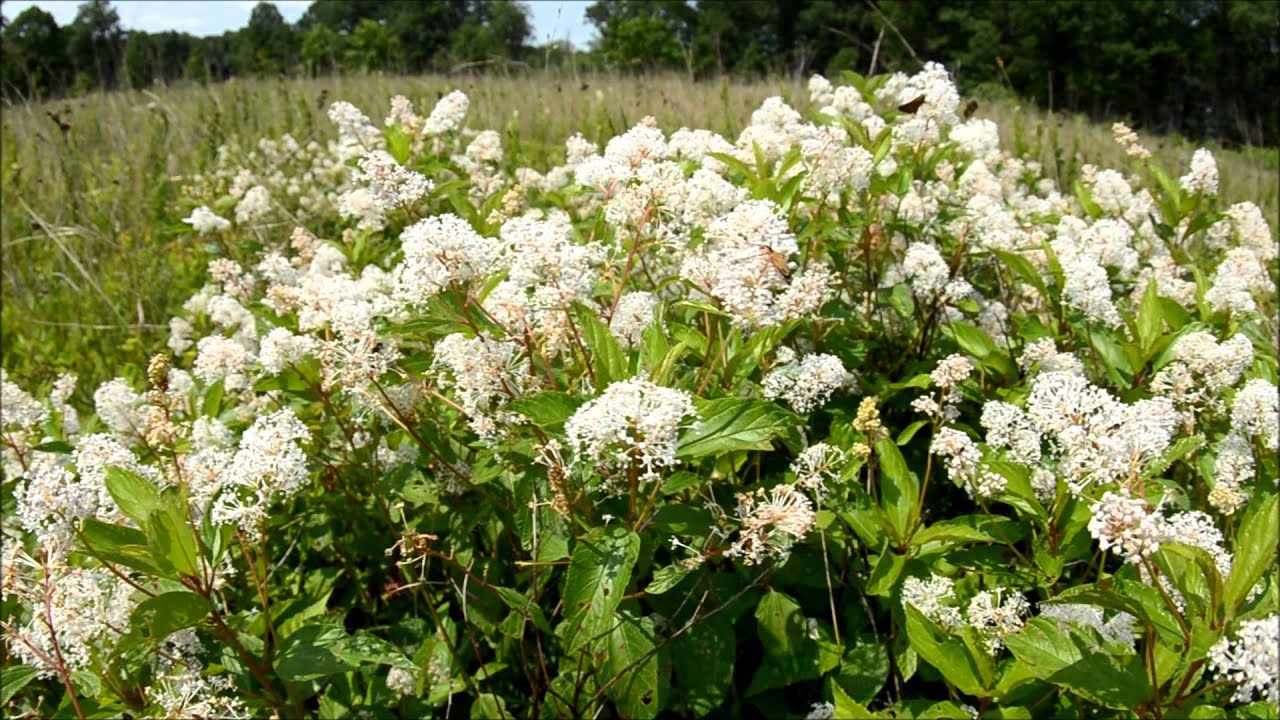

Parts used: lower branch (branch goes into soil) and root, shave off ¼ inch. Also both dried and fresh leaves
Qualities: a bit bitter, cold, dry; decongesting, stimulating, astringing, relaxing, stabilizing movement
Properties Lymphatic, astringent, anti-spirochete, anti-spasmotic, expectorant
Tropism: liver, spleen, lungs, uterus, blood
Ground: Sanguine & Phlegmatic krases; Expressive/Jue Yin & Dependant/Tai Yin biotypes; Lymphatic/Carbonic/Blue-Iris constitution
Constituents:
Cyclic peptide alkaloids (0.16% in the root cortex); including ceanothines A to E, americine, adouetines X and Y cyclic peptines
Triterpenes: including ceanthusic acid, ceanothenic acid, and betulic acid
Also frangularin, succinic/oxalic/malonic/malic/orthophos-phoric/pyrophosphric acids, quercetrin, pungent oil, resin, tannin, gum, lignin
- Ceanothus alkaloids. Americine
- A preliminary study of the alkaloidal principles of Ceanothus americanus and Ceanothus velutinus.
- The Constituents of Ceanothus Americanus. I. Ceanothic Acid
Effects
The tannins have an astringent effect. In blood taken from young rats, an aqueous-ethanol extract reduced blood-clotting time by 25%. However, results are difficult to assess. The hemostyptic effect is attributed to the acid fraction. It is still useful as an astringent, expectorant and antispasmodic.
The root is astringent. It has been shown that the drug contains a mixture of alkaloids which reside in the root bark; that an extract containing these alkaloids has the property of hastening blood coagulation when orally administered; that this effect on blood coagulation is apparent regardless of the age or sex of the subject; that this is due to an acceleration of the action of thromboplastin"
Uses
Used as an astringent, in the clotting of the blood, for fever, gonorrhea and syphilis. A powerful lymphatic cleanser, it helps shrink swollen lymph nodes and reduce an enlarged spleen. Combined with echinacea, it works well for tonsillitis, cysts, and infections in the lymph glands. It is very good for AIDS patients with a low platelet count, enlarged spleen, or swollen lymph nodes. Its important to keep the lymphatic system moving when you have a chronic illness. Use for serious lymphatic swelling in the neck, armpits, the groin. While its doing this cleansing it can raise the lymphocytes including T-cells. Bartonella can cause swollen lymph nodes, include in bartonella treatment. For babesia it helps move out broken cellular debris. Helps with treating Lyme. Used for whooping cough.
The astringent properties are useful as an application to wounds. The property of hastening blood coagulation makes this an invaluable remedy for lung hemorrhage.
Native American Uses
ALABAMA-injured feet and legs-A decoction is made by boiling the roots. This is cooled and used to bathe the injured part.
Homeopathic: used to treat enlarged spleen
1. CREATES ASTRICTION, REMOVES CONGESTION, MODERATES THE MENSES AND ARRESTS BLEEDING; DRIES MUCOUS DAMP AND ARRESTS DISCHARGE
uterus blood congestion with pelvic weight, copious menses, bleeding hemorrhoids
blood heat with mild skin rashes, spontaneous bleeding, irritability, unrest
CHRONIC BLOOD CONGESTION in general, congestive dysmenorhea
INTERMENSTRUAL BLEEDING, MENORRHAGIA in all conditions
LEUCORRHEA due to damp heat or damp cold
VENEREAL INFECTIONS
MOUTH, GUM & THROAT INFLAMMATIONS
Lymphadenitis, lymphocytic leukemia.
2. CLEARS HEAT, TRANSFORMS DAMP AND RELIEVES IRRITABILITY; STIMULATES AND DREDGES THE LIVER AND ACTIVATES THE LYMPH
liver Qi stagnation with flank soreness, constipation, irritability
liver/Spleen damp heat with nausea, jaundice, painful flanks and sides, bilious headache
LYMPH CONGESTION
SPLEEN ENLARGEMENT with left flank pain, sallow doughy skin
Hepatitis or cirrhosis with spleen involvement. It is specific for such situations when the platelet count is dropping.
Splenomegaly from infection (mononucleosis, malaria), toxicity or anemia
pelvic cysts and fibroids
HIGH BLOOD PRESSURE
Often combined with artemesia annua for malaria
It is an important herb in that it helps facilitate clearing of dead cellular tissue from the lymph system. When the immune system is responding to acute conditions or the onset of disease, as white blood cells kill disease pathogens they are taken to the lymph system for disposal. When the lymph system can clear out dead cellular material rapidly, the healing process is increased, sometimes dramatically. The herb shows especially strong action wherever any portion of the lymph system is swollen, infected, or inflamed. This includes lymph nodes, tonsils, (entire back of throat), spleen, appendix, and liver. There is some evidence that Red root's activity in the lymph nodes also enhances the lymph nodes' production of lymphocytes, especially the formation of T (killer) cells. It is especially effective in reducing inflammations in the spleen and liver from such things as excessive bacterial garbage (dead spirochetes!!), white blood cell detritus in the lymph, and red blood cell fragments in the blood in diseases like babesiosis. (Buhner, Healing Lyme, p. 185)
3. STIMULATES THE LUNGS AND EXPELS PHLEGM; RELAXES THE BRONCHI, OPENS THE CHEST AND RELIEVES WHEEZING
lung Qi constraint with difficult breathing, wheezing
WHOOPING COUGH
lung phlegm heat with coughing up white or yellow phlegm
The Physiomedical Dispensatory by William Cook, M.D., 1869
The thick root is red, and makes a fair dye. It yields its properties readily to water.
Properties and Uses: The root of this plant is medicinal, but is not very powerful or reliable. It is a mild stimulating astringent, with slight tonic qualities, and reported to be nervine and expectorant. It is principally useful as awash in sore mouth and weak ulcers; and also in chronic diarrhea as an injection for chronic gonorrhea and leucorrhea, and as a local application (by powder) on mild chancres. It is spoken of in syphilis, asthma and bronchitis, but is of doubtful efficacy in these cases, though a good alterant for milder cases. A decoction is made with an ounce of the root in a pint of boiling water; of which one to two fluid ounces may be given two or three times a day. It is sometimes used in compound alterant sirups.
Dr. J. Overholt, of Columbus City, Iowa, informs me that the leaves are an excellent tonic expectorant, with some demulcent properties. He uses them in recent and long-standing coughs; in bronchitis, and convalescence from pleurisy and pneumonia; and in all other cases where there is cough with irritability; dryness and feebleness of the respiratory organs. Dr. Overholt is an old and skillful practitioner, and is entitled to the confidence of the profession. He furnishes the following formula from his experience, and commends it to notice as a sirup that he has used to the greatest advantage in pulmonary complaints: Leaves of ceanothus, and roots of asclepias tuberosa, each, four ounces; symphytum officinalis, marrubium, and root of glycyrrhiza, crushed, each, two ounces; roots of inula, one ounce. Macerate for twenty-four hours in a sufficient quantity of forty percent alcohol to saturate thoroughly. Transfer to a percolator, and add water till one pint has passed; set this aside, and add water till two more pints have passed, to which add four pounds of sugar, and evaporate till two pints remain. Now mix the two products, and add four ounces tincture of cimicifuga and one ounce essence of anise. Dose, from half a fluid drachm to two fluid drachms every two hours or oftener. Tincture of lobelia may be further added for cases that require it.
Physio-Medical Therapeutics, Materia Medica and Pharmacy BY T. J. LYLE, A.M.M. 1897
The root and leaves are a mildly stimulating tonic, quite soothing to the mucous membrane. They may be used to good advantage in diarrhoea, and with aralia racemosa or other agents that especially affect the respiratory mucous membrane they are excellent in bronchitis and in the convalescent stage therefrom; also in pneumonia when the membrane is relaxed and weak and the discharge moderately free. Lobelia or sanguinaria in small quantities may be added as the mucous membrane may require.

NOTES -- HOLMES
Red root's unique characteristics make it useful for very particular and mixed types of disharmonies. As an astringent decongestant Red root acts in every way that any good herb of this type should: clearing congested blood, restraining infection and checking mucus or blood spillage. Being of an astringent cold dry nature it is perfect for treating the symptoms arising from chronic forms of heat at the blood or nutritive(yong) level, all the more since its nerve relaxant property ensures relief from irritability and unrest. This is not surprising, since it contains a considerable phalanx of both alkaloids and acids. If the condition is an infectious one, however, then other herbs from the following classes should be used: "Clear Toxemia,reduce Inflammation, Clear Fire Toxin" and"Activate Immunity, Restrain Infection"in conjunction.
Red root resembles Ce bai ye, cacumen Biotae, from China in this respect. In both remedies the emphasis is on stopping uterine bleeding and removing blood congestion, including that due to blood heat, as well as clearing lung phlegm heat infections. Although Dan shen, Salvia miltiorrhiza,also literally means scarlet root, the latter has a much wider and different spectrum of therapeutic functions than the American Red root, although also enlivening the blood itself.
Obstructive, stagnant conditions in the middle warmer, across the liver-Spleen axis, is the second main interest of Red root. In these conditions where internal damp heat is generated through liver sluggishness, portal congestion, lymph stagnation and mucus accretion, Red root excels. In its thoroughness here it is very similar to May apple and Blue flag, and like the latter is also used for infectious and asthmatic lung conditions. Red root is clearly a remedy for chronic internal conditions of this kind, and combines well with other herbs.
Articles/Studies
Cardiovascular
- An investigation of the blood coagulating principles from Ceanothus americanus.
- Influence of tea from leaves of Ceanothus americanus on blood pressure of hypertensive rats.
- The Alkaloids of Ceanothus Americanus and Their use in the Control of Hemorrhage in Laryngology
Oral Health
Antimicrobial compounds from Ceanothus americanus against oral pathogens.