Sleepy Catchfly
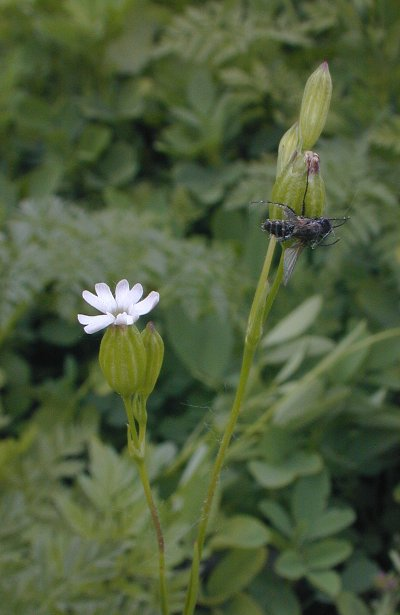
Silene antirrhina, commonly known as the sleep catchfly or the snapdragon catchfly, is a species of flowering plant in the family Caryophyllaceae. Native to Europe, it is also found in some parts of North America.
The sleep catchfly is a small, herbaceous plant that typically grows to a height of around 10-40 centimeters. It has slender stems with lance-shaped leaves that are arranged in opposite pairs. The flowers are the most distinctive feature of this plant, with their vibrant pink or purple petals arranged in clusters at the top of the stems. Each flower has a tubular shape, resembling a snapdragon, hence the common name snapdragon catchfly.
One interesting characteristic of Silene antirrhina is its ability to attract and trap small insects. The flowers produce a sticky secretion that acts as a natural adhesive. When insects come into contact with this secretion while feeding on the nectar, they get stuck and are unable to escape. This unique adaptation helps the plant in two ways: firstly, it ensures pollination as the trapped insects carry pollen from one flower to another, and secondly, it serves as a defense mechanism against herbivorous insects.
This species is known for its preference for dry, rocky habitats, such as limestone grasslands and cliffs. It can tolerate a wide range of soil types, from sandy to loamy, as long as the drainage is good. Silene antirrhina is a relatively hardy plant that can survive in harsh conditions, making it suitable for cultivation in rock gardens or dry borders.
Propagation of Silene antirrhina can be done through both seeds and vegetative methods. The seeds are small and can be sown directly into the soil in spring or autumn. However, they have a low germination rate, so it is recommended to sow them in trays and transplant the seedlings once they have grown. Vegetative propagation can be achieved by taking stem cuttings in spring or dividing mature clumps in autumn.
Once established, the sleep catchfly requires minimal maintenance. It is a drought-tolerant plant that can survive with little watering. However, regular watering during dry spells will promote healthy growth and flowering. Deadheading the spent flowers will prolong the blooming period and prevent self-seeding, as this plant can be invasive in some regions.
In terms of pests and diseases, Silene antirrhina is relatively resistant. However, aphids and slugs can occasionally pose a problem. These can be controlled by using organic insecticides or by encouraging natural predators like ladybugs and birds.
As a garden plant, Silene antirrhina adds a splash of color to any landscape. Its vibrant flowers are a magnet for butterflies and bees, making it an excellent choice for pollinator gardens. The compact size of the sleep catchfly also makes it suitable for container gardening or as a border plant.