Anthrax
Anthrax spores use RNA coat to mislead immune system
2001 Weaponized Anthrax Event:
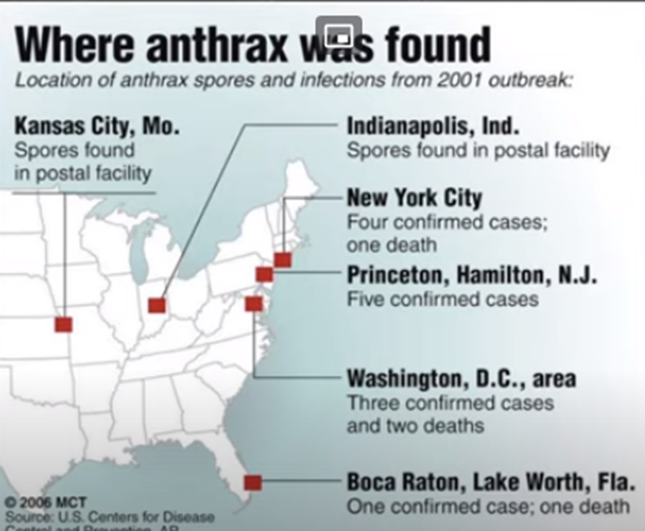


The FBI and CIA suspected "extremists" in the 2001 anthrax cases. Spores in one of the letters had been treated with very sophisticated chemical additives using advanced technologies. The attack was pinned on Iraq.
From a TV interview with Anthony Fauci:
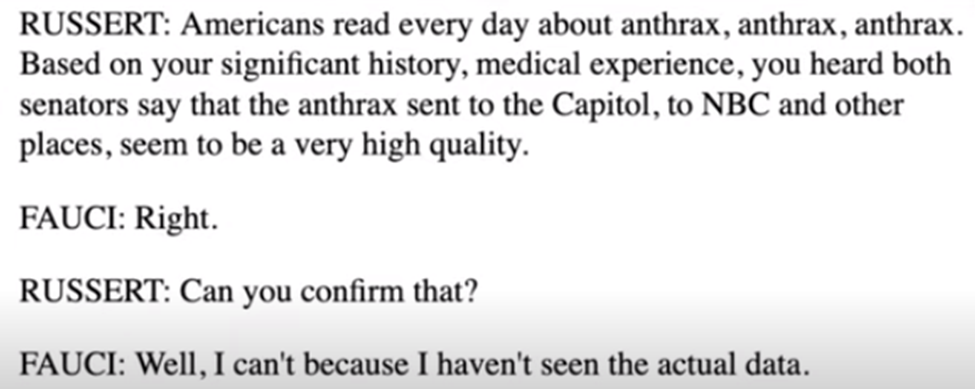
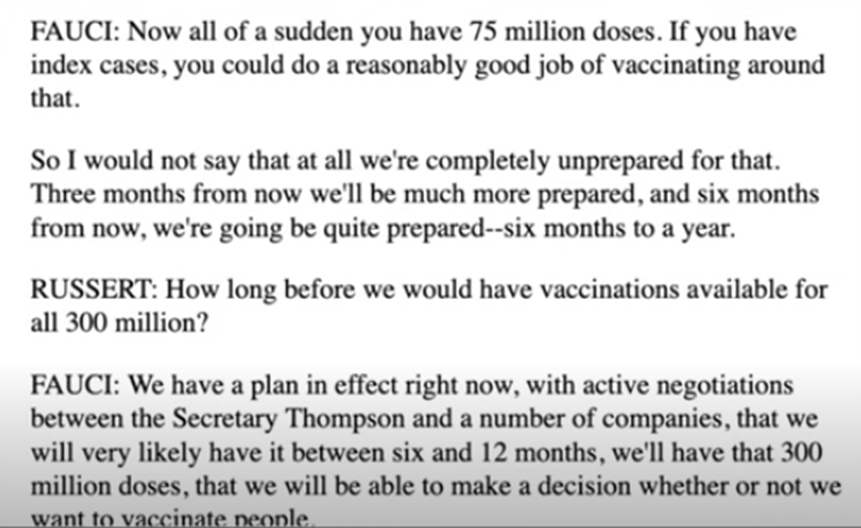
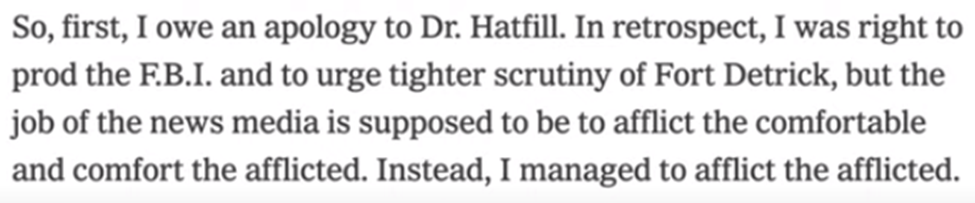
A former U.S. biodefense researcher, Steven Hatfield, was falsely accused in the New York Times and later won a $5.85 million dollar settlement. The author of the NY Times article, Nicholas Kristof, several years later, wrote:
The media was receiving information in advance on the anthrax scare. Another journalist, Richard Cohen, wrote:

The Bush administration used the event as part of its selling campaign to go to war with Iraq, 2003.
The FBI's Strange Anthrax Investigation Sheds Light on COVID Lab-Leak Theory and Fauci's Emails
A full seven years after the attack, the FBI once again claimed that it had found the perpetrator: this time, it was the microbiologist Bruce Ivins, a long-time “biodefense” researcher at the U.S. Army’s infectious disease research lab in Fort Detrick, Maryland. Yet before he could be indicted, Ivins died, apparently by suicide, to avoid prosecution. As a result, the FBI was never required to prove its case in court. The agency insisted, however, that there was no doubt that Ivins was the anthrax killer, citing genetic analysis of the anthrax strain that they said conclusively matched the anthrax found in Ivins’ U.S. Army lab, along with circumstantial evidence pointing to him.
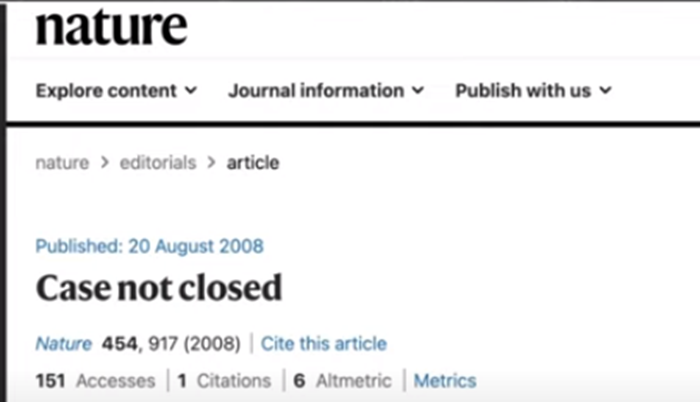
But virtually every mainstream institution other than the FBI harbored doubts. The New York Times quoted Ivins’ co-workers as calling into question the FBI’s claims (“The investigators looked around, they decided they had to find somebody”), and the paper also cited “vocal skepticism from key members of Congress.” Sen. Patrick Leahy (D-VT), one of the targets of the anthrax letters, said explicitly he did not believe Ivins could have carried out the attacks alone. Sen. Charles Grassley (R-IA) and then-Rep. Rush Holt (D-NJ), a physicist, said the same to me in interviews. The nation’s three largest newspapers — The New York Times, The Washington Post, and The Wall Street Journal — all editorially called for independent investigations on the grounds that the FBI’s evidence was inconclusive if not outright unconvincing. One of the country’s most prestigious science journals, Nature, published an editorial under the headline “Case Not Closed,” arguing, about the FBI’s key claims, that “the jury is still out on those questions.”
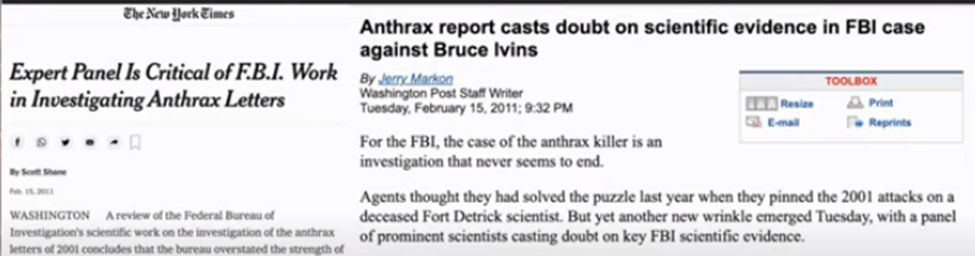
An in-depth joint investigation by ProPublica, PBS and McClatchy — published under the headline “New Evidence Adds Doubt to FBI’s Case Against Anthrax Suspect”—concluded that “newly available documents and the accounts of Ivins’ former colleagues shed fresh light on the evidence and, while they don't exonerate Ivins, are at odds with some of the science and circumstantial evidence that the government said would have convicted him of capital crimes.” It added: “even some of the government’s science consultants wonder whether the real killer is still at large.” The report itself, issued by the National Research Council, concluded that while the components of the anthrax in Ivins’ lab were “consistent” with the weaponized anthrax that had been sent, “the scientific link between the letter material and flask number RMR-1029 [found in Ivins’ lab] is not as conclusive as stated in the DOJ Investigative Summary."
U.S. institutions seemingly agreed to simply move on without ever addressing lingering scientific and other evidentiary questions regarding whether Ivins was really involved in the anthrax attacks and, if so, how it was possible that he could have carried out this sophisticated attack within a top-secret U.S. Army lab acting alone. So whitewashed is this history that doubts about whether the FBI found the real perpetrator are now mocked by smug Smart People as a fringe conspiracy theory rather than what they had been: the consensus of mainstream institutions.
But what we do know for certain from this anthrax investigation is quite serious. And because it is quite relevant to the current debates over the origins of COVID-19, it is well-worth reviewing. A trove of emails from Dr. Anthony Fauci — who was the government’s top infectious disease specialist during the AIDS pandemic, the anthrax attacks, and the COVID pandemic — was published on Monday by BuzzFeedafter they were produced pursuant to a FOIA request. Among other things, they reveal that in February and March of last year — at the time that Fauci and others were dismissing any real possibility that the coronavirus inadvertently escaped from a lab, to the point that the Silicon Valley monopolies Facebook and Google banned any discussion of that theory -- Fauci and his associates and colleagues were privately discussing the possibility that the virus had escaped from the Wuhan Institute of Virology, possibly as part of a U.S.-funded joint program with the scientists at that lab.
Last week, BBC reported that “in recent weeks the controversial claim that the pandemic might have leaked from a Chinese laboratory — once dismissed by many as a fringe conspiracy theory — has been gaining traction.” President Biden ordered an investigation into this lab-leak possibility. And with Democrats now open to this possibility, “Facebook reversed course Thursday and said that it would no longer remove posts that claim the virus is man-made,” reported The Washington Post.Nobody can rationally claim to know the origins of COVID, and that is exactly why — as I on the Rising program this morning — it should be so disturbing that Silicon Valley monopolies and the WHO/Fauci-led scientific community spent a full year pretending to have certainty about that “debunked” theory that they plainly did not possess, to the point where discussions of it were prohibited on social media.
What we know — but have largely forgotten — from the anthrax case is now vital to recall. What made the anthrax attacks of 2001 particularly frightening was how sophisticated and deadly the strain was. It was not naturally occurring anthrax. Scientists quickly identified it as the notorious Ames strain, which researchers at the U.S. Army lab in Fort Detrick had essentially invented. As PBS’ Frontline program put it in 2011: “in October 2001, Northern Arizona University microbiologist Dr. Paul Keim identified that the anthrax used in the attack letters was the Ames strain, a development he described as ‘chilling’ because that particular strain was developed in U.S. government laboratories.” As Dr. Keim recalled in that Frontline interview about his 2001 analysis of the anthrax strain:
We were surprised it was the Ames strain. And it was chilling at the same time, because the Ames strain is a laboratory strain that had been developed by the U.S. Army as a vaccine-challenge strain. We knew that it was highly virulent. In fact, that’s why the Army used it, because it represented a more potent challenge to vaccines that were being developed by the U.S. Army. It wasn’t just some random type of anthrax that you find in nature; it was a laboratory strain, and that was very significant to us, because that was the first hint that this might really be a bioterrorism event.
Why was the U.S. government creating exotic and extraordinarily deadly infectious bacterial strains and viruses that, even in small quantities, could kill large numbers of people? The official position of the U.S. Government is that it does not engage in offensive bioweapons research: meaning research designed to create weaponized viruses as weapons of war. The U.S. has signed treaties barring such research. But in the wake of the anthrax attacks — especially once the FBI’s own theory was that the anthrax was sent by a U.S. Army scientist from his stash at Fort Detrick — U.S. officials were forced to acknowledge that they do engage in defensive bioweapons research: meaning research designed to allow the development of vaccines and other defenses in the event that another country unleashes a biological attack.
But ultimately, that distinction barely matters. For both offensive and defensive bioweapons research, scientists must create, cultivate, manipulate and store non-natural viruses or infectious bacteria in their labs, whether to study them for weaponization or for vaccines. A fascinating-in-retrospect New Yorkerarticle from March, 2002, featured the suspicions of molecular biologist Barbara Hatch Rosenberg, who had “strongly implied that the F.B.I. was moving much more slowly in its anthrax investigation than it had any reason to.” Like The New York Times, the magazine (without naming him) detailed her speculation that Dr. Hatfill was the perpetrator (though her theory about his motive — that he wanted to scare people about anthrax in order to increase funding for research — was virtually identical to the FBI’s ultimate accusations about Dr. Ivins’ motives).
But the key point that is particularly relevant now is what all of this said about the kind of very dangerous research the U.S. Government, along with other large governments, conducts in bioweapons research labs. Namely, they manufacture and store extremely lethal biological agents that, if they escape from the lab either deliberately or inadvertently, can jeopardize the human species. As the article put it:
The United States officially forswore biological-weapons development in 1969, and signed the 1972 Biological Weapons Convention, along with many other nations. But Rosenberg believes that the American bioweapons program, which won't allow itself to be monitored, may not be in strict compliance with the convention. If the perpetrator of the anthrax attacks is who she thinks it is, that would put the American program in a bad light, and it would prove that she was right to demand that the program be monitored.
If the government is saying that the perpetrator was probably an American, it's hard to imagine how it couldn't have been an American who worked in a government-supported bioweapons lab. Think back to the panicky month of October [2001]: would knowing that have made you less nervous, or more?
Having extensively reported on the FBI’s investigation into the anthrax case and ultimate claim to have solved it, I continue to share all the doubts that were so widely expressed at the time about whether any of that was true. But what we know for certain is that the U.S. government and other governments do conduct research which requires the manufacture of deadly viruses and infectious bacterial strains. Dr. Fauci has acknowledged that the U.S. government indirectly funded research by the Wuhan Institute of Virology into coronaviruses, though he denies that this was for so-called “gain of function” research, whereby naturally occurring viruses are manipulated to make them more transmissible and/or more harmful to humans.
We do not know for sure if the COVID-19 virus escaped from the Wuhan lab, another lab, or jumped from animals to humans. But what we do know for certain — from the anthrax investigation — is that governments most definitely conduct the sort of research that could produce novel coronaviruses. Dr. Rosenberg, the subject of the 2002 New Yorkerarticle, was suggesting that the F.B.I. was purposely impeding its own investigation because they knew that the anthrax actually came from the U.S. government’s own lab and wanted to prevent exposure of the real bio-research that is done there. We should again ponder why the pervasive mainstream doubts about the F.B.I.’s case against Ivins have been memory-holed. We should also reflect on what we learned about government research into highly lethal viruses and bacterial strains from that still-strange episode.
Wikipedia
Anthrax is an infection caused by the bacterium Bacillus anthracis. It can occur in four forms: skin, inhalation, intestinal, and injection. Symptoms begin between one day and two months after the infection is contracted. The skin form presents with a small blister with surrounding swelling that often turns into a painless ulcer with a black center. The inhalation form presents with fever, chest pain, and shortness of breath. The intestinal form presents with nausea, vomiting, diarrhea, or abdominal pain. The injection form presents with fever and an abscess at the site of drug injection.
Anthrax is spread by contact with the spores of the bacteria, which are often from infectious animal products. Contact is by breathing, eating, or through an area of broken skin. It does not typically spread directly between people.[4] Risk factors include people who work with animals or animal products, travelers, postal workers, and military personnel. Diagnosis can be confirmed based on finding antibodies or the toxin in the blood or by culture of a sample from the infected site.[6]
Anthrax vaccination is recommended for people who are at high risk.[5] Immunizing animals against anthrax is recommended in areas where previous infections have occurred.[4] Two months of antibiotics, such as doxycycline or ciprofloxacin, after exposure can also prevent infection.[7] If infection occurs treatment is with antibiotics and possibly antitoxin.[8] The type and number of antibiotics used depends on the type of infection.[7] Antitoxin is recommended for those with widespread infection.[7]
Anthrax among humans is most common in Africa and central and Southern Asia.[9] It also occurs fairly regularly in Southern Europe, but is uncommon in Northern Europe and North America.[10] Globally, at least 2,000 cases occur a year, with about two cases a year in the United States.[11][12] Skin infections represent more than 95% of cases.[13] Without treatment the risk of death from skin anthrax is 24%.[7] For intestinal infection the risk of death is 25% to 75%, while respiratory anthrax has a mortality of 50% to 80%, despite treatment.[7][13] Until the 20th century, anthrax infections killed hundreds of thousands of people and animals each year.[14] Anthrax has been developed as a weapon by a number of countries.[13] In plant-eating animals, infection occurs when they eat or breathe in the spores while grazing. Carnivores may become infected by eating infected animals.[9]
Signs and symptoms
Skin
Cutaneous anthrax, also known as Hide porter's disease, is when anthrax occurs on the skin. It presents as a boil-like skin lesion that eventually forms an ulcer with a black center (eschar). The black eschar often shows up as a large, painless necrotic ulcer (beginning as an irritating and itchy skin lesion or blister that is dark and usually concentrated as a black dot, somewhat resembling bread mold) at the site of infection. In general, cutaneous infections form within the site of spore penetration between two and five days after exposure. Unlike bruises or most other lesions, cutaneous anthrax infections normally do not cause pain. Cutaneous anthrax is the most common and least dangerous form of anthrax.
Cutaneous anthrax is typically caused when B. anthracis spores enter through cuts on the skin. This form is found most commonly when humans handle infected animals and/or animal products.
Cutaneous anthrax is rarely fatal if treated, because the infection area is limited to the skin, preventing the lethal factor, edema factor, and protective antigen from entering and destroying a vital organ. Without treatment, about 20% of cutaneous skin infection cases progress to toxemia and death.
Lungs
Respiratory infection in humans is relatively rare and initially presents with cold or flu-like symptoms for several days, followed by pneumonia and severe (and often fatal) respiratory collapse. Historical mortality rates were over 85%,[17] but, when treated early (seen in the 2001 anthrax attacks), observed case fatality rate dropped to 45%.[16][17] Distinguishing pulmonary anthrax from more common causes of respiratory illness is essential to avoiding delays in diagnosis and thereby improving outcomes. An algorithm for this purpose has been developed.[18]
Gastrointestinal
Gastrointestinal (GI) infection in humans is most often caused by consuming anthrax-infected meat and is characterized by serious GI difficulty, vomiting of blood, severe diarrhea, acute inflammation of the intestinal tract, and loss of appetite.[19] Lesions have been found in the intestines and in the mouth and throat. After the bacterium invades the gastrointestinal system, it spreads to the bloodstream and throughout the body, while continuing to make toxins. GI infections can be treated, but usually result in fatality rates of 25% to 60%, depending upon how soon treatment commences. This form of anthrax is the rarest form.
Cause
Bacteria
Bacillus anthracis is a rod-shaped, Gram-positive, aerobic bacterium about 1 by 9 μm in size.[1] It was shown to cause disease by Robert Koch in 1876 when he took a blood sample from an infected cow, isolated the bacteria and put them into a mouse.[20] The bacterium normally rests in endospore form in the soil, and can survive for decades in this state. Herbivores are often infected whilst grazing, especially when eating rough, irritant, or spiky vegetation: the vegetation has been hypothesized to cause wounds within the gastrointestinal tract permitting entry of the bacterial endospores into the tissues, though this has not been proven. Once ingested or placed in an open wound, the bacterium begins multiplying inside the animal or human and typically kills the host within a few days or weeks. The endospores germinate at the site of entry into the tissues and then spread by the circulation to the lymphatics, where the bacteria multiply.
The production of two powerful exotoxins and lethal toxin by the bacteria causes death. Veterinarians can often tell a possible anthrax-induced death by its sudden occurrence, and by the dark, nonclotting blood that oozes from the body orifices. Most anthrax bacteria inside the body after death are outcompeted and destroyed by anaerobic bacteria within minutes to hours post mortem. However, anthrax vegetative bacteria that escape the body via oozing blood or through the opening of the carcass may form hardy spores. These vegetative bacteria are not contagious.[21] One spore forms per one vegetative bacterium. The triggers for spore formation are not yet known, though oxygen tension and lack of nutrients may play roles. Once formed, these spores are very hard to eradicate.
The infection of herbivores (and occasionally humans) by the inhalational route normally proceeds as follows: Once the spores are inhaled, they are transported through the air passages into the tiny air sacs (alveoli) in the lungs. The spores are then picked up by scavenger cells (macrophages) in the lungs and are transported through small vessels (lymphatics) to the lymph nodes in the central chest cavity (mediastinum). Damage caused by the anthrax spores and bacilli to the central chest cavity can cause chest pain and difficulty in breathing. Once in the lymph nodes, the spores germinate into active bacilli that multiply and eventually burst the macrophages, releasing many more bacilli into the bloodstream to be transferred to the entire body. Once in the blood stream, these bacilli release three proteins named lethal factor, edema factor, and protective antigen. The three are not toxic by themselves, but the combination is incredibly lethal to humans.[22] Protective antigen combines with these other two factors to form lethal toxin and edema toxin, respectively. These toxins are the primary agents of tissue destruction, bleeding, and death of the host. If antibiotics are administered too late, even if the antibiotics eradicate the bacteria, some hosts will still die of toxemia because the toxins produced by the bacilli remain in their system at lethal dose levels.
The lethality of the anthrax disease is due to the bacterium's two principal virulence factors: the poly-D-glutamic acidcapsule, which protects the bacterium from phagocytosis by host neutrophils, and the tripartite protein toxin, called anthrax toxin. Anthrax toxin is a mixture of three protein components: protective antigen (PA), edema factor (EF), and lethal factor (LF).[23] PA plus LF produces lethal toxin, and PA plus EF produces edema toxin. These toxins cause death and tissue swelling (edema), respectively.
To enter the cells, the edema and lethal factors use another protein produced by B. anthracis called protective antigen, which binds to two surface receptors on the host cell. A cell protease then cleaves PA into two fragments: PA20 and PA63. PA20 dissociates into the extracellular medium, playing no further role in the toxic cycle. PA63 then oligomerizes with six other PA63 fragments forming a heptameric ring-shaped structure named a prepore. Once in this shape, the complex can competitively bind up to three EFs or LFs, forming a resistant complex.[22] Receptor-mediated endocytosis occurs next, providing the newly formed toxic complex access to the interior of the host cell. The acidified environment within the endosome triggers the heptamer to release the LF and/or EF into the cytosol.[24] It is unknown how exactly the complex results in the death of the cell.
Edema factor is a calmodulin-dependent adenylate cyclase. Adenylate cyclase catalyzes the conversion of ATP into cyclic AMP (cAMP) and pyrophosphate. The complexation of adenylate cyclase with calmodulin removes calmodulin from stimulating calcium-triggered signaling, thus inhibiting the immune response.[22] To be specific, LF inactivates neutrophils (a type of phagocytic cell) by the process just described so they cannot phagocytose bacteria. Throughout history, lethal factor was presumed to cause macrophages to make TNF-alpha and interleukin 1, beta (IL1B). TNF-alpha is a cytokine whose primary role is to regulate immune cells, as well as to induce inflammation and apoptosis or programmed cell death. Interleukin 1, beta is another cytokine that also regulates inflammation and apoptosis. The overproduction of TNF-alpha and IL1B ultimately leads to septic shock and death. However, recent evidence indicates anthrax also targets endothelial cells that line serous cavities such as the pericardial cavity, pleural cavity, and the peritoneal cavity, lymph vessels, and blood vessels, causing vascular leakage of fluid and cells, and ultimately hypovolemic shock and septic shock.
Exposure
The spores are able to survive in harsh conditions for decades or even centuries.[25] Such spores can be found on all continents, including Antarctica.[26] Disturbed grave sites of infected animals have been known to cause infection after 70 years.[27]
Occupational exposure to infected animals or their products (such as skin, wool, and meat) is the usual pathway of exposure for humans. Workers who are exposed to dead animals and animal products are at the highest risk, especially in countries where anthrax is more common. Anthrax in livestock grazing on open range where they mix with wild animals still occasionally occurs in the United States and elsewhere. Many workers who deal with wool and animal hides are routinely exposed to low levels of anthrax spores, but most exposure levels are not sufficient to develop anthrax infections. A lethal infection is reported to result from inhalation of about 10,000–20,000 spores, though this dose varies among host species.[28] Little documented evidence is available to verify the exact or average number of spores needed for infection.
Historically, inhalational anthrax was called woolsorters' disease because it was an occupational hazard for people who sorted wool. Today, this form of infection is extremely rare in advanced nations, as almost no infected animals remain. The last fatal case of natural inhalational anthrax in the United States occurred in California in 1976, when a home weaver died after working with infected wool imported from Pakistan. To minimize the chance of spreading the disease, the deceased was transported to UCLA in a sealed plastic body bag within a sealed metal container for autopsy.
In November 2008, a drum maker in the United Kingdom who worked with untreated animal skins died from anthrax.[30] Gastrointestinal anthrax is exceedingly rare in the United States, with two cases on record, the first was reported in 1942, according to the Centers for Disease Control and Prevention.[31] In December 2009, an outbreak of anthrax occurred amongst heroin addicts in the Glasgow and Stirling areas of Scotland, resulting in 14 deaths.[32] The source of the anthrax is believed to be dilution of the heroin with bone meal in Afghanistan.[33]
Also during December 2009, the New Hampshire Department of Health and Human Services confirmed a case of gastrointestinal anthrax in an adult female. The CDC investigated the source and the possibility that it was contracted from an African drum recently used by the woman taking part in a drumming circle. The woman apparently inhaled anthrax [in spore form] from the hide of the drum. She became critically ill, but with gastrointestinal anthrax rather than inhaled anthrax, which made her unique in American medical history. The building where the infection took place was cleaned and reopened to the public and the woman recovered. Jodie Dionne-Odom, New Hampshire state epidemiologist, stated, "It is a mystery. We really don't know why it happened."
Mode of infection
Anthrax can enter the human body through the intestines (ingestion), lungs (inhalation), or skin (cutaneous) and causes distinct clinical symptoms based on its site of entry. In general, an infected human will be quarantined. However, anthrax does not usually spread from an infected human to a noninfected human. But, if the disease is fatal to the person's body, its mass of anthrax bacilli becomes a potential source of infection to others and special precautions should be used to prevent further contamination. Inhalational anthrax, if left untreated until obvious symptoms occur, may be fatal.
Anthrax can be contracted in laboratory accidents or by handling infected animals or their wool or hides.[37] It has also been used in biological warfare agents and by terrorists to intentionally infect as exemplified by the 2001 anthrax attacks.[38]
Diagnosis
Various techniques may be used for the direct identification of B. anthracis in clinical material. Firstly, specimens may be Gram stained. Bacillus spp. are quite large in size (3 to 4 μm long), they may grow in long chains, and they stain Gram-positive. To confirm the organism is B. anthracis, rapid diagnostic techniques such as polymerase chain reaction-based assays and immunofluorescence microscopy may be used.[39]
All Bacillus species grow well on 5% sheep blood agar and other routine culture media. Polymyxin-lysozyme-EDTA-thallous acetate can be used to isolate B. anthracis from contaminated specimens, and bicarbonate agar is used as an identification method to induce capsule formation. Bacillus spp. usually grow within 24 hours of incubation at 35 °C, in ambient air (room temperature) or in 5% CO2. If bicarbonate agar is used for identification, then the medium must be incubated in 5% CO2. B. anthracis colonies are medium-large, gray, flat, and irregular with swirling projections, often referred to as having a "medusa head" appearance, and are not hemolytic on 5% sheep blood agar. The bacteria are not motile, susceptible to penicillin, and produce a wide zone of lecithinase on egg yolk agar. Confirmatory testing to identify B. anthracis includes gamma bacteriophage testing, indirect hemagglutination, and enzyme linked immunosorbent assay to detect antibodies. The best confirmatory precipitation test for anthrax is the Ascoli test.
Prevention
If a person is suspected as having died from anthrax, precautions should be taken to avoid skin contact with the potentially contaminated body and fluids exuded through natural body openings. The body should be put in strict quarantine. A blood sample should then be collected and sealed in a container and analyzed in an approved laboratory to ascertain if anthrax is the cause of death. Then, the body should be incinerated. Microscopic visualization of the encapsulated bacilli, usually in very large numbers, in a blood smear stained with polychrome methylene blue (McFadyean stain) is fully diagnostic, though culture of the organism is still the gold standard for diagnosis. Full isolation of the body is important to prevent possible contamination of others. Protective, impermeable clothing and equipment such as rubber gloves, rubber apron, and rubber boots with no perforations should be used when handling the body. No skin, especially if it has any wounds or scratches, should be exposed. Disposable personal protective equipment is preferable, but if not available, decontamination can be achieved by autoclaving. Disposable personal protective equipment and filters should be autoclaved, and/or burned and buried. B. anthracis bacillii range from 0.5–5.0 μm in size. Anyone working with anthrax in a suspected or confirmed person should wear respiratory equipment capable of filtering this size of particle or smaller. The US National Institute for Occupational Safety and Health – and Mine Safety and Health Administration-approved high-efficiency respirator, such as a half-face disposable respirator with a high-efficiency particulate air filter, is recommended.[41] All possibly contaminated bedding or clothing should be isolated in double plastic bags and treated as possible biohazard waste. The infected person should be sealed in an airtight body bag. Dead people who are opened and not burned provide an ideal source of anthrax spores. Cremating people is the preferred way of handling body disposal. No embalming or autopsy should be attempted without a fully equipped biohazard laboratory and trained, knowledgeable personnel.