Osteochondroma (bone tumor)
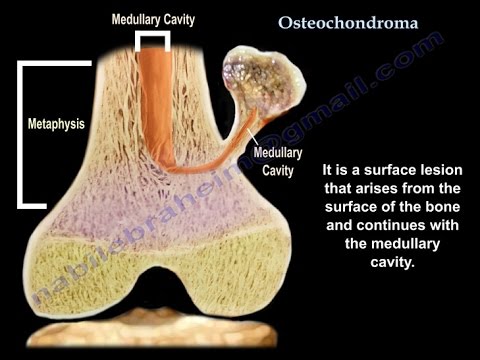
A Common Bone Tumor
Osteochondroma is a benign bone tumor that is most commonly found in children and adolescents. It is characterized by an abnormal growth on the surface of a bone near the growth plate, often resembling a cartilage-capped bony projection. This condition is the most prevalent type of benign bone tumor, accounting for approximately 35-40% of all such cases.
Characteristics of Osteochondroma
Osteochondromas typically develop during the growth years and are often discovered incidentally during imaging for unrelated issues. They can occur as solitary lesions or as part of a condition known as multiple osteochondromatosis, also referred to as hereditary multiple exostoses (HME). Key characteristics include:
- Location: Most commonly found on the long bones of the leg, pelvis, or shoulder blade.
- Appearance: They appear as a bony outgrowth covered with a cartilage cap.
- Growth: These tumors generally stop growing once skeletal maturity is reached.
- Symptoms: Often asymptomatic, but can cause pain, restricted movement, or nerve compression if they impinge on surrounding tissues.
Causes and Risk Factors
The exact cause of osteochondroma is not well understood, but it is believed to be related to genetic mutations, particularly in cases of hereditary multiple exostoses. Some risk factors include:
- Genetic Predisposition: A family history of multiple osteochondromas increases the likelihood of developing the condition.
- Age and Growth: Most cases are diagnosed in individuals under the age of 20, during periods of rapid bone growth.
Diagnosis
Diagnosis of osteochondroma typically involves a combination of clinical evaluation and imaging studies. The following methods are commonly used:
- Physical Examination: A doctor may feel the bony protrusion and assess for any associated symptoms.
- X-rays: These are the primary imaging tool used to identify the characteristic appearance of osteochondromas.
- MRI or CT Scans: These may be used to evaluate the cartilage cap and assess any potential complications, such as malignant transformation.
Treatment Options
Treatment for osteochondroma depends on the size, location, and symptoms associated with the tumor. Options include:
- Observation: Many osteochondromas are monitored over time without intervention, especially if they are asymptomatic.
- Surgical Removal: Indicated if the tumor causes pain, restricts movement, or has a risk of malignant transformation. Surgery involves excising the tumor and a portion of the surrounding bone to prevent recurrence.
Potential Complications
While osteochondromas are benign, there are potential complications to be aware of:
- Malignant Transformation: Although rare, there is a small risk that an osteochondroma can transform into a malignant chondrosarcoma. This risk is higher in individuals with multiple osteochondromas.
- Mechanical Issues: Large osteochondromas can cause mechanical problems, such as joint deformities or impingement on nerves and blood vessels.
- Fractures: The bony protrusion can be prone to fractures, especially if subjected to trauma.
Prognosis
The prognosis for individuals with osteochondroma is generally excellent, particularly for those with solitary lesions. Most people experience no significant long-term issues, and the risk of malignant transformation remains low. Regular monitoring and follow-up are essential for those with multiple osteochondromas to manage any potential complications effectively.