Kanna
Videos
Kanna: A Legal Plant for Microdosing + More 🌿

Overview
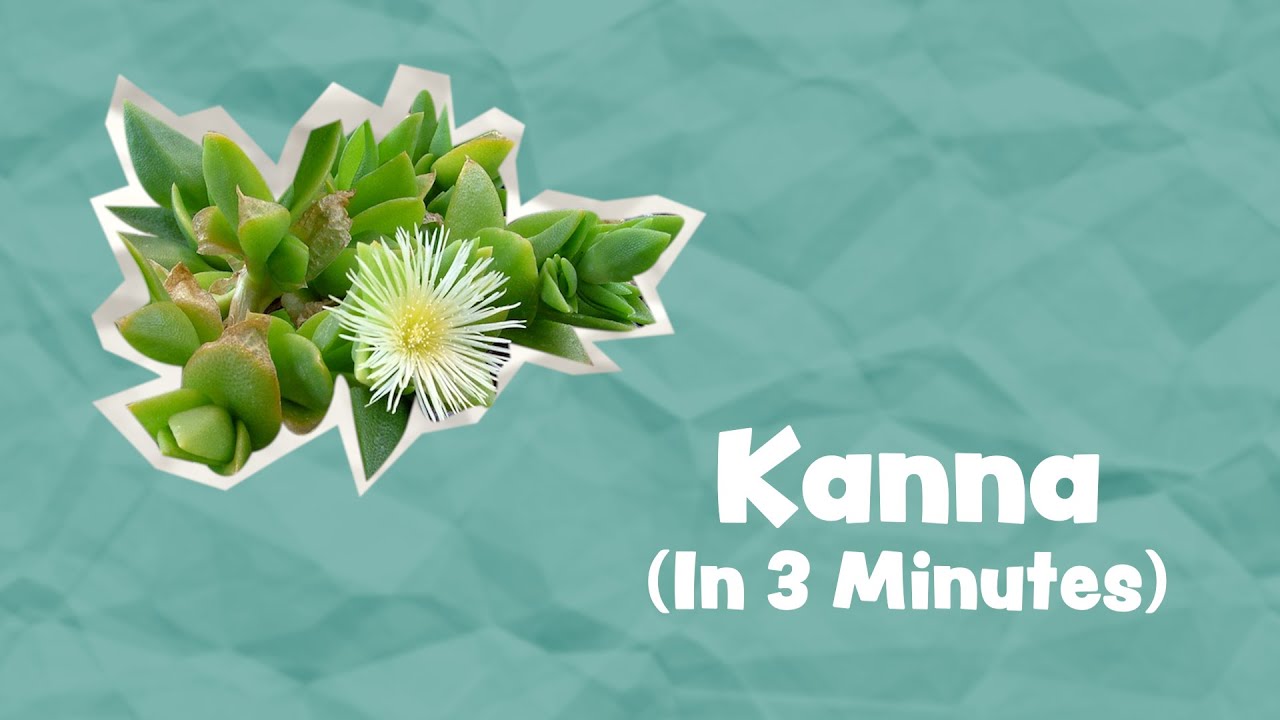
Sceletium, or Sceletium tortuosum, is a small succulent with yellow flowers that is native to South Africa. Traditional healers use the dried whole plant to treat anxiety, stress, tension and colic. Active ingredients include the alkaloids mesembrine, mesembrenone, mesembrenol and tortuosamine. A study published in the October 2008 issue of the “Journal of Ethnopharmacology” identified mesembrine as a potent serotonin reuptake inhibitor. Van Wyk and Wink note that the plant does not cause dependency even after years of constant use. Do not combine sceletium with other antidepressants.
Botanical identity
- Scientific name: Sceletium tortuosum (L.) N.E.Br.
- Family: Aizoaceae (ice-plant family)
- Native range: Arid and semi-arid regions of South Africa, especially the Karoo.
- Growth form: Low-growing succulent with fleshy leaves and small yellow to white flowers. Several related Sceletium species may also be used commercially, so accurate identification and quality control matter.
Traditional and contemporary uses
Historically, Khoisan communities prepared kanna by fermenting, drying, and chewing or insufflating the plant. It was traditionally associated with mood elevation, sociability, easing hunger and thirst, and relieving fatigue or tension. Contemporary products are marketed as teas, powders, capsules, tinctures, extracts, and sometimes fermented plant material. Commercial preparations can differ substantially in alkaloid content and purity.
Principal alkaloids and proposed actions
The best-known constituents are mesembrine, mesembrenone, mesembrenol, and tortuosamine. Laboratory and early human research suggests that kanna extracts may influence serotonin reuptake and may also affect phosphodiesterase-4 (PDE4) activity. These mechanisms could help explain reported effects on mood, anxiety, stress, and sociability, but they do not establish kanna as a proven treatment for any medical condition. Effects may vary according to species, harvest, fermentation, extraction method, dose, and individual sensitivity.
Evidence and limitations
Small clinical studies of standardized extracts have reported possible improvements in stress, anxiety-related symptoms, or mood, but the evidence base remains limited. Larger, independent, well-controlled trials are needed to determine efficacy, optimal dosing, long-term safety, and interactions. Traditional use provides important historical context but is not equivalent to clinical evidence.
Safety and interactions
- Avoid combining kanna with prescription antidepressants or other substances that substantially increase serotonin, including MAO inhibitors, many SSRIs and SNRIs, and certain recreational or medicinal drugs, unless a qualified clinician specifically advises otherwise.
- Potential adverse effects may include nausea, headache, dizziness, drowsiness, gastrointestinal upset, agitation, or changes in heart rate or blood pressure.
- Seek urgent medical care for possible serotonin toxicity—especially confusion, restlessness, sweating, fever, shivering, diarrhea, muscle rigidity, or rapid heartbeat—after combining serotonergic substances.
- Use extra caution, and seek medical advice, during pregnancy or breastfeeding, with liver or cardiovascular disease, bipolar-spectrum conditions, or when taking psychoactive or prescription medicines.
- Do not drive or operate machinery until individual effects are known. Product labels may be inaccurate, and contamination or adulteration is possible.
Important: Do not combine sceletium with other antidepressants. The original note’s safety warning is retained above. This information is educational and does not replace advice from a physician or pharmacist.
Practical quality considerations
Prefer products that identify the plant material and extract standardization, disclose third-party testing, and provide lot numbers and contaminant testing. Avoid products with unclear ingredients or exaggerated medical claims. “Natural” does not necessarily mean risk-free.
Research topics
- Standardized mesembrine-containing extracts in controlled clinical trials
- Long-term and repeated-use safety
- Pharmacokinetics and clinically relevant drug interactions
- Differences between fermented whole plant, raw powder, and extracts
- Botanical authentication and alkaloid variability
Sources and further reading
- van Wyk, B.-E., and Wink, M. Medicinal Plants of the World—traditional uses and botanical context.
- Journal of Ethnopharmacology (2008)—research identifying mesembrine as a potent serotonin reuptake inhibitor.
- Consult current clinical drug-interaction references and a qualified healthcare professional before use, particularly when taking antidepressants or other serotonergic medicines.