Buttonwood
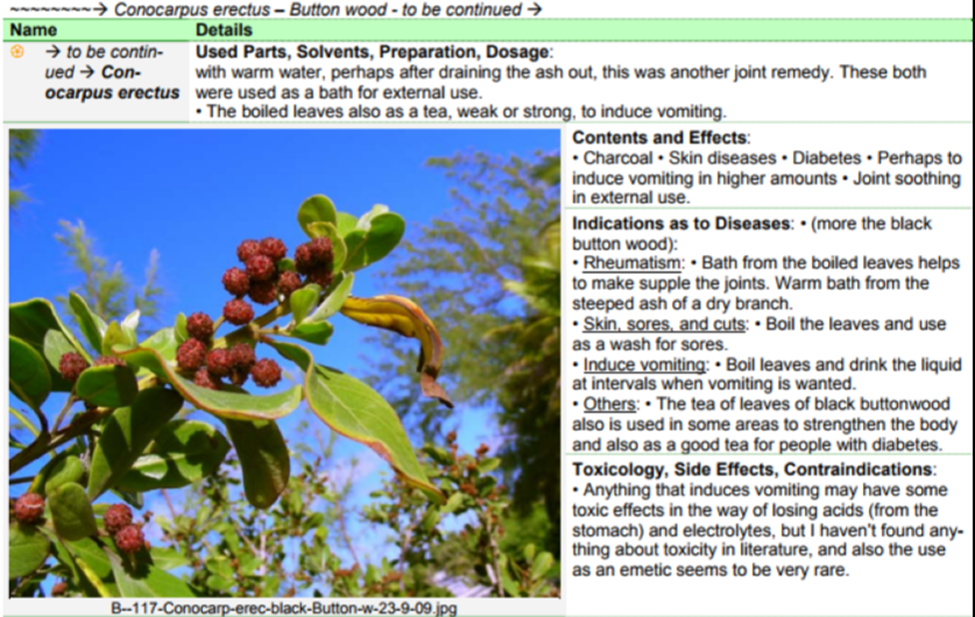
Conocarpus erectus, commonly known as the buttonwood or button mangrove, is a versatile and resilient plant species native to tropical and subtropical regions. This plant is often found in coastal areas, thriving in saline environments where few other species can survive. Its adaptability and ecological benefits make it an important species for coastal management and restoration projects.
Botanical Characteristics
Conocarpus erectus belongs to the Combretaceae family. It is a small to medium-sized tree or shrub that can grow up to 20 meters in height, although it is often found in shorter, shrubby forms. The plant has a distinctive appearance with:
- Leaves: Simple, alternate, and leathery with a glossy green surface. They are typically 2-7 cm long and 1-3 cm wide.
- Flowers: Small, inconspicuous, and greenish-white, arranged in dense, button-like clusters, which is how the plant gets its common name.
- Fruits: Small, dry, and woody, resembling buttons, which persist on the plant for extended periods.
Habitat and Distribution
Conocarpus erectus is predominantly found in coastal regions, particularly in mangrove swamps, estuaries, and along shorelines. It is native to:
- The Americas, including the southeastern United States, the Caribbean, Central America, and northern South America.
- Parts of West Africa and the Indian subcontinent, where it has been introduced and naturalized.
The plant is highly tolerant of saline conditions, making it an ideal species for areas with high salt concentrations in the soil and water.
Ecological Importance
The ecological significance of Conocarpus erectus cannot be overstated. It plays several crucial roles in its native habitats:
- Erosion Control: The extensive root system of Conocarpus erectus helps stabilize coastal soils, preventing erosion and protecting shorelines from storm surges and wave action.
- Habitat Provision: The dense foliage and root systems provide shelter and breeding grounds for various wildlife, including birds, fish, and invertebrates.
- Water Filtration: The plant helps filter pollutants from water, improving water quality in coastal and estuarine environments.
Uses and Applications
Beyond its ecological benefits, Conocarpus erectus has several practical uses:
- Landscaping: Due to its tolerance of harsh conditions, it is often used in landscaping for coastal areas, urban environments, and as a windbreak.
- Timber and Fuel: The wood of Conocarpus erectus is hard and durable, making it suitable for construction, furniture, and as a source of fuel.
- Traditional Medicine: Various parts of the plant have been used in traditional medicine to treat ailments such as fever, diarrhea, and skin conditions.
Cultivation and Care
Cultivating Conocarpus erectus is relatively straightforward, given its hardy nature. Here are some tips for successful growth:
- Soil: Prefers well-drained, sandy soils but can tolerate a range of soil types, including saline and alkaline soils.
- Watering: Once established, it is drought-tolerant but benefits from regular watering during dry periods.
- Sunlight: Thrives in full sun but can tolerate partial shade.
- Pruning: Regular pruning helps maintain its shape and encourages denser foliage.
Challenges and Considerations
While Conocarpus erectus is generally a robust plant, it is not without its challenges:
- Invasive Potential: In some regions, it has shown invasive tendencies, outcompeting native vegetation and altering local ecosystems.
- Pests and Diseases: It can be susceptible to pests such as scales and diseases like leaf spot, which require monitoring and management.