Stinking Dapperling
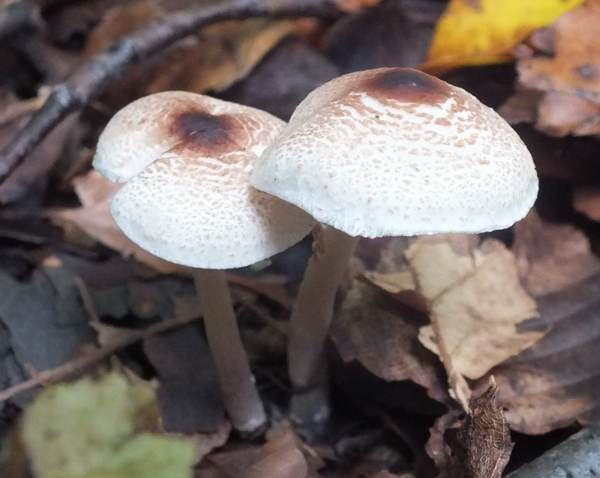
The Stinking Dapperling, scientifically known as Lepiota cristata, is a small mushroom that belongs to the family Agaricaceae. This mushroom is notable for its distinctive odor and appearance. Despite its intriguing characteristics, it is important to note that the Stinking Dapperling is toxic and should not be consumed.
Identification
Appearance
The Stinking Dapperling has several key features that aid in its identification:
- Cap: The cap is small, typically ranging from 2 to 5 cm in diameter. It starts off convex and flattens out as it matures, often developing a slight central bump. The cap surface is white to cream-colored with a distinctive reddish-brown center. As the mushroom ages, the cap may develop scales or warts.
- Gills: The gills are free from the stem and are white to cream in color. They are closely spaced and can sometimes have a slightly serrated edge.
- Stem: The stem is slender, measuring 3 to 7 cm in height and 0.3 to 0.7 cm in diameter. It is white to cream-colored and may have a slight bulbous base. A fragile, ring-like structure (annulus) is often present on the upper part of the stem.
- Spore Print: The spore print of the Stinking Dapperling is white.
Odor
One of the most distinguishing features of the Stinking Dapperling is its odor. As the name suggests, it emits a strong, unpleasant smell that is often described as similar to rubber or burnt hair. This odor becomes more pronounced as the mushroom ages or when it is crushed.
Habitat and Distribution
The Stinking Dapperling is commonly found in temperate regions across North America, Europe, and Asia. It typically grows in grassy areas, gardens, parks, and sometimes in woodlands. This mushroom is saprotrophic, meaning it feeds on decaying organic matter, which is why it is often found in areas with rich, organic soil.
Toxicity
The Stinking Dapperling contains toxic compounds that can cause gastrointestinal distress if ingested. Symptoms of poisoning may include nausea, vomiting, diarrhea, and abdominal pain. In severe cases, it can lead to dehydration and require medical attention. Due to its toxic nature, it is crucial to avoid consuming this mushroom and to educate others about its potential dangers.
Similar Species
There are several species that can be easily confused with the Stinking Dapperling due to their similar appearance. Some of these include:
- Lepiota brunneoincarnata: Also known as the Deadly Dapperling, this species is highly toxic and can cause severe poisoning. It has a similar cap appearance but can be distinguished by its more pronounced reddish-brown scales.
- Lepiota castanea: Known as the Chestnut Dapperling, this species has a darker, chestnut-brown cap and is also toxic.
- Lepiota clypeolaria: This species has a more fibrous cap and a distinctive ring on the stem. It is less toxic but still not recommended for consumption.
Ecological Role
As a saprotrophic organism, the Stinking Dapperling plays an important role in the ecosystem by breaking down organic matter and recycling nutrients back into the soil. This process helps maintain soil health and supports plant growth. Despite its toxicity, the Stinking Dapperling contributes to the balance of natural ecosystems.