Oakleaf Hydrangea / Oak Leaved Hydrangea
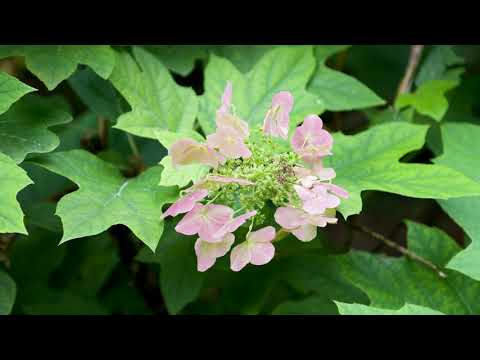
Hydrangea quercifolia, commonly known as the Oakleaf Hydrangea, is a deciduous shrub native to the southeastern United States.
Key Characteristics
Foliage
One of the most distinctive features of Hydrangea quercifolia is its foliage. The leaves are deeply lobed, resembling those of an oak tree, which is how the plant gets its common name. In the fall, the leaves turn a stunning array of colors, including shades of red, orange, and purple, adding seasonal interest to any garden.
Flowers
The Oakleaf Hydrangea produces large, cone-shaped flower clusters that can reach up to 12 inches in length. These blooms typically appear in early summer and can last for several weeks. The flowers start as a creamy white and gradually turn pink as they age, providing a dynamic display of color.
Bark
Another attractive feature of Hydrangea quercifolia is its exfoliating bark. As the plant matures, the bark peels away in thin, papery layers, revealing a rich, cinnamon-brown color underneath. This characteristic adds winter interest to the garden when the plant is not in bloom.
Growing Conditions
Soil
Hydrangea quercifolia prefers well-drained, fertile soil. It thrives in slightly acidic to neutral pH levels but can tolerate a range of soil types as long as they are well-draining. Adding organic matter, such as compost, can improve soil fertility and drainage.
Light
This shrub is quite versatile when it comes to light requirements. It can grow in full sun to partial shade. However, in hotter climates, some afternoon shade is beneficial to protect the plant from intense sunlight and to prevent leaf scorch.
Water
Oakleaf Hydrangeas require consistent moisture, especially during their first few years of growth. While they are somewhat drought-tolerant once established, regular watering is essential to maintain healthy foliage and vibrant blooms. Mulching around the base of the plant can help retain soil moisture and regulate temperature.
Care Tips
Pruning
Pruning Hydrangea quercifolia is generally minimal. It blooms on old wood, so any necessary pruning should be done immediately after flowering to avoid cutting off next year's flower buds. Remove any dead or damaged wood and thin out crowded branches to improve air circulation.
Fertilization
A balanced, slow-release fertilizer applied in early spring can support healthy growth and abundant blooms. Avoid over-fertilizing, as this can lead to excessive leaf growth at the expense of flowers.
Pests and Diseases
Hydrangea quercifolia is relatively pest and disease-resistant. However, it can occasionally be affected by common garden pests such as aphids, spider mites, and scale. Regular monitoring and appropriate treatments, such as insecticidal soap or neem oil, can help manage these issues. Good air circulation and proper watering practices can prevent fungal diseases like powdery mildew and leaf spot.
Landscape Uses
Specimen Plant
Due to its striking appearance, Hydrangea quercifolia makes an excellent specimen plant. It can be used as a focal point in garden beds or as a standalone feature in the landscape.
Mass Planting
When planted in groups, Oakleaf Hydrangeas create a lush, cohesive look. They are particularly effective in woodland gardens or naturalized areas where their informal growth habit can shine.
Foundation Planting
The shrub's moderate size and attractive year-round features make it suitable for foundation planting around homes and buildings. Its seasonal changes provide ongoing visual interest.