Cognitive Training / Brain Training
Videos
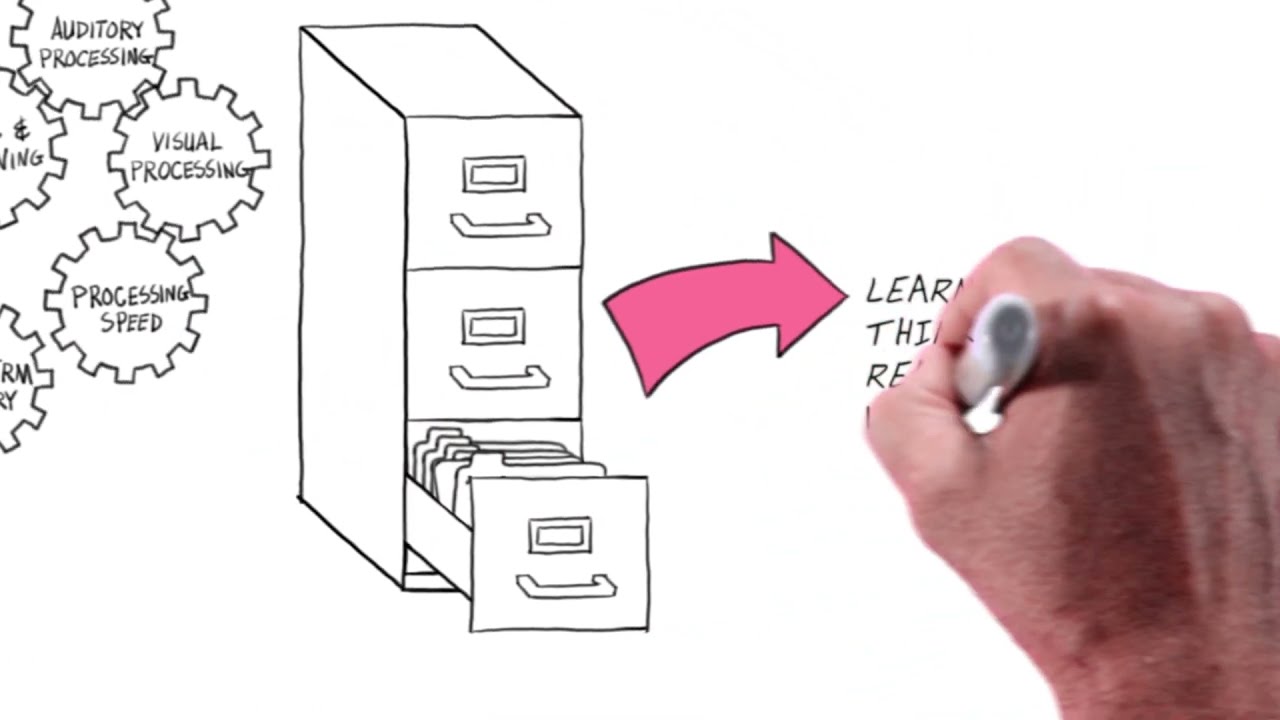
The Best Brain Training Focuses on THESE Seven Cognitive Skills
Improve Concentration Exercise with Tongue Movement
Cognitive Training: Explanation and Techniques
What cognitive training is
Cognitive training—also called brain training—is the deliberate practice of mental skills through structured exercises and real-world activities. It aims to improve or maintain abilities such as attention, memory, processing speed, reasoning, language, executive function, and visuospatial skills.
Training is most effective when it is regular, appropriately challenging, adaptive, and relevant to a person’s goals. Improvement is usually strongest on the practiced task or closely related tasks (near transfer). Transfer to broad everyday intelligence or prevention of cognitive decline is less certain, so cognitive training should complement—not replace—sleep, physical activity, social connection, medical care, and management of cardiovascular risk factors.
Core cognitive skills
- Attention: Sustaining focus, selectively attending to important information, and switching between tasks.
- Working memory: Holding and manipulating information briefly, such as remembering directions while using them.
- Long-term memory: Encoding, storing, and retrieving facts, experiences, and procedures.
- Processing speed: Quickly noticing, interpreting, and responding to information.
- Executive function: Planning, inhibition, flexible thinking, prioritizing, and problem-solving.
- Language: Vocabulary, verbal fluency, comprehension, and word retrieval.
- Visuospatial ability: Mentally representing objects, distances, directions, and spatial relationships.
Evidence-informed techniques
1. Active recall
After reading or learning something, close the source and retrieve the main ideas from memory. Use flashcards, self-quizzing, or short written summaries. Retrieval is generally more effective than repeatedly rereading.
2. Spaced repetition
Review information at gradually increasing intervals—for example, after one day, three days, one week, and one month. Revisit material just before it is likely to be forgotten.
3. Elaboration and association
Ask “How does this work?”, “Why is it important?”, and “What does it remind me of?” Connect new information to prior knowledge, examples, images, or a meaningful story.
4. Chunking and organization
Group separate items into meaningful units. Use categories, hierarchies, acronyms, outlines, or mental maps to reduce working-memory demands.
5. Attention-control practice
Practice focused attention for 5–15 minutes: attend to breathing, a sound, or a visual target; notice distractions; and gently return attention without self-criticism. Increase duration gradually.
6. Processing-speed exercises
Use timed, accuracy-first activities such as visual scanning, symbol matching, reaction tasks, or identifying changes in a scene. Increase speed only while maintaining reliable accuracy.
7. Executive-function drills
Plan a multistep task, estimate its time, carry it out, and review the result. Other options include switching rules in sorting tasks, inhibiting an automatic response, or solving logic and strategy problems.
8. Dual-task and divided-attention practice
Combine two manageable activities—such as listening for target words while sorting items—then assess accuracy. Keep the difficulty moderate and avoid practicing in situations where distraction could be unsafe.
9. Language practice
Read challenging material, explain it in your own words, generate words by category or first letter, learn a language, or engage in conversation that requires active listening and recall.
10. Visuospatial practice
Use navigation without relying entirely on GPS, mentally rotate objects, draw a room or route from memory, complete puzzles, or recreate a pattern after studying it.
11. Strategy and metacognition
Before an exercise, predict your performance and choose a strategy. Afterward, record what worked, what caused errors, and how to adapt. This turns practice into deliberate learning rather than repetition alone.
12. Positive, realistic self-talk
Use process-focused statements such as “I can slow down and use a strategy” or “An error gives me information.” Avoid exaggerated claims; confidence should support persistence without masking fatigue or difficulty.
A practical 20–30-minute routine
- 5 minutes — Warm-up: Focused-attention or breathing exercise.
- 10 minutes — Target skill: Practice one adaptive memory, attention, speed, or reasoning task.
- 10 minutes — Real-world transfer: Apply the skill by learning, planning, navigating, summarizing, or solving a practical problem.
- 2–5 minutes — Review: Note accuracy, difficulty, strategy used, and one adjustment for the next session.
Practice 3–5 days per week, change tasks occasionally, and increase difficulty gradually. Stop or take a break when performance declines because of fatigue. Track accuracy, completion time, recall after a delay, and whether the skill helps in daily activities—not just the score on an app.
Important considerations
- Brain-training apps can provide structured practice, but no app should be assumed to improve every cognitive ability or prevent dementia without strong supporting evidence.
- Learning demanding real-world skills—music, a language, dance, crafts, or a complex hobby—adds novelty and may promote broader engagement than repetitive drills alone.
- Sleep, aerobic exercise, strength training, balanced nutrition, stress management, and social activity are important foundations for cognitive health.
- New, worsening, or functionally disruptive memory or thinking problems warrant evaluation by a qualified healthcare professional; training is not a substitute for diagnosis or treatment.
Articles/Studies
Just 5 weeks of brain training may protect against dementia for 20 years. Brain game reduces dementia risk. A simple brain-training program that sharpens how quickly older adults process visual information may have a surprisingly powerful long-term payoff. In a major 20-year study of adults 65 and older, those who completed five to six weeks of adaptive “speed of processing” training — along with a few booster sessions — were significantly less likely to develop dementia, including Alzheimer’s disease,