Vilca
Constituents
Anadenanthera colubrina, commonly known as Vilca, Huilco, or Cebil, is a tree species native to South America. This tree is notable for its cultural, medicinal, and psychoactive properties, which have been utilized by indigenous peoples for centuries.
Botanical Characteristics
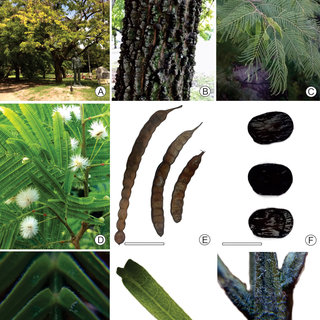
Anadenanthera colubrina belongs to the Fabaceae family, which is commonly known as the legume, pea, or bean family. The tree can grow up to 20 meters in height and is characterized by its thorny bark and pinnate leaves. The flowers are small, yellowish, and form in dense clusters. The fruit is a flat, elongated pod containing several hard, flat seeds.
Key Features:
- Height: Up to 20 meters
- Bark: Thorny
- Leaves: Pinnate
- Flowers: Small, yellowish, clustered
- Fruit: Flat, elongated pod
Traditional Uses
Anadenanthera colubrina has been used by various indigenous cultures in South America for its psychoactive properties. The seeds of the tree are often ground into a powder and used in traditional rituals. This powder, known as Yopo or Vilca, is typically inhaled as a snuff. The psychoactive effects are attributed to the presence of alkaloids such as bufotenin and DMT (dimethyltryptamine).
Ritualistic and Medicinal Uses:
- Ritualistic: Used in shamanic rituals to induce altered states of consciousness.
- Medicinal: Employed in traditional medicine to treat ailments such as respiratory issues and skin conditions.
Chemical Composition
The seeds of Anadenanthera colubrina contain several psychoactive alkaloids. The primary compounds include bufotenin, DMT, and 5-MeO-DMT. These substances are known for their potent psychoactive effects, which can induce visions, altered perception, and profound spiritual experiences.
Major Alkaloids:
- Bufotenin: Known for its hallucinogenic properties.
- DMT (Dimethyltryptamine): A powerful psychedelic compound.
- 5-MeO-DMT: Another potent psychoactive substance.
Ecological Significance
Anadenanthera colubrina plays a crucial role in its native ecosystem. As a member of the Fabaceae family, it contributes to soil fertility through nitrogen fixation. The tree also provides habitat and food for various wildlife species. Its seeds are dispersed by animals, aiding in the propagation of the species.
Ecological Contributions:
- Nitrogen Fixation: Enhances soil fertility.
- Habitat: Provides shelter and food for wildlife.
- Seed Dispersal: Facilitated by animals.
Articles/Studies
Gum heteropolysaccharide and free reducing mono- and oligosaccharides of Anadenanthera colubrina
Google Books: Anadenanthera: Visionary Plant of Ancient South America - Constantino Manuel Torres, David B. Repke