Energetics (Western)
(Return to Intro to Herbalism Menu)
Videos
What Exactly is Herbal Energetics?
The Key to Herbal Energetics & Constitution Theory
Energetic Architecture & the Alchemical Philosophy of Plants
12 Categories of Plants
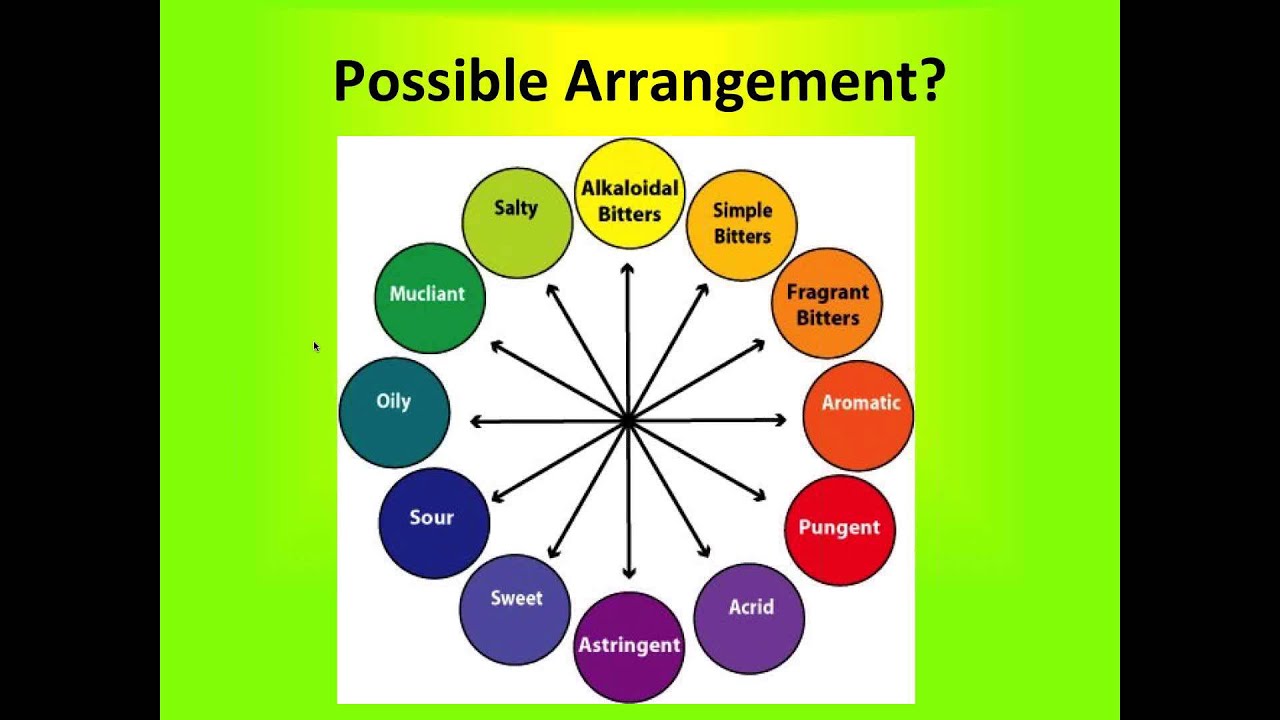
Herbal Energetics
Principles & Practice of Constitutional Physiology for Herbalists(pdf) Michael Moore
'The word ‘energetic’ was introduced in the last decades of the twentieth century – I believe it originated with Randolph Stone, DC, ND, founder of polarity therapy – to describe ‘patterns of energy’ such as hot and cold, damp and dry, yin and yang, and the four or five elements.
This approach utilizes the faculty that perceives the whole pattern. This is known as the intuition. Through the intuition we are able to see the pattern emerge from a field of data. Intuitive realization comes upon us suddenly, and is known as the ‘aha moment.’ However, intuitive analysis requires observation and data, just as does ordinary science. It is necessary to collect information, in order to determine if something is ‘hot’ or ‘cold,’ or yin or yang. The intuition does not yield objective facts, obvious to all, as in scientific research and demonstration, but it shows us patterns that can be described and shared with others. Thus, intuitive information can be agreed upon and discussed. For thousands of years, Chinese, Ayurvedic, Greek, and Arabic doctors were able to describe patterns of disease and constitution to their students and patients. Thus,
intuitive information can approach the objective level. If we look at the most basic patterns utilized in traditional medicine we will see that they represent attempts to quantify levels.
Several prominent herbalists have attempted to work out a modern system of energetics for Western herbalism. Several have attempted to use the Chinese rubric (Michael Tierra, Peter Holmes) or the Ayurvedic (David Frawley, Vasant Lad). Such efforts, however, are not capable of capturing many of the nuances of Western herbs and herbalism, which are encoded in a difference intellectual and cultural tradition. In order to understand Western herbs holistically,we need to be able to communicate in terminology native to the Western tradition.
Other prominent herbalists have attempted to preserve more of the heritage and flavor of Western herbalism. This would include Simon Mills (1991) and David Winston (1998, 2006). The latter has originated a well-organized, efficient system, although it has not been widely published. I have used this model, making minor modifications.
Some people believe that pharmacology and energetics are of heat and moisture. Thus, for instance, yin and yang, in Chinese medicine, are essentially equivalent to fire and water, while the four qualities of Greek medicine represent excess or deficiency of heat and moisture. Ayurveda uses the three doshas, which more or less measure heat and dampness.
Some people believe that pharmacology and energetics are incompatible. This is not true. As David Winston has shown, we can bridge from constituents through tastes to energetics. Holistic herbalism is that which unites tradition, pharmacology, and energetics'. - by Mathew Woods