Little Bur-clover
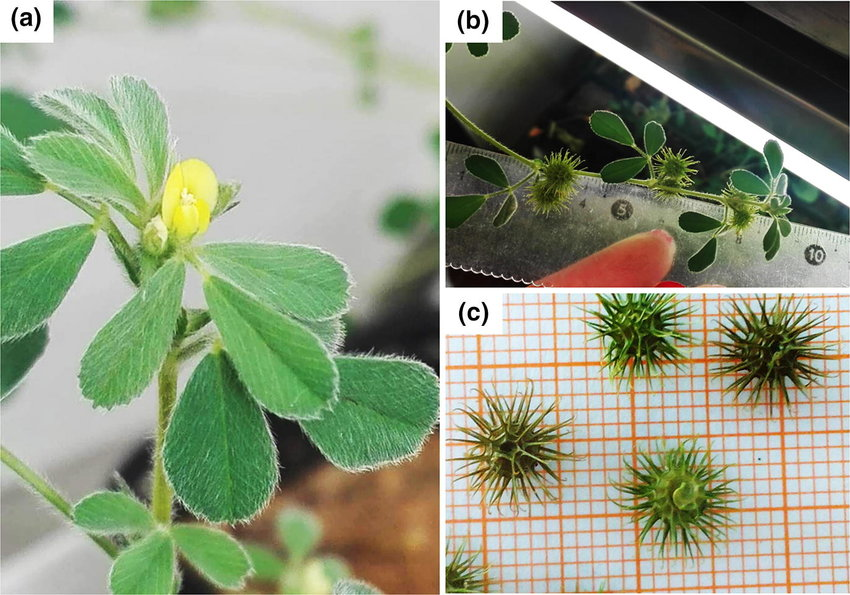
Little Bur-clover, scientifically known as Medicago minima, is a small, annual herbaceous plant belonging to the legume family, Fabaceae. This plant is native to the Mediterranean region but has spread to various parts of the world, including North America, Australia, and parts of Asia. It is often found in disturbed soils, grasslands, and agricultural fields, where it can sometimes be considered a weed. Despite its weedy nature, Little Bur-clover has several interesting characteristics and ecological benefits.
Botanical Description
Little Bur-clover is a low-growing plant that typically reaches a height of 10 to 30 centimeters. It has a sprawling growth habit with stems that can spread outwards up to 50 centimeters. The leaves are trifoliate, meaning they are composed of three small leaflets. Each leaflet is obovate to oblong in shape, with a slightly toothed margin. The leaves are typically green but can sometimes have a slight bluish tint.
The flowers of Little Bur-clover are small and yellow, usually less than 5 millimeters in diameter. They are borne in clusters of 2 to 10 flowers on short peduncles. The flowering period generally occurs from spring to early summer, depending on the climate. After pollination, the plant produces small, coiled seed pods that are covered in tiny, hooked spines. These spines help the seed pods attach to animals and humans, aiding in seed dispersal.
Ecological Role
As a member of the legume family, Little Bur-clover plays a significant role in nitrogen fixation. The plant forms a symbiotic relationship with nitrogen-fixing bacteria in the soil, which allows it to convert atmospheric nitrogen into a form that is usable by plants. This process enriches the soil with nitrogen, making it more fertile and beneficial for other plants. Consequently, Little Bur-clover can be an important component of sustainable agricultural systems and natural ecosystems.
Uses and Benefits
Despite being considered a weed in some contexts, Little Bur-clover has several uses and benefits:
- Soil Improvement: Due to its nitrogen-fixing ability, Little Bur-clover can improve soil fertility and structure. It is often used in cover cropping and green manuring practices to enhance soil health.
- Forage: The plant is palatable to livestock and can be used as forage. It provides a source of protein and other nutrients for grazing animals.
- Erosion Control: Its low-growing, spreading habit makes it effective in controlling soil erosion. It can be planted on slopes and disturbed areas to stabilize the soil.
- Biodiversity: Little Bur-clover can contribute to biodiversity in agricultural and natural ecosystems. It provides habitat and food for various insects, including pollinators.
Management and Control
While Little Bur-clover has its benefits, it can also become invasive in certain situations. Effective management and control strategies are essential to prevent it from becoming a problematic weed:
- Mechanical Control: Regular mowing or cutting can help manage the spread of Little Bur-clover. Removing the plant before it sets seed is crucial to prevent further propagation.
- Cultural Control: Maintaining healthy, competitive vegetation can reduce the establishment and spread of Little Bur-clover. Practices such as crop rotation and maintaining dense plant cover can be effective.
- Chemical Control: Herbicides can be used to control Little Bur-clover, but they should be applied with caution to avoid harming non-target species. Selective herbicides that target broadleaf plants can be effective.
- Biological Control: Research into biological control agents, such as specific insects or pathogens that target Little Bur-clover, is ongoing. These methods offer a sustainable approach to managing the plant without relying on chemicals.