Four Elements (alchemy)
Video: The Elements in Plants and People (Part 1)
Video: The Elements in People and Plants (Part 2)
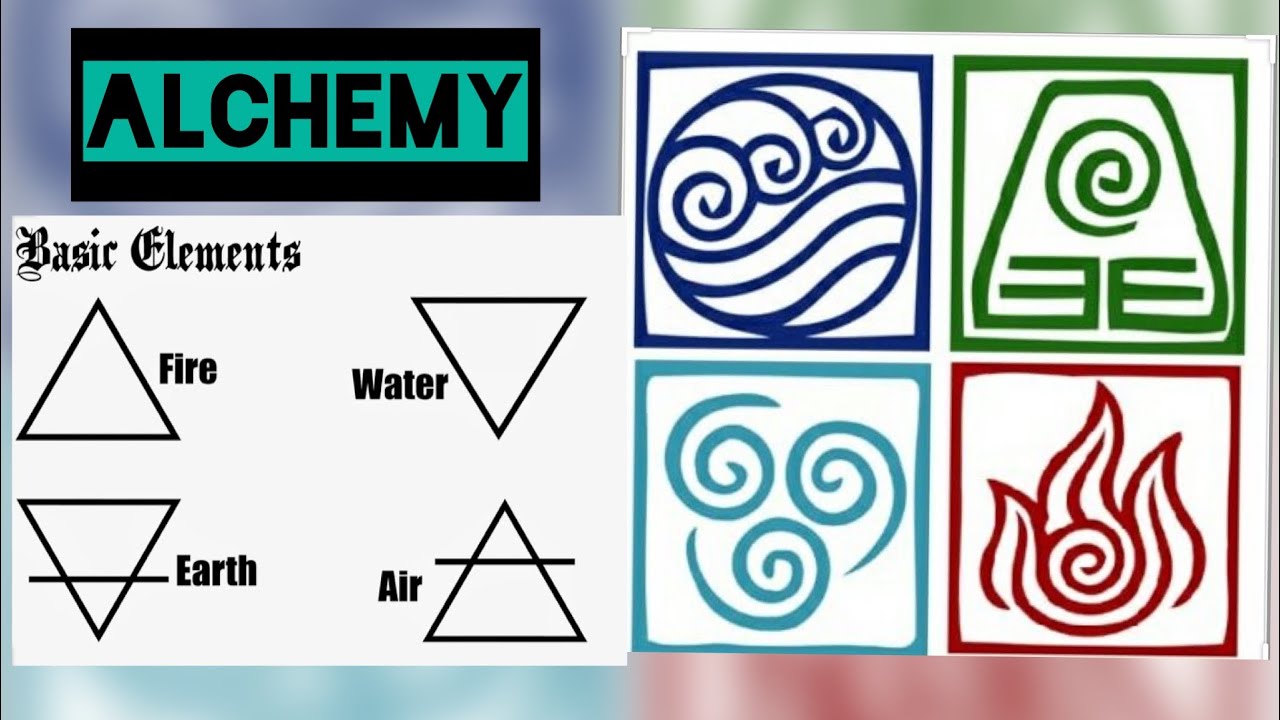
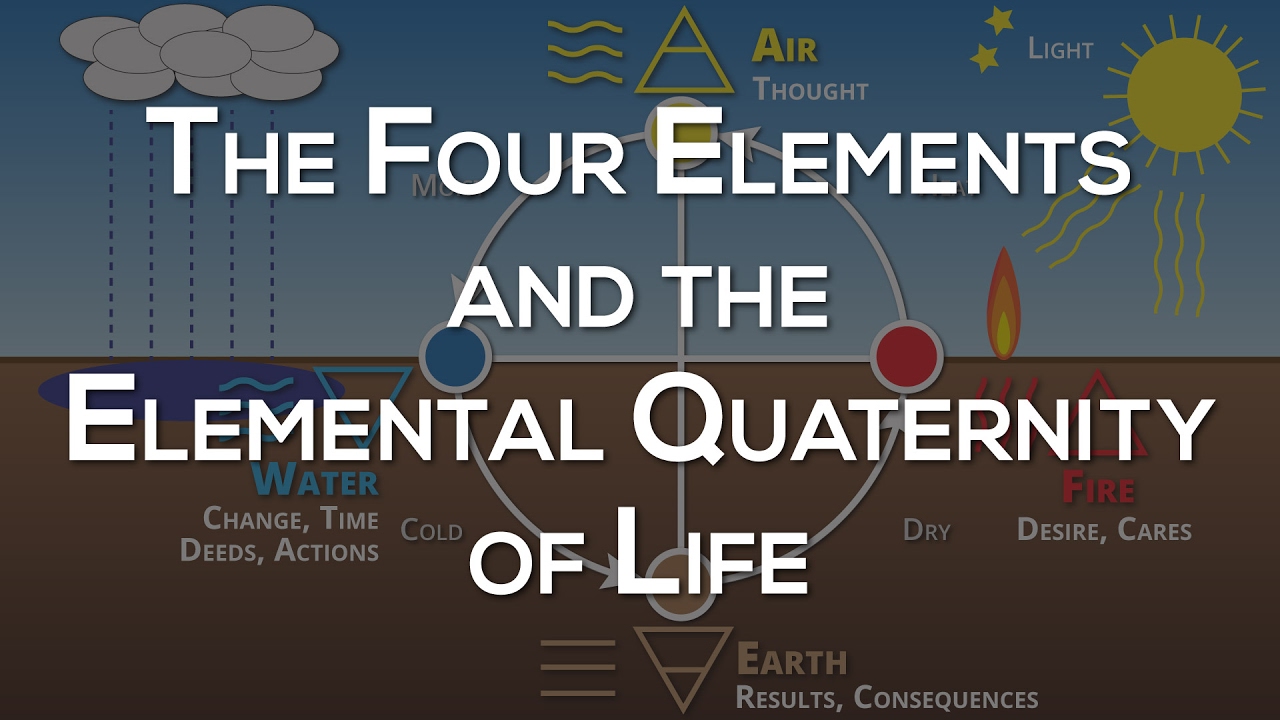
The Three Principles of alchemy are accessible to our sense in the form of matter that manifest in four different states: solid, liquid, gaseous, radiant or etheric. These manifestations are considered the four Elements; Earth, Water, Air and Fire and are endowed with the properties of cold, moist, dry, and hot.
This gives them a dual nature and that allows the Elements to separate and intermingle. In each case, two Elements have one quality in common and each Element also contains something of the other three. Fire from Water Element for instance would be the product of detonating gas through the separation of hydrogen and oxygen by means of electricity.
The Elements of alchemy are not basic substances in the sense of chemistry but manifest as states of matter.
Fire Element: characterized by the emission of light and heat. Signifies warmth, expansion, the active, the creative, the pure, the subtle, the noble, the virtuous, the masculine potency, strength, the will, generosity, altruism, intuition.
Water Element: the liquid state. The result of the coagulation of Fire and Air. Steam condenses and turns into water. Water is magnetic and is called “universal menstruum,: also “mother of the things.” It is either condensed air or liquid earth; its character is cold and contractive. In a broader sense, it signifies the passive, the absorbing, the penetrating, life, feelings, love of nature and of the great family. It acts as a mediator between Air and Earth.
Air Element:the gaseous and volatile. Denser than Fire, out of which it is precipitated, in the medium between Fire and Water. It is also the “carrier of the seed” and signifies in a broader sense wisdom, clarity, cleanliness, intellect, reason, the ability to communicate, and the expansion of being.
Earth Element: the concrete, solid condition. Contains three other Elements in a spcially noticeable way. We recognize it in coagulate Fire, coagulated Water and condensed Air (vapor). It’s the mother of metals, minerals, plants and animals and is also called the Great Treasurer. It is the mother of all material things, which are meant to attain to eternal life through evolution, and through the imperfection of things it provides the knowledge of that which is still lacking for completion.
In practical laboratory alchemy, different substances are designated as the Elements, according to the work of the day. In the Opus Vini the Work of the Wine, for example, alcohol is considered Air (because it is volatile); the phlegma remaining after its distillation is Water; the solid residue remaining after the subsequent distillation of the phlegma is Earth, and the shining color of the wine that is distilled by special manual operations if Fire. What matters in the separation of the Elements –which can never be completely done—is to recognize what substances are considered the Elements. The respective alchemistic texts clarify this point each time.
The alchemist Johannes Isaac Hollandus distinguishes between the two manifested Elements, Water and Earth, and the inflowing Elements, Air and Fire. The latter are concealed in the former, Air in Water and Fire in Earth. Water and Earth are fixed Elements; both are depicted by triangles standing on their points (descending). Fire and Air are volatile; they are represented by upward pointing triangles