Common Juniper

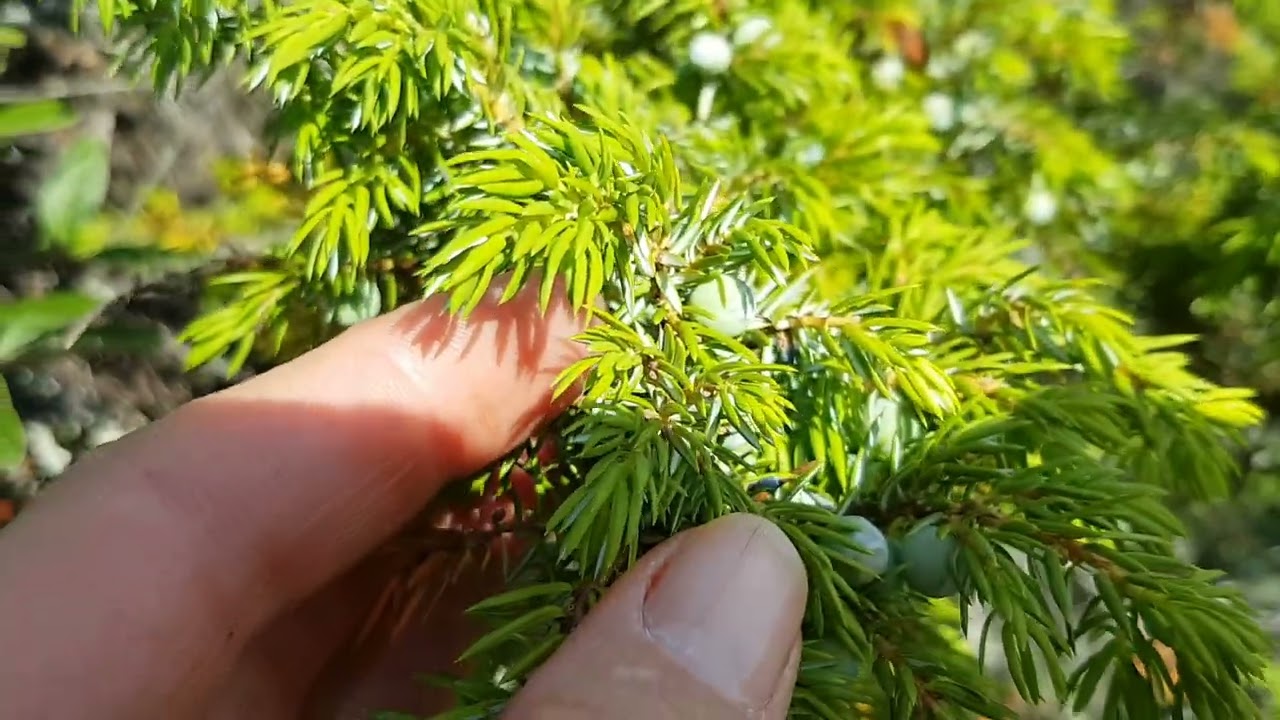
The Common Juniper, scientifically known as Juniperus communis, is a versatile and widespread coniferous shrub or small tree belonging to the cypress family, Cupressaceae. This resilient plant is notable for its adaptability to various climates and terrains, making it one of the most widely distributed woody plants in the world. Its presence spans across the Northern Hemisphere, from the Arctic to temperate regions, showcasing its remarkable ecological versatility.
Botanical Characteristics
Juniperus communis is characterized by its evergreen foliage, which consists of needle-like leaves arranged in whorls of three. These leaves are typically sharp and pointed, providing a distinctive texture to the plant. The shrub can vary significantly in size, ranging from low-growing ground covers to small trees reaching heights of up to 10 meters (approximately 33 feet). The bark is thin and scaly, often peeling in narrow strips.
One of the most recognizable features of the Common Juniper is its berry-like cones. These cones, commonly referred to as juniper berries, are actually modified seed cones. They are initially green and mature to a bluish-black color over a period of 18 months to three years. These berries are not only visually appealing but also play a crucial role in the plant's reproductive cycle.
Habitat and Distribution
The Common Juniper thrives in a wide range of habitats, from rocky hillsides and sandy soils to alpine regions and coastal areas. Its adaptability to different soil types and climates has contributed to its extensive distribution. In North America, it is found from Alaska to Newfoundland and as far south as the northern United States. In Europe, it is prevalent from the British Isles to the Mediterranean region and extends into parts of Asia.
This plant's ability to withstand harsh conditions, such as cold temperatures and poor soil quality, makes it a pioneer species in many ecosystems. It often colonizes disturbed areas, contributing to soil stabilization and providing habitat for various wildlife species.
Ecological Importance
The Common Juniper plays a vital role in its ecosystem. Its dense foliage offers shelter and nesting sites for birds and small mammals. The berries serve as a food source for numerous bird species, including thrushes and waxwings, which aid in seed dispersal. Additionally, the plant's root system helps prevent soil erosion, making it an essential component of fragile landscapes.
Uses and Applications
Ornamental Uses
Due to its attractive foliage and adaptability, the Common Juniper is a popular choice for ornamental landscaping. It is often used in rock gardens, hedges, and as a ground cover. Its ability to thrive in poor soil conditions and its resistance to drought make it a low-maintenance option for gardeners.
Culinary Uses
Juniper berries are perhaps best known for their culinary applications. They are a key ingredient in the production of gin, imparting the spirit's distinctive flavor. Beyond gin, the berries are used as a spice in various dishes, particularly in European cuisine. They add a unique, slightly piney flavor to meats, sauces, and marinades.
Medicinal Uses
Historically, Juniperus communis has been valued for its medicinal properties. The berries and essential oils derived from the plant have been used in traditional medicine to treat a range of ailments, including digestive disorders, respiratory issues, and urinary tract infections. However, it is important to note that the use of juniper for medicinal purposes should be approached with caution, as excessive consumption can lead to adverse effects.
This is the species most commonly used medicinally. There are several subspecies:
- Common Juniper: (Juniperus communis subsp. communis): With leaves up to 2 cm in length and cones usually shorter than the leaves. Is mainly distributed in temperate zones, medium or low altitudes and in different soil types that present a good drainage. It has the following variants:
- Juniperus communis subsp. communis var. communis. It is a variant of northern Europe and Asia.
- Juniperus communis subsp. communis var. nipponica (Maxim.) E.H.Wilson. Japanese variant
- Juniperus communis subsp. communis var. depressa. North American variant
- Creeping Juniper (Juniperus communis subsp. nana): With leaves that do not surpass 1.5 cm in length. It presents/displays a more crawling habit forming bushes in cold higher zones and of mountains of the center and the south of Europe or in cold level zones and of the north of Europe.
- Alpine Juniper: (Juniperus communis subsp. alpine) with leaves that usually do not surpass 8 mm in length and cones habitually more lengths than the leaves. Forms bushes of low height found in subarctic areas and high altitude alpine zones in temperate areas. We can find the following variants:
- Juniperus communis subsp. alpine bar. alpina - Europe, Asia and Greenland.
- Juniperus communis subsp. alpine bar. megistocarpa Fernald & H.St.John. Eastern Canada.
- Juniperus communis subsp. alpine bar. jackii Rehder. Western North America.
Common juniper, Juniperus communis, is amongst the plants most frequently used by the indigenous peoples of North America for medicinal purposes. The First Nations of the Canadian Maritimes use infusions of juniper primarily as a tonic and for the treatment of tuberculosis. Previous investigations of extracts derived from the aerial parts of J. communis have shown it to possess anti-mycobacterial activity.
The Physiomedical Dispensatory by William Cook, M.D., 1869
In the family with the pines, but more closely allied to the sub-order of cypress, Genus JUNIPERUS: Evergreens, comprising species of every size, from large trees to small and creeping plants. Flowers dioecious, very rarely monoecious, in very small lateral catkins; sterile aments sub-terminal or axillary, anther cells on the under side of the shield-like scales, from three to six in number, opening lengthwise; fertile aments axillary, ovoid, bracteate at base, of three to six fleshy and coalescent scales, each one to three ovuled. Fruit a sort of drupe or berry, with scaly bracts underneath, with one to three hard-shelled seeds, of a strongly resinous odor. Leaves scale-like or awl-shaped, very persistent. J.COMMUNIS: Leaves in whorls of three, spreading in the adult plants, jointed at the base, linear or awl-shaped, glaucous-white on the upper surface, bright green on the under surface, prickly pointed, about an inch long. Branches rigid, with numerous branchlets. Fruit small, round, dark purple, covered with a handsome light bloom which gives the globular berry a bluish appearance, as large as a pea. May.
This species of juniper is indigenous, common through Pennsylvania and northward, much cultivated among the ornamental evergreens. Its usual height is from eight to twelve feet, and spreading; but by under-trimming it is trained to a tree of from twenty to twenty-five feet high. Preferring dry hill-sides. The leaves and berries both have a terebinthinate smell and taste, which arise from a volatile oil they contain. This oil is usually of a faint greenish-yellow tint, warming taste, and a pleasant terebinthinate odor. Nearly all that comes to market is obtained from the leaves. The berries are added to Holland gin during distillation, and give to that liquor its peculiar smell and diuretic action.
Properties and Uses: Juniper berries are a mild stimulant and relaxant, chiefly influencing the kidneys and bladder. They are a pleasant and somewhat prompt diuretic, not usable in acute inflammation of any portion of the renal apparatus, but answering an excellent purpose in all renal congestions, aching through the back and loins, catarrh of the bladder, etc. They seem best suited to cases of retained uric acid, with amber-colored wine. (§192.) They exert a moderate influence on the uterus, and some upon the nervous peripheries at large; hence are sometimes useful in sudden suppressions of the menses from exposure, and in the peculiar and half-hysterical forms of nervousness arising under such circumstances. They may be crushed with sugar, and given in doses of half a drachm to a drachm three or four times a day. A better method of using them is to crush an ounce of the berries, and macerate them in a pint of warm water for an hour in a covered vessel; of which two fluid ounces may be taken every two or three hours. In this form they are very effective, and are often added to more relaxing and slower diuretics, as queen-of-meadow, scoparium, etc., in the treatment of dropsies.
The oil is a stimulant with relaxant properties, acting as a diuretic, carminative and emmenagogue, and used in much the same maladies as the berries. It is more stimulating than the berries, and is fitted for atonic conditions of the kidneys and uterus; but should not be employed in inflamed or even sensitive conditions. It is usually added to compounds, in the form of an essence; but may be mixed with sugar, and given in doses of from two to five drops every four hours, in obstruction of the kidneys and atonic forms of dropsy. The oil has lately come into much repute, in Europe, as a local application in eczema, herpes, lichen, porrigo, and similar cutaneous maladies; and there seems to be good reason to believe that it is of much service. It is sometimes applied in the form of a weak alcoholic solution, but oftener in ointment. A recent favorite method of application is by adding the oil to some mild soap, (as a soap formed on glycerin,) in company with tar water, and using this in washing. Probably a better way would be to combine the oil with glycerin, and use this several times a day washing the parts well with suds of castile soap before each application.
Pharmaceutical Preparations: Fluid Extract. A good preparation is made from the berries by the use of eighty percent alcohol, after the manner of other fluid extracts. Dose, thirty drops to half a fluid drachm, or more. A compound containing the berries is given under horseradish. Under the head of Compound Spirit of Juniper, ten drops each oils of caraway and fennel are made into an essence with a drachm of juniper oil.
CONSERVATION AND THREATS
While the Common Juniper is not currently considered endangered, certain populations face threats from habitat loss, overgrazing, and climate change. In some regions, the plant is subject to overharvesting for its berries and wood. Conservation efforts focus on preserving its natural habitats and promoting sustainable harvesting practices.