Jerusalem Sage
Constituents:
Shown in Duke's Phytochemical Database
Teucrium gnaphalodes, commonly known as the Jerusalem Sage, is a species of flowering plant that belongs to the mint family, Lamiaceae. This perennial herb is native to the Mediterranean region, where it thrives in rocky, dry habitats. The plant is characterized by its aromatic leaves, which release a pleasant scent when crushed or brushed against. Teucrium gnaphalodes has been valued for its ornamental beauty and medicinal properties.
Description and Characteristics
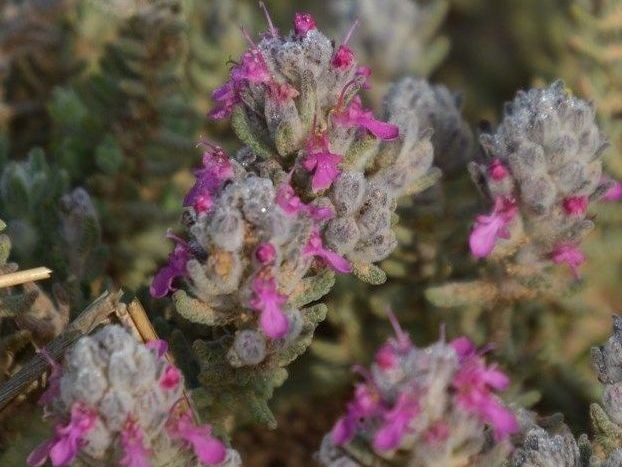
Teucrium gnaphalodes is a compact, bushy shrub that typically grows to a height of 1 to 2 feet. The plant features small, oval-shaped leaves that are gray-green in color and covered with fine hairs. The leaves are arranged in opposite pairs along the stems, giving the plant a dense and lush appearance. In the summer months, Teucrium gnaphalodes produces clusters of tiny, tubular flowers that range in color from pale pink to lavender. These delicate blooms attract pollinators such as bees and butterflies, adding to the plant's charm.
Cultivation and Care
Jerusalem Sage is a relatively low-maintenance plant that is well-suited to dry, sunny gardens. It thrives in well-drained soil and is tolerant of drought once established. Teucrium gnaphalodes prefers full sun but can also tolerate partial shade. Regular pruning after flowering helps to maintain the plant's shape and encourages new growth. Propagation can be done through seeds or cuttings, with the plant readily establishing itself in suitable growing conditions.
Ornamental Uses
Teucrium gnaphalodes is prized for its ornamental value in garden settings. The plant's compact size and attractive foliage make it a versatile choice for borders, rock gardens, and containers. The aromatic leaves add a sensory element to the garden, releasing a pleasant fragrance that can be enjoyed when brushing past the plant. The delicate flowers provide a pop of color and attract beneficial insects, contributing to a vibrant and biodiverse garden ecosystem.
Medicinal Properties
In addition to its ornamental appeal, Teucrium gnaphalodes has a long history of medicinal use. The plant contains bioactive compounds that are believed to have various health benefits. Jerusalem Sage has been traditionally used to treat respiratory ailments, digestive issues, and skin conditions. The leaves and flowers of the plant can be prepared as herbal infusions or extracts for internal or external use. As with any herbal remedy, it is important to consult with a healthcare professional before using Teucrium gnaphalodes for medicinal purposes.