Dislocation Sternoclavicular Joint
Posterior Dislocation Sternoclavicular Joint - Everything You Need To Know -
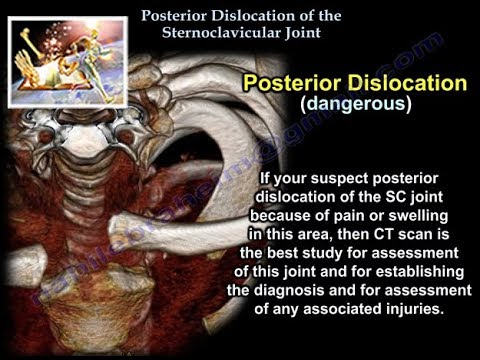
The sternoclavicular (SC) joint is a pivotal component of the shoulder girdle, connecting the sternum (breastbone) to the clavicle (collarbone). Dislocation of this joint, although rare, can lead to significant discomfort and functional impairment.
Anatomy of the Sternoclavicular Joint
The SC joint is a synovial saddle joint that allows for a wide range of motion, including elevation, depression, protraction, retraction, and rotation of the clavicle. It is stabilized by several ligaments:
- Anterior and Posterior Sternoclavicular Ligaments: These provide anterior and posterior stability.
- Costoclavicular Ligament: This ligament anchors the clavicle to the first rib, providing vertical stability.
- Interclavicular Ligament: This ligament connects the two clavicles across the top of the sternum, offering additional support.
Causes of Dislocation
Dislocation of the SC joint can occur due to:
- Trauma: A direct blow to the shoulder or a fall onto an outstretched hand can cause dislocation.
- Sports Injuries: Contact sports such as football, rugby, or wrestling often involve high-impact forces that can lead to dislocation.
- Motor Vehicle Accidents: The force from a collision can result in dislocation.
- Repetitive Stress: Overuse or repetitive movements can weaken the joint over time, leading to dislocation.
Types of Dislocation
SC joint dislocations are classified into two main types:
- Anterior Dislocation: The clavicle is displaced forward, which is more common and generally less severe.
- Posterior Dislocation: The clavicle is displaced backward, which is less common but more serious due to the risk of injury to vital structures such as blood vessels, trachea, and esophagus.
Symptoms
Symptoms of SC joint dislocation may include:
- Pain and Tenderness: Localized pain at the joint, which may worsen with movement.
- Swelling and Bruising: Visible swelling and bruising around the joint.
- Deformity: A noticeable bump or deformity at the site of dislocation.
- Limited Range of Motion: Difficulty moving the shoulder or arm.
- Respiratory or Vascular Symptoms: In posterior dislocations, difficulty breathing or swallowing, and vascular compromise may occur.
Diagnosis
Diagnosis of SC joint dislocation involves:
- Physical Examination: A thorough examination to assess pain, swelling, and deformity.
- Imaging Studies:
* X-rays: Initial imaging to assess the position of the clavicle.
* CT Scan: Provides detailed images to confirm the type and extent of dislocation.
* MRI: Used to evaluate soft tissue injuries and ligament damage.
Treatment Options
Treatment for SC joint dislocation depends on the severity and type of dislocation:
- Conservative Management:
- Rest and Immobilization: Using a sling to immobilize the joint and allow healing.
- Pain Management: NSAIDs or analgesics to manage pain and inflammation.
- Physical Therapy: Exercises to restore range of motion and strengthen surrounding muscles.
- Surgical Intervention:
- Closed Reduction: Manual manipulation to reposition the clavicle, typically under anesthesia.
- Open Reduction and Internal Fixation (ORIF): Surgical procedure to realign and stabilize the joint using hardware, often necessary for posterior dislocations or when conservative treatment fails.
Prognosis and Recovery
The prognosis for SC joint dislocation is generally favorable with appropriate treatment. Recovery time varies depending on the severity of the dislocation and the treatment approach. Most individuals can return to normal activities within a few weeks to months, although full recovery may take longer for severe cases or those requiring surgery.