White Dapperling
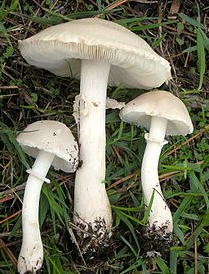
The White Dapperling, scientifically known as Leucoagaricus leucothites, is a species of mushroom that belongs to the family Agaricaceae. This mushroom is notable for its striking white appearance and is often found in grassy areas, gardens, and sometimes even in woodlands. Despite its appealing look, it is important to approach this mushroom with caution due to its potential toxicity.
Identification
Identifying the White Dapperling involves observing several key characteristics:
Cap
- The cap is initially convex but flattens out as the mushroom matures.
- It is typically white, sometimes with a slight brownish tint at the center.
- The surface is smooth and can become slightly scaly with age.
- The diameter ranges from 5 to 10 cm.
Gills
- The gills are free from the stem and are densely packed.
- They start off white but may turn pinkish or brownish as the mushroom ages.
Stem
- The stem is white, slender, and can grow up to 10 cm in height.
- It has a ring (annulus) near the top, which is a remnant of the partial veil.
- The base of the stem may be slightly bulbous.
Spore Print
- The spore print of Leucoagaricus leucothites is white, which is a helpful identification feature.
Habitat and Distribution
The White Dapperling is commonly found in:
- Lawns and grassy areas
- Gardens and parks
- Occasionally in woodlands
It is widely distributed across North America, Europe, and other temperate regions. The mushroom tends to appear in late summer to fall, especially after periods of rain.
Edibility and Toxicity
While some sources suggest that the White Dapperling is edible, it is generally advised to avoid consuming it. This caution is due to several reasons:
- Potential for Misidentification: The White Dapperling can be easily confused with other toxic white mushrooms, such as certain species of Amanita.
- Toxic Compounds: There have been reports of gastrointestinal distress following the consumption of Leucoagaricus leucothites. Symptoms may include nausea, vomiting, and diarrhea.
Given these risks, it is best to err on the side of caution and not consume this mushroom.
Ecological Role
Mushrooms like the White Dapperling play a crucial role in their ecosystems:
- Decomposers: They help break down organic matter, recycling nutrients back into the soil.
- Symbiotic Relationships: Some mushrooms form symbiotic relationships with plants, aiding in nutrient absorption.
Similar Species
Several mushrooms resemble the White Dapperling, making accurate identification essential:
- Amanita bisporigera: Also known as the Destroying Angel, this highly toxic mushroom is pure white and can be deadly if ingested.
- Chlorophyllum molybdites: Known as the Green-spored Parasol, it has a similar appearance but produces a green spore print and is toxic.
- Lepiota species: Some small white mushrooms in this genus are also toxic and can be mistaken for the White Dapperling.
Safety Tips for Mushroom Foraging
If you are interested in mushroom foraging, here are some safety tips to keep in mind:
- Learn from Experts: Go foraging with experienced mycologists or join a local mycological society.
- Use Multiple Identification Sources: Cross-reference multiple field guides and resources.
- Avoid White Mushrooms: As a general rule, avoid consuming white mushrooms unless you are absolutely certain of their identity.
- Conduct a Spore Print Test: This can help differentiate between similar-looking species.
- When in Doubt, Throw it Out: If you are unsure about a mushroom's identity, it is best to discard it.