Mesentery
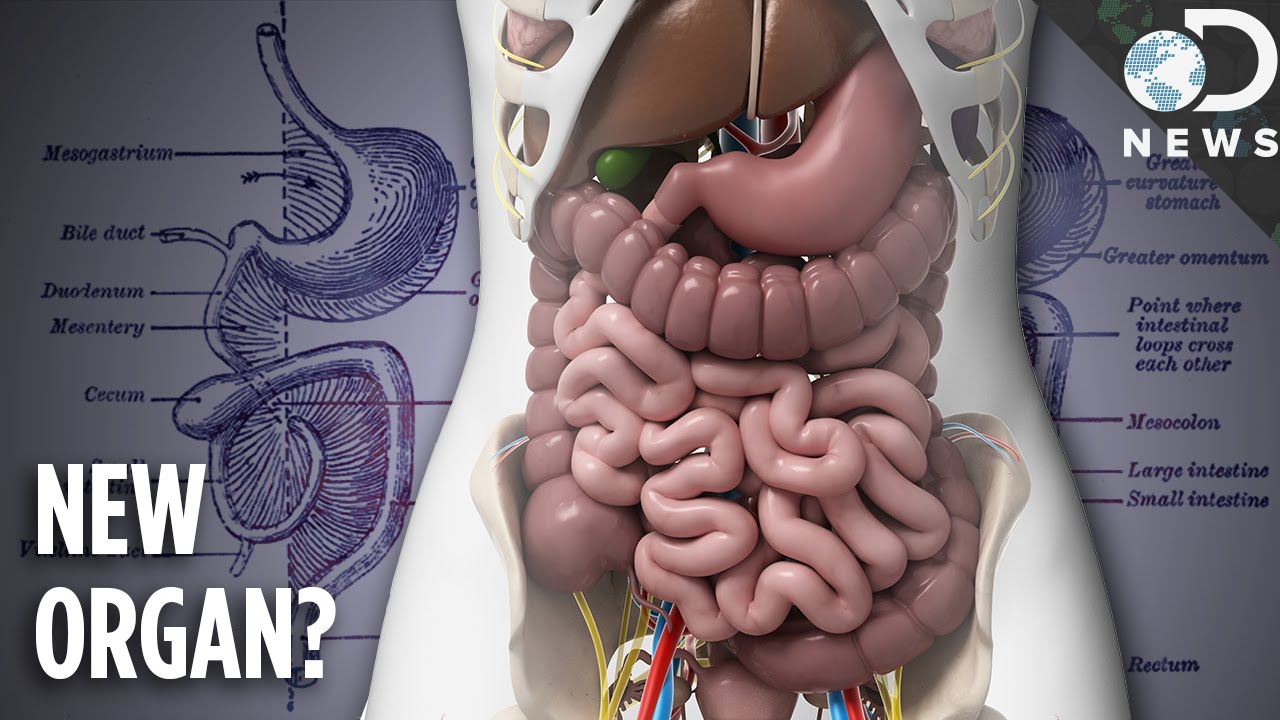
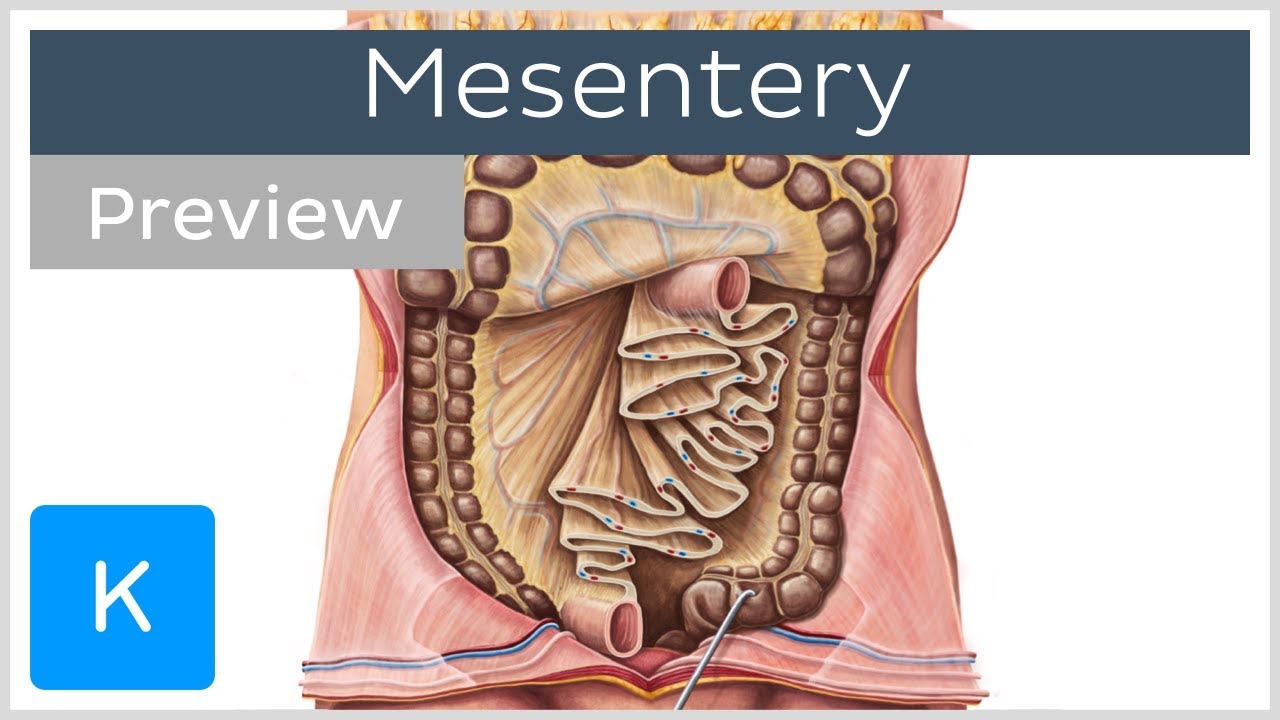
Peritoneum - Omentum, Mesentery and Cavity

Wikipedia
The mesentery is an organ that attaches the intestines to the posterior abdominal wall in humans and is formed by the double fold of peritoneum. It helps in storing fat and allowing blood vessels, lymphatics, and nerves to supply the intestines, among other functions. The blood supply to each organ in the abdominal cavity is through the mesenteric wall.
The mesocolon was thought to be a fragmented structure, with all named parts—the ascending, transverse, descending, and sigmoid mesocolons, the mesoappendix, and the mesorectum—separately terminating their insertion into the posterior abdominal wall. However, in 2012, new microscopic and electron microscopic examinations showed the mesocolon to be a single structure derived from the duodenojejunal flexure and extending to the distal mesorectal layer. Thus, the mesentery is an internal organ.
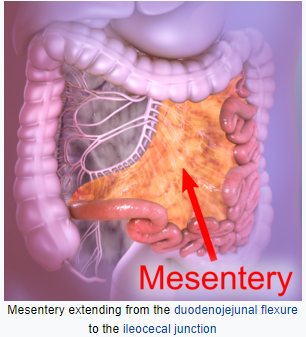
Light shed on a new order in the abdomen A pioneering professor of surgery whose groundbreaking research led to the reclassification of an organ has published new evidence detailing the fundamental order of the abdomen. He has detailed the development and structure of the mesentery. In doing this, they uncovered a new order by which all contents of the abdomen are organized or arranged -- or the 'fundamental order of the abdomen.'