Phosphorus
Videos


Dangers of Excess Phosphorus
Phosphorus: What Makes It So Vital – Yet So Deadly? An Author Explains
Phosphorus is an essential macromineral that plays a crucial role in various biological processes. As a component of DNA, RNA, ATP, and phospholipids, phosphorus is indispensable for life. It is the second most abundant mineral in the human body, following calcium, and is primarily stored in bones and teeth.
Functions of Phosphorus
Phosphorus is involved in several critical functions within the body:
- Bone and Teeth Formation: Phosphorus, in conjunction with calcium, is vital for the development and maintenance of strong bones and teeth. It forms a part of the mineral matrix that gives bones their rigidity.
- Energy Production: As a component of adenosine triphosphate (ATP), phosphorus is essential for energy storage and transfer within cells. ATP is the primary energy carrier in biological systems.
- Cellular Function: Phosphorus is a key component of cell membranes, as it is part of phospholipids. These molecules form the lipid bilayer that surrounds cells, maintaining their integrity and facilitating communication.
- Acid-Base Balance: Phosphorus helps maintain the body's acid-base balance by acting as a buffer. This is crucial for normal cellular function and overall metabolic processes.
- DNA and RNA Synthesis: Phosphorus is a component of nucleotides, the building blocks of DNA and RNA. It is essential for the synthesis and repair of genetic material.
Dietary Sources of Phosphorus
Phosphorus is widely available in a variety of foods, making it relatively easy to meet daily requirements through diet. Some rich sources include:
- Dairy Products: Milk, cheese, and yogurt are excellent sources of phosphorus.
- Meat and Poultry: Chicken, turkey, beef, and pork contain significant amounts of phosphorus.
- Fish: Salmon, tuna, and other fish are good sources of this mineral.
- Nuts and Seeds: Almonds, sunflower seeds, and pumpkin seeds provide phosphorus.
- Legumes: Lentils, chickpeas, and beans are plant-based sources of phosphorus.
- Whole Grains: Brown rice, oats, and whole wheat products contain phosphorus.
Recommended Dietary Allowance (RDA)
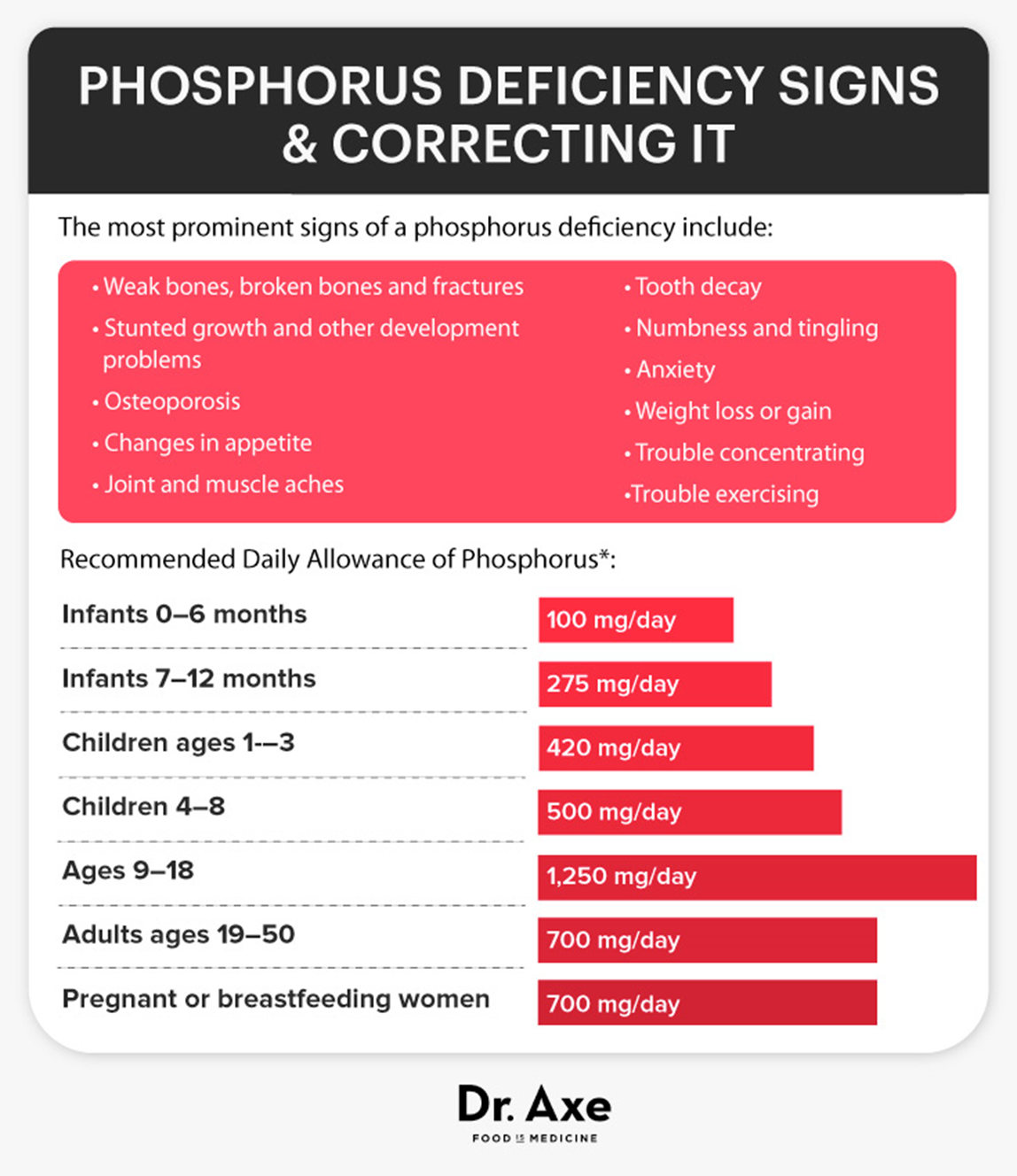
The RDA for phosphorus varies by age, sex, and life stage. For adults, the recommended intake is approximately 700 mg per day. However, specific needs may differ for children, pregnant or lactating women, and older adults. It is important to consult dietary guidelines or a healthcare provider for personalized recommendations.
Health Implications of Phosphorus
While phosphorus is essential for health, both deficiency and excess can lead to health issues.
Phosphorus Deficiency
Phosphorus deficiency is relatively rare due to its abundance in the diet. However, it can occur in certain situations, such as:
- Malnutrition: Inadequate dietary intake can lead to deficiency.
- Chronic Alcoholism: Excessive alcohol consumption can impair phosphorus absorption.
- Certain Medical Conditions: Conditions like diabetes and hyperparathyroidism can affect phosphorus levels.
Symptoms of deficiency may include bone pain, muscle weakness, fatigue, and irregular breathing.
Excess Phosphorus
Excessive phosphorus intake, often due to overconsumption of processed foods and phosphate additives, can lead to health problems, including:
- Kidney Damage: High phosphorus levels can strain the kidneys, especially in individuals with pre-existing kidney conditions.
- Bone Loss: An imbalance between calcium and phosphorus can lead to bone demineralization.
- Cardiovascular Issues: Elevated phosphorus levels have been linked to an increased risk of cardiovascular disease.