Scarlet Globemallow
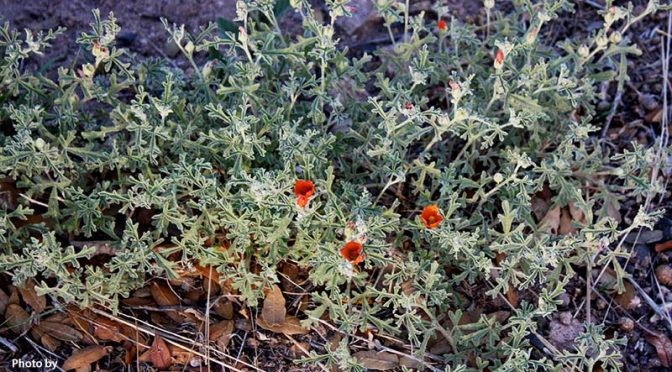
North America (Arizona): root eaten by Native American Navajo group.
Sphaeralcea coccinea, commonly known as Scarlet Globemallow, is a perennial herbaceous plant that belongs to the Malvaceae family. This resilient plant is native to North America and is often found in arid and semi-arid regions, including prairies, deserts, and grasslands. Its ability to thrive in harsh conditions makes it a fascinating subject for botanists and plant enthusiasts alike.
Botanical Characteristics
Appearance
Sphaeralcea coccinea is easily recognizable by its vibrant orange to red flowers, which bloom from late spring to early fall. The plant typically grows to a height of 4 to 12 inches, although it can occasionally reach up to 18 inches under optimal conditions. The leaves are deeply lobed and covered with fine hairs, giving them a silvery-gray appearance. These hairs help reduce water loss, making the plant well-suited for dry environments.
Root System
One of the most remarkable features of Sphaeralcea coccinea is its extensive root system. The plant has a deep taproot that can penetrate several feet into the soil, allowing it to access water and nutrients that are unavailable to many other plants. This deep root system also helps stabilize the soil, making Sphaeralcea coccinea an important species for erosion control.
Habitat and Distribution
Native Range
Sphaeralcea coccinea is native to a wide range of habitats across North America. It is commonly found in the Great Plains, the Rocky Mountains, and the southwestern United States. The plant is highly adaptable and can grow in a variety of soil types, including sandy, rocky, and clay soils.
Environmental Tolerance
The plant is highly drought-tolerant and can survive in areas with as little as 8 inches of annual rainfall. It is also resistant to extreme temperatures, both hot and cold, making it a versatile species for restoration projects in challenging environments.
Ecological Importance
Pollinator Attraction
Sphaeralcea coccinea plays a crucial role in supporting local ecosystems by attracting a variety of pollinators, including bees, butterflies, and hummingbirds. The bright flowers are rich in nectar, providing an essential food source for these insects and birds.
Wildlife Habitat
In addition to attracting pollinators, Sphaeralcea coccinea provides habitat and forage for various wildlife species. Small mammals and birds often use the plant for cover, while herbivores such as deer and rabbits may feed on its leaves and stems.
Uses and Applications
Traditional Medicine
Native American tribes have long used Sphaeralcea coccinea for its medicinal properties. The plant has been used to treat a variety of ailments, including respiratory issues, digestive problems, and skin conditions. The leaves and roots are often made into teas or poultices for these purposes.
Edible Uses
1. Roots — the main edible part
The Edible Plant Database explicitly lists “Root” as the edible portion of Sphaeralcea coccinea edibleplantdb.org.
Ethnobotanical sources expand on how roots were used:
- Chewed to reduce hunger during scarcity (Navajo, Pueblo traditions) montana.plant-life.org.
- Boiled to make a drink (documented in edible plant references) edibleplantdb.org.
- Used as a sweet-tasting tea in some Plains cultures montana.plant-life.org.
- Used medicinally as poultices, plasters, or decoctions (not a food use, but confirms cultural familiarity with root preparation) montana.plant-life.org.
Flavor profile: described as mild, somewhat sweet when decocted.
2. Fruits / Seeds — edible across globe-mallows
Ethnobotanical documentation for globe-mallows as a group states:
- “The fruits of all globe-mallows are edible.”
Archaeological evidence shows pollen and seeds of Sphaeralcea species at Chaco Canyon, Pecos, and Rio Grande sites, indicating they were regularly eaten in Ancestral Puebloan diets eldoradowindyfarm.com.
This applies to Sphaeralcea coccinea specifically, as the source directly references its use.
Form: dry schizocarp segments containing small seeds.
Use: likely eaten whole or ground; traditional contexts suggest small-scale, seasonal use rather than staple food.
3. Leaves & flowers — not listed as edible
Unlike some mallows (e.g., Malva, Althaea), no grounded source lists the leaves or flowers of S. coccinea as edible.
They are medicinally used (mucilaginous, soothing), but not documented as food in any of the sources returned.
Modern Applications
In contemporary times, Sphaeralcea coccinea is valued for its potential in land reclamation and habitat restoration projects. Its ability to stabilize soil and thrive in poor conditions makes it an excellent candidate for revegetating disturbed areas, such as mine sites and overgrazed rangelands.
Cultivation and Care
Growing Conditions
For those interested in cultivating Sphaeralcea coccinea, it is important to mimic its natural growing conditions as closely as possible. The plant prefers full sun and well-drained soil. It is highly drought-tolerant once established but may require occasional watering during prolonged dry spells.
Propagation
Sphaeralcea coccinea can be propagated from seeds or cuttings. Seeds should be sown in the fall or early spring, as they require a period of cold stratification to germinate. Cuttings can be taken in the spring or early summer and should be rooted in a well-draining soil mix.
Challenges and Considerations
Pests and Diseases
While Sphaeralcea coccinea is generally resistant to pests and diseases, it can occasionally be affected by aphids, spider mites, and fungal infections. Regular monitoring and appropriate cultural practices, such as proper spacing and watering, can help mitigate these issues.
Invasive Potential
Although Sphaeralcea coccinea is not considered invasive in its native range, it is important to be mindful of its potential to spread in non-native areas. Care should be taken to ensure that it does not outcompete local flora in restoration projects.