Smooth Mesquite
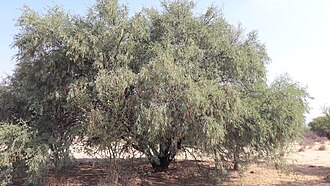
Smooth Mesquite, scientifically known as Prosopis laevigata, is a species of flowering plant in the legume family, Fabaceae. This tree is native to the arid and semi-arid regions of Mexico and the southwestern United States. It is well-adapted to harsh environments and plays a significant role in the ecosystems where it is found.
Botanical Characteristics
Appearance
Smooth Mesquite is a medium-sized tree that can grow up to 30 feet tall. It has a distinctive smooth, grayish-brown bark that becomes rougher with age. The tree's branches are often twisted and gnarled, giving it a unique and picturesque appearance. The leaves are bipinnate, meaning they are divided into smaller leaflets, which provide a feathery texture.
Flowers and Fruits
The tree produces small, yellowish-green flowers that are arranged in dense, cylindrical spikes. These flowers are highly attractive to pollinators, especially bees. Following pollination, the tree develops long, slender pods that contain seeds. These pods are a crucial food source for various wildlife species.
Ecological Importance
Soil Enrichment
One of the most significant ecological roles of Smooth Mesquite is its ability to fix nitrogen in the soil. Like other legumes, it has a symbiotic relationship with nitrogen-fixing bacteria in its root nodules. This process enriches the soil, making it more fertile and supporting the growth of other plant species.
Habitat and Food Source
Smooth Mesquite provides essential habitat and food for a variety of wildlife. Birds, insects, and mammals rely on its seeds, flowers, and foliage for sustenance. The tree's dense canopy offers shelter and nesting sites for birds and small mammals.
Uses and Benefits
Traditional Uses
Indigenous peoples have utilized Smooth Mesquite for centuries. The pods are edible and can be ground into flour to make bread and other foods. The wood is highly valued for its hardness and durability, making it ideal for crafting tools, furniture, and even musical instruments.
Modern Applications
In contemporary times, Smooth Mesquite continues to be valued for its wood, which is used in furniture making and as a source of high-quality charcoal. The tree is also planted for erosion control and land reclamation projects due to its deep root system and ability to thrive in poor soil conditions.
Cultivation and Management
Growing Conditions
Smooth Mesquite is highly adaptable and can grow in a variety of soil types, including sandy, loamy, and clay soils. It prefers full sun and is drought-tolerant, making it an excellent choice for xeriscaping and sustainable landscaping in arid regions.
Propagation
The tree can be propagated from seeds, which should be scarified or soaked in water to enhance germination. It can also be propagated through cuttings, although this method is less common. Once established, Smooth Mesquite requires minimal maintenance.
Management Challenges
While Smooth Mesquite offers numerous benefits, it can become invasive in some areas. Its deep root system and prolific seed production allow it to spread rapidly, potentially outcompeting native vegetation. Effective management strategies include regular monitoring, mechanical removal, and the use of herbicides when necessary.
Conservation and Sustainability
Threats
Despite its resilience, Smooth Mesquite faces threats from habitat destruction, overgrazing, and climate change. Conservation efforts are essential to ensure the survival of this species and the ecosystems it supports.
Sustainable Practices
Promoting sustainable land management practices, such as rotational grazing and the protection of natural habitats, can help preserve Smooth Mesquite populations. Additionally, raising awareness about the ecological and cultural importance of this tree can foster greater appreciation and conservation efforts.