Zigzag Jointvetch
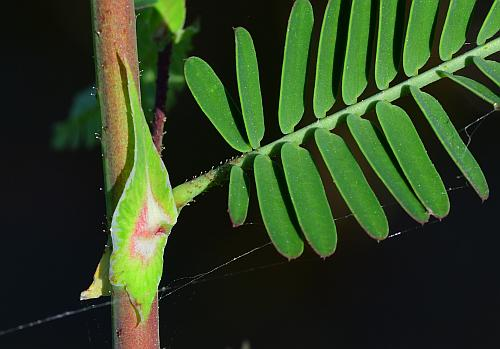
Aeschynomene rudis, commonly known as rough jointvetch, is a fascinating plant species belonging to the Fabaceae family. This plant is native to the Americas and is often found in wetland areas, such as marshes, swamps, and along the edges of ponds and streams. Its unique characteristics and ecological significance make it an interesting subject for study.
Botanical Description
Aeschynomene rudis is an annual herb that can grow up to 1.5 meters in height. The plant has a distinctive appearance with its erect, branched stems that are covered in fine hairs, giving it a rough texture. The leaves are pinnately compound, meaning they are divided into smaller leaflets arranged on either side of a central stem. Each leaflet is oblong to lanceolate in shape, with a smooth margin and a pointed tip.
The flowers of Aeschynomene rudis are small but striking, typically yellow or orange in color. They are arranged in racemes, which are elongated clusters that grow from the axils of the leaves. Each flower has a standard petal, two wing petals, and a keel petal, which are characteristic features of the Fabaceae family. The fruit is a legume, a type of pod that contains several seeds. When mature, the pod splits open to release the seeds, which are then dispersed by water or animals.
Habitat and Distribution
Aeschynomene rudis thrives in wet, marshy environments where the soil is consistently moist. It is commonly found in the southeastern United States, particularly in states like Florida, Louisiana, and Texas. The plant is also present in parts of Central and South America, where it occupies similar wetland habitats.
The ability of Aeschynomene rudis to grow in waterlogged conditions makes it an important species for maintaining the health of wetland ecosystems. It helps stabilize the soil, reducing erosion and providing habitat for various aquatic and semi-aquatic organisms. Additionally, the plant's roots can fix nitrogen, enriching the soil and benefiting other plant species in the area.
Ecological Importance
Aeschynomene rudis plays a crucial role in wetland ecosystems. Its dense growth provides cover and nesting sites for birds, amphibians, and insects. The plant's flowers attract pollinators such as bees and butterflies, which are essential for the reproduction of many plant species. Furthermore, the seeds of Aeschynomene rudis are a food source for various animals, including waterfowl and small mammals.
The nitrogen-fixing ability of Aeschynomene rudis is particularly significant. Like other members of the Fabaceae family, the plant forms a symbiotic relationship with nitrogen-fixing bacteria in its root nodules. These bacteria convert atmospheric nitrogen into a form that plants can use, thereby enhancing soil fertility. This process is vital for the health of wetland ecosystems, where nutrient levels can be low.
Uses and Applications
While Aeschynomene rudis is primarily valued for its ecological benefits, it also has some practical uses. In agriculture, the plant can be used as a cover crop to improve soil health and prevent erosion. Its ability to fix nitrogen makes it a valuable addition to crop rotation systems, where it can help replenish soil nutrients.
In addition to its agricultural applications, Aeschynomene rudis has potential uses in phytoremediation, a process that involves using plants to remove contaminants from the environment. The plant's ability to thrive in wet, polluted conditions makes it a candidate for cleaning up contaminated wetlands and water bodies.