Giant Arrowhead
In Arkansas we have the subspecies; S. montevidensis Cham. & Schl. subsp. calycina (Engelm.) Bogin
Constituents
Abietatrienes diterpenoids from Sagittaria montevidensis SSP Montevidensis
The Giant Arrowhead, scientifically known as Sagittaria montevidensis, is an aquatic plant that belongs to the Alismataceae family. This perennial plant is native to the Americas, particularly found in regions ranging from the southern United States to South America.
Physical Characteristics
Leaves
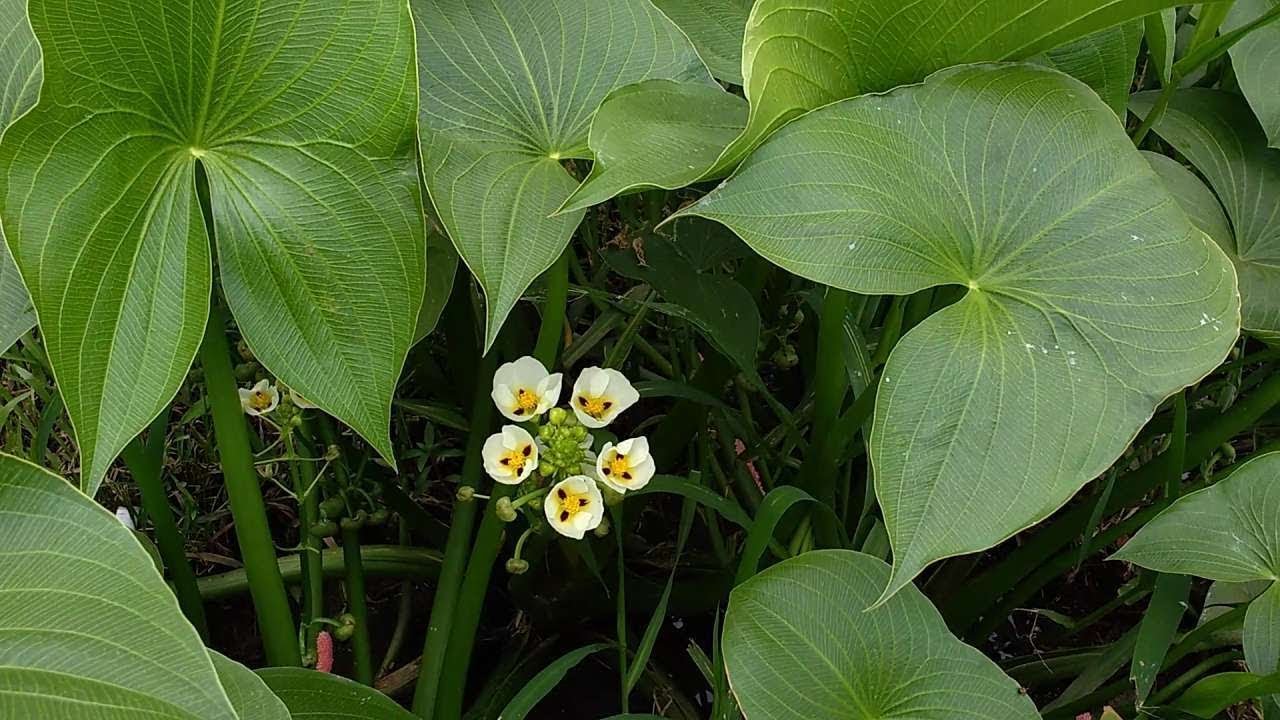
The leaves of the Giant Arrowhead are one of its most distinguishing features. They are typically large, arrow-shaped, and can grow up to 30 cm in length. The leaves are usually bright green and have a glossy texture, which adds to their visual appeal. The shape of the leaves is not only aesthetically pleasing but also functional, as it helps the plant to float and thrive in aquatic environments.
Flowers
The flowers of Sagittaria montevidensis are equally captivating. They are usually white with a yellow center, although some varieties may exhibit a slight pinkish hue. The flowers grow in clusters on tall stalks that can reach up to 1 meter in height. Each flower has three petals and is about 2-3 cm in diameter. The blooming period typically occurs in the summer, adding a splash of color to water gardens and ponds.
Roots
The root system of the Giant Arrowhead is robust and well-adapted to aquatic environments. The roots are fibrous and can anchor the plant firmly in the muddy or sandy substrates commonly found in ponds and wetlands. This strong root system also helps the plant to absorb nutrients efficiently, contributing to its vigorous growth.
Habitat and Distribution
The Giant Arrowhead is predominantly found in freshwater habitats such as ponds, marshes, and slow-moving streams. It thrives in areas with full sun to partial shade and prefers nutrient-rich, muddy substrates. The plant is quite adaptable and can tolerate a range of water conditions, from shallow to moderately deep waters.
In terms of geographical distribution, Sagittaria montevidensis is native to the Americas. It is commonly found in the southern United States, including states like Texas and Florida, and extends down through Central America to South America, including countries like Brazil and Argentina.
Ecological Importance
Biodiversity
The Giant Arrowhead plays a crucial role in maintaining biodiversity in aquatic ecosystems. Its dense foliage provides shelter and breeding grounds for various aquatic organisms, including fish, amphibians, and invertebrates. The plant also serves as a food source for some herbivorous animals and insects.
Water Quality
Another significant ecological benefit of Sagittaria montevidensis is its ability to improve water quality. The plant's roots help to stabilize the substrate, reducing erosion and sedimentation. Additionally, the Giant Arrowhead can absorb excess nutrients from the water, such as nitrogen and phosphorus, which helps to prevent algal blooms and maintain a balanced aquatic ecosystem.
Edible Roots
Cultivation and Care
Planting
Cultivating the Giant Arrowhead is relatively straightforward. The plant can be propagated through seeds or by dividing the rhizomes. When planting, it is essential to place the roots in a nutrient-rich, muddy substrate and ensure that the plant receives adequate sunlight. The water depth should be shallow to moderate, ideally between 15 to 30 cm.
Maintenance
Once established, Sagittaria montevidensis requires minimal maintenance. Regularly check for any signs of pests or diseases, although the plant is generally resistant to most common issues. Pruning may be necessary to control the plant's growth and prevent it from becoming too invasive, especially in smaller water gardens.
Overwintering
In colder climates, the Giant Arrowhead may die back during the winter months. However, the plant is hardy and will typically regrow in the spring. To protect the plant during harsh winters, consider moving it to a deeper part of the pond or providing some form of insulation.
. No evidence has been found for the use of Sagittaria montevidensis ssp montevidensis in traditional medicine.
The crude methanolic extract of S. montevidensis ssp montevidensis were tested against a representative set of fungi and bacteria strains and found to have antimicrobial properties:
Abietatrienes diterpenoids from Sagittaria montevidensis SSP Montevidensis