Texas Spiderlily
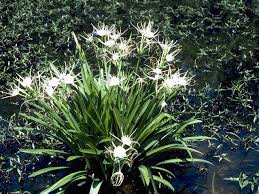
The Texas Spiderlily, scientifically known as Hymenocallus liriosme, is a flowering plant native to the southeastern United States. This perennial plant is particularly noted for its striking, spider-like flowers that bloom in the spring and early summer. The Texas Spiderlily is a member of the Amaryllidaceae family, which includes other well-known plants such as daffodils and snowdrops.
Description
The Texas Spiderlily is characterized by its long, slender leaves and its distinctive flowers. The leaves are typically dark green, strap-like, and can grow up to 2 feet in length. The flowers, which are the plant's most notable feature, are white and have a unique, spidery appearance. Each flower consists of six narrow, petal-like segments that radiate outwards, giving it a star-like shape. The central part of the flower is adorned with a cup-like structure known as the corona, which is surrounded by long, filamentous stamens.
Habitat and Distribution
This plant is native to the southeastern United States, with its range extending from Texas to Florida and northward to Arkansas and Tennessee. It thrives in wetland habitats such as marshes, swamps, and along the edges of streams and rivers. The Texas Spiderlily prefers moist, well-drained soils and can often be found in areas that are periodically flooded. It is well-adapted to the warm, humid climate of the southeastern United States and can tolerate a range of soil types, from sandy to clayey.
Growth and Cultivation
The Texas Spiderlily is a perennial plant that grows from a bulb. It typically blooms in the spring and early summer, with each plant producing several flowers on a single stalk. The flowers are short-lived, usually lasting only a few days, but the plant can produce multiple blooms over the course of the growing season.
Growing Conditions
- Soil: Prefers moist, well-drained soils. Can tolerate a range of soil types, including sandy and clayey soils.
- Light: Thrives in full sun to partial shade. In hotter climates, some afternoon shade can help protect the plant from intense sunlight.
- Water: Requires consistent moisture, especially during the growing season. Can tolerate periodic flooding but does not do well in dry conditions.
- Temperature: Prefers warm, humid climates. Can tolerate mild frost but may need protection in areas with harsh winters.
Propagation
The Texas Spiderlily can be propagated by dividing the bulbs or by seed. Bulb division is the most common method and is typically done in the fall after the plant has finished blooming. The bulbs should be planted at a depth of about 4-6 inches and spaced about 12 inches apart. When propagating by seed, the seeds should be sown in a well-drained potting mix and kept moist until they germinate.
Ecological Importance
The Texas Spiderlily plays an important role in its native wetland ecosystems. The flowers attract a variety of pollinators, including bees, butterflies, and moths, which help to ensure the plant's reproduction. The plant's dense foliage also provides habitat and shelter for a range of small animals and insects. Additionally, the Texas Spiderlily can help to stabilize soil and prevent erosion in wetland areas.
Conservation Status
While the Texas Spiderlily is not currently listed as endangered, its wetland habitat is under threat from human activities such as development, agriculture, and water management practices. Conservation efforts are focused on protecting and restoring wetland habitats to ensure the survival of this and other wetland-dependent species. Gardeners and plant enthusiasts can also contribute to conservation efforts by cultivating Texas Spiderlilies in their gardens and landscapes, thereby helping to preserve this unique and beautiful plant.