Blackdisc Medick
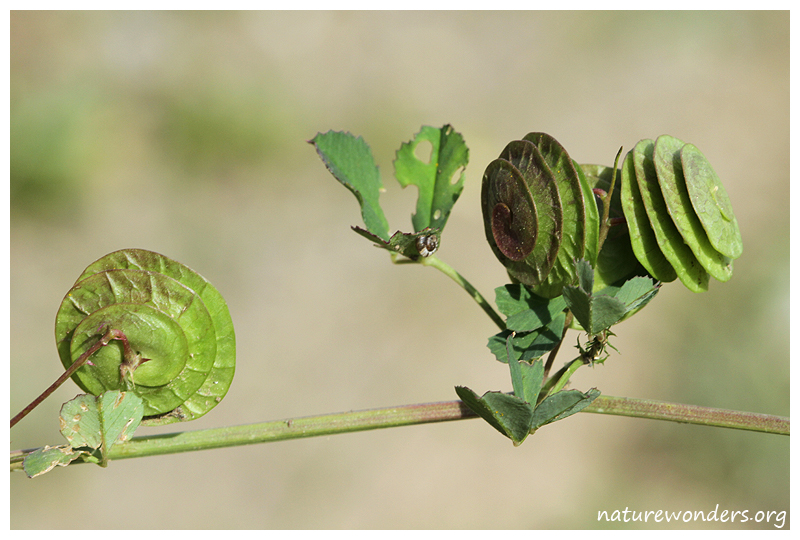
Blackdisc Medick
Blackdisc Medick, scientifically known as Medicago orbicularis, is a fascinating plant species belonging to the legume family, Fabaceae. This plant is notable for its unique disc-shaped seed pods and its role in agriculture and ecology. Below, we delve into various aspects of Blackdisc Medick, including its botanical characteristics, habitat, ecological significance, and uses.
Botanical Characteristics
Blackdisc Medick is an annual herbaceous plant that typically grows to a height of 10-30 cm. It has a sprawling growth habit with stems that can spread outwards, forming a mat-like appearance. The leaves are trifoliate, meaning they are composed of three leaflets. Each leaflet is oval to oblong in shape, with a slightly serrated margin.
One of the most distinctive features of Blackdisc Medick is its seed pods. The pods are flat, circular, and disc-shaped, measuring about 5-10 mm in diameter. They are initially green but turn black as they mature, which is the origin of the common name "Blackdisc Medick." The pods contain several small, kidney-shaped seeds.
Habitat and Distribution
Blackdisc Medick is native to the Mediterranean region but has spread to various parts of the world, including North America, Australia, and parts of Asia. It thrives in a variety of habitats, including grasslands, roadsides, and disturbed areas. The plant prefers well-drained soils and can tolerate a range of soil types, from sandy to clayey.
This species is well-adapted to dry conditions and can often be found in arid and semi-arid regions. It is also known to grow in areas with moderate rainfall, demonstrating its versatility in different environmental conditions.
Ecological Significance
Blackdisc Medick plays a crucial role in its ecosystem. As a member of the legume family, it has the ability to fix atmospheric nitrogen through a symbiotic relationship with Rhizobium bacteria in its root nodules. This process enriches the soil with nitrogen, making it more fertile and beneficial for other plants. This nitrogen-fixing ability is particularly valuable in agricultural systems, where it can improve soil health and reduce the need for synthetic fertilizers.
Additionally, Blackdisc Medick provides food and habitat for various insects and animals. The flowers attract pollinators such as bees, which are essential for the reproduction of many plant species. The seeds are also a food source for birds and small mammals.
Uses
Agricultural Uses
Blackdisc Medick is often used as a cover crop and green manure in agricultural practices. As a cover crop, it helps prevent soil erosion, suppress weeds, and improve soil structure. When used as green manure, the plant is grown and then incorporated into the soil to add organic matter and nutrients. This practice enhances soil fertility and promotes sustainable farming.
Forage
The plant is also used as forage for livestock. Its leaves and stems are palatable to animals such as cattle, sheep, and goats. The high protein content of the plant makes it a nutritious feed option, especially in regions where other forage plants may be scarce.
Medicinal Uses
While not as commonly used in modern medicine, Blackdisc Medick has been utilized in traditional medicine for its potential health benefits. It has been used to treat various ailments, including digestive issues and respiratory conditions. However, more research is needed to fully understand its medicinal properties and efficacy.
Conservation and Management
Despite its widespread distribution, Blackdisc Medick faces threats from habitat loss and competition with invasive species. Conservation efforts are essential to preserve its natural habitats and ensure its continued ecological contributions. Sustainable agricultural practices that incorporate Blackdisc Medick can also help maintain its populations and promote biodiversity.