Diarrhea
See also: Useful for Treating Diarrhea ; Osmotic Vs Secretory Diarrhea; Small bowel vs large bowel; Types of Diarrhea ; Gastroenteritis; The gut and fluid balance; Shigellosis ; Cryptosporidiosis ; Autoimmune Enteropathy
VIDEOS:
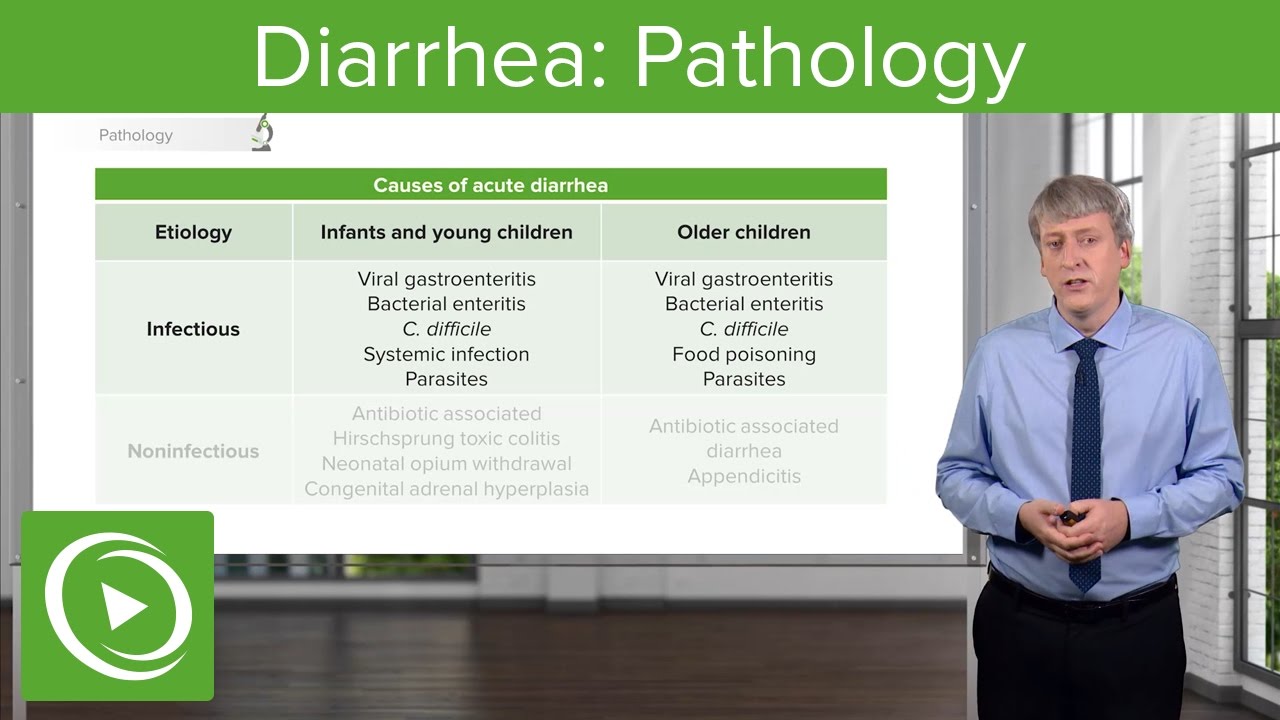
Infection:
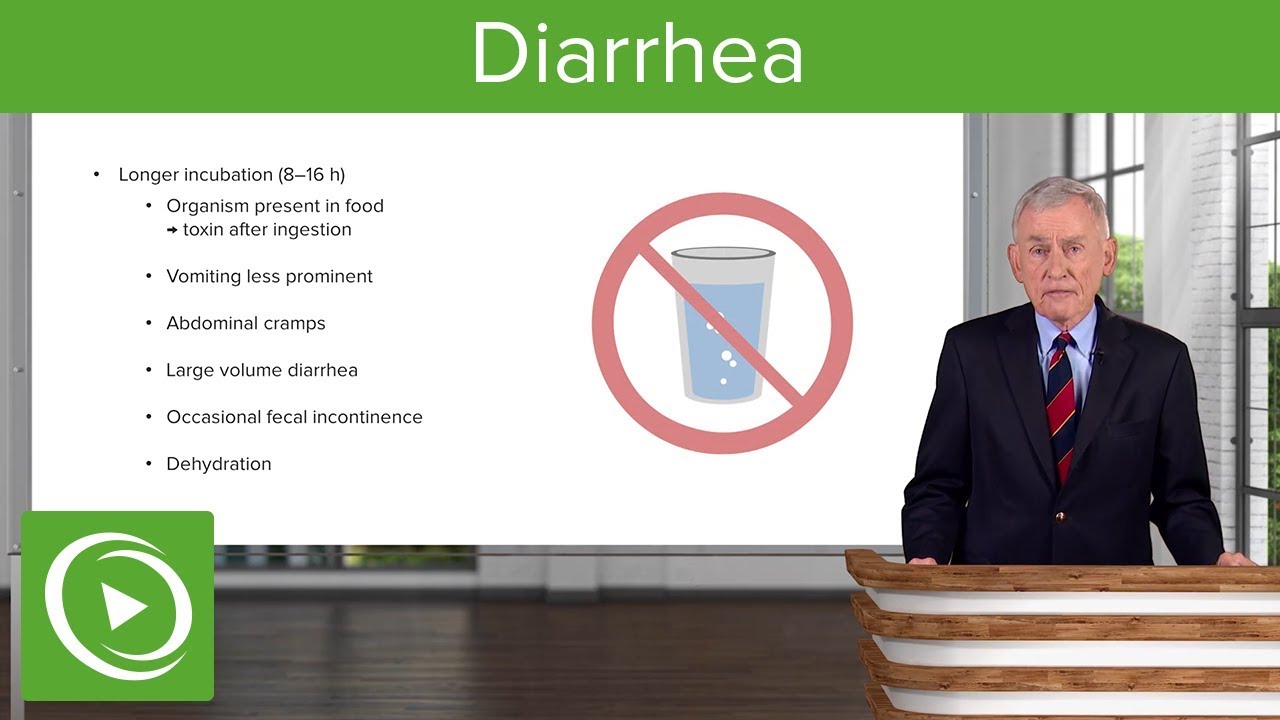
An approach to chronic diarrhea:

Digestion Solutions for Diarrhea and Acid Reflux
Crash Course on Diarrhea
How Functional Medicine Can Help
How To Beat Diarrhea Dehydration and Replenish Electrolytes
Articles/Studies
Fecal Leukocytes in Diarrheal Illness
In diarrhea, think in terms of the syndrome it might be (as follows)
Low – versus – High Volume Diarrhea
- Low volume (low water): colonic
- High volume (high water): small bowel
- OSMOTIC DIARRHEA: high-volume diarrhea in which the measured fecal osmolality is less than 2 (Na +K)
- SECRETORY DIARRHEA: high-volume diarrhea in which the measured fecal osmolality equals 2 (Na +K)
Small – versus – Large Bowel Diarrhea
- Small bowel (“the runs”): large, watery, less frequent, painless stools. Blood and white blood cells are rare: proctoscopy is normal. Pain is mid-abdominal
- Large bowel (“the squirts”): small, often mucoid, more frequent, painful stools. Blood and white blood cells are common. Proctoscopy is abnormal. Pain is lower abdominal (left lower quadrant)
The “runs” are when you’re doing fine, but all of a sudden you’ve got to “go” and you have this huge rushing watery bowel movement. The colon is a reservoir, its working normally. There’s no pain on defecation. When the small bowel hurts the pain is around the umbilical area.
In large bowel diarrhea the colon is diseased, so you go frequently, it hurts to go and you have a small stool. There may be pain on defecation and you may see blood and white cells.
Both forms can be life threatening. The runs is classic for cholera, death is from dehydration. Large bowel diarrhea is more apt to portend a bad illness.
White Blood Cells (Leukocytes) in the Stool:
Seen in:
- Shigellosis
- Enteroinvasive E. coli
- Clostridium difficile
- Salmonella enteritidis
- Vibrio parahemolyticus
- Ulcerative colitis
- Ischemic colitis
- Inflammatory Bowel Disease
Pathophysiologic mechanisms of infectious diarrhea
- Toxin production (as in food poisoning, cytotoxins of C. dif,etc.))
- Enteroadherence (things stick onto the mucosa, mainly with the small bowel, such as Giardia and Cryptosporidium so the absorptive surface is lost so stuff just goes right through you)
- Mucosal invasion (Shigella and others)
- Systemic infection (example, typhoid fever)
Toxin Production Examples
- Preformed toxins (syndromes of food poisoning): Bacillus cereus, Clostridium perfringens, Staphylocossus aureus
- Enterotoxin: Aeromonasspecies, enterotoxigenic coli, Vibrio cholerae
- Cytotoxin: Clostridium difficile, E. coli 0157:H7
Enteroadherence examples
- Cryptosporidiosis (Cryptosporidium parvum)
- Cyclosporaspecies (?)
- Enteroadherent and enteropathogenic coli
- Helminths
- Giardasis (Giardia lamblia)
Mucosal Invasion
- Minimal invasion: Norwalk virus, Rotavirus, other viruses
- Variable invasion: Aeromonas, Campylobacterspp., Salmonellaspp., Vibrio parahemolyticus
- Severe invasion: Entamoeba histolytica,enteroinvasive coli, Shigellaspecies
Systemic Infection examples
Things that use the gut as a portal for systemic infection
- Legionellosis
- Listeriosis (from milk products)
- Measles
- Psittacosis
- Rocky Mountain spotted fever
- Toxic shock syndrome
- Septicemia
- Viral hepatitis
Enteric Infection
Three major syndromes of enteric infection:
- Noninflammatory (enterotoxin): proximal small bowel, watery diarrhea, no fecal leukocytes. The “runs”
- Inflammatory (invasion, ? cytotoxin): colon, dysentery, fecal polymorphonuclear leukocytes. The “squirts”
- Penetrating: distal small bowel, enteric fever syndrome, fecal mononuclear leukocytes. Typhoid is the prototypical example.
Noninflammatory (enterotoxin) diarrhea
- Cholera
- Toxigenic e. coli
- Food poisoning syndromes; Clostridium perfringens, Bacillus cereus, Stpahylococcus aureus
- Viral: rotavirus, Norwalk agent
- Parasitic: giardiasis, Cryptosporidium
- ? Salmonella, ? Vibrio parahemolyticus
Who’s vulnerable?
- Neonates & old people in nursing homes: enteropathogenic coli,rotaviruses, many other agents
- Healthy adults in temperate climates: viruses, food poisoning, parasites
- Travelers: enterotoxigenic coli, and others
- Adults in areas of poor sanitation: cholera, entertoxigenic coli
- Hospitals: difficile,viruses; Salmonella (hospital food)
- Chronic cases: giardia, sprue, others
Enteric Bacterial Toxins
- Neurotoxins: Usually ingested preformed (examples: Clostridium botulimum, S. aureaus, B. cereus)
- True enterotoxins: Direct effect on intestinal mucosa to elicit fluid secretion (examples; coli, V. cholerae, Salmonella,others)
- Cytotoxins: Mucosal destruction causing inflammatory colitis (examples: Shilella, E. coli 0157:H7; Clostridium difficile)
Inflammatory Diarrhea
- Colon
- Dysentery
- Fecal polymorphonucear leukocytes
- Examples: shigella;invasive coli, Salmonella enteritidis, Clostridium difficile, Vibrio parahemolyticus, ? Campylobacter jejuni
Penetrating Bowel Infection (enteric fever)
A systemic febrile illness originating from the distal small bowel with come combination of sustained fever, headache, rash, splenomegaly, positive blood cultures, and fecal mononuclear leukocytes, and mimicked by many diseases. Often symptoms direct attention away from the gut.
Examples: Salmonella typhr, Yersinia enterocolitica (Yersinosis), ? Campylobacter fetus
Use of proton-pump inhibitors is associated with increased risk of diarrhea in the elderly.