Pacemakers
How to avoid a pacemaker:

For Afib:



Additional Settings for Temporary Pacemakers
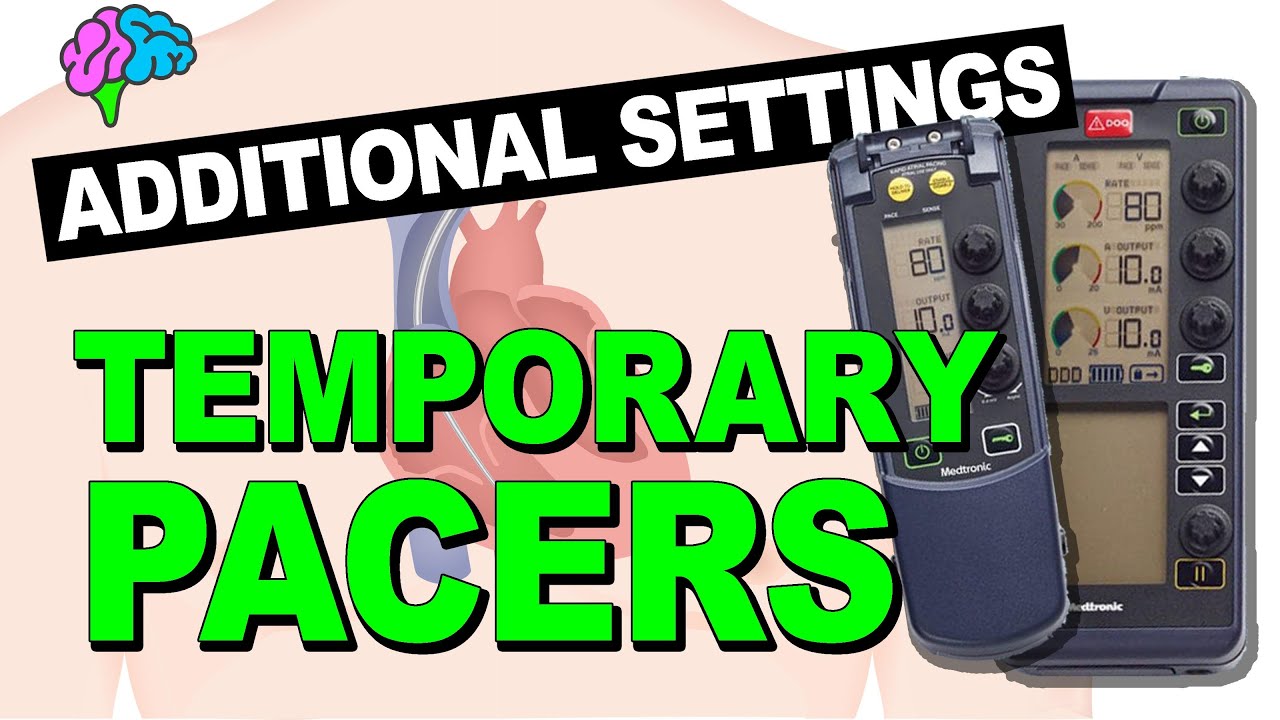
Pacemakers are small medical devices that play a crucial role in managing heart rhythm disorders. These devices are implanted in the chest or abdomen to help control abnormal heart rhythms, known as arrhythmias. By sending electrical impulses to the heart, pacemakers ensure that the heart beats at a normal rate and rhythm, which is essential for maintaining adequate blood flow throughout the body.
How Pacemakers Work
Pacemakers consist of two main components: the pulse generator and the leads. The pulse generator is a small metal case that contains a battery and the electronic circuitry that regulates the pacing of the heart. The leads are insulated wires that connect the pulse generator to the heart. These leads deliver electrical impulses from the generator to the heart muscle, prompting it to contract and produce a heartbeat.
Types of Pacemakers
There are several types of pacemakers, each designed to address specific heart rhythm issues:
- Single-Chamber Pacemaker: This type of pacemaker uses one lead to connect the pulse generator to either the right atrium or the right ventricle of the heart. It is typically used when only one chamber of the heart needs pacing.
- Dual-Chamber Pacemaker: This device uses two leads to connect the pulse generator to both the right atrium and the right ventricle. It helps coordinate the timing of contractions between these two chambers, which can improve the efficiency of the heart's pumping action.
- Biventricular Pacemaker: Also known as cardiac resynchronization therapy (CRT), this type of pacemaker is used for patients with heart failure. It uses three leads to connect the pulse generator to the right atrium, right ventricle, and left ventricle, helping to synchronize the contractions of the ventricles and improve cardiac function.
Indications for Pacemaker Implantation
Pacemakers are typically recommended for individuals with certain types of arrhythmias that cannot be managed with medication alone. Common indications include:
- Bradycardia: A condition characterized by a slow heart rate, which can lead to fatigue, dizziness, and fainting.
- Heart block: A condition where the electrical signals between the heart's chambers are partially or completely blocked.
- Atrial fibrillation: A common type of arrhythmia that can cause an irregular and often rapid heart rate.
The Implantation Procedure
The implantation of a pacemaker is a relatively straightforward procedure that is usually performed under local anesthesia. During the procedure:
- A small incision is made near the collarbone.
- The leads are inserted into a vein and guided to the heart using X-ray imaging.
- The pulse generator is placed under the skin, and the leads are connected to it.
- The incision is closed, and the device is tested to ensure proper function.
Most patients can return home the same day or the day after the procedure, with minimal recovery time.
Living with a Pacemaker
After implantation, patients will need to attend regular follow-up appointments to ensure the pacemaker is functioning correctly. These appointments may include:
- Checking the battery life of the device.
- Adjusting the settings of the pacemaker if necessary.
- Monitoring for any signs of infection or complications.
Patients with pacemakers should also be aware of certain precautions, such as:
- Avoiding close proximity to strong magnetic fields, which can interfere with the device's function.
- Informing healthcare providers and security personnel about the pacemaker, as it may trigger metal detectors or require special considerations during medical procedures.
Advances in Pacemaker Technology
Recent advancements in pacemaker technology have led to the development of leadless pacemakers, which are smaller and do not require leads to connect to the heart. These devices are implanted directly into the heart via a catheter, reducing the risk of complications associated with traditional pacemakers.
Additionally, modern pacemakers are equipped with wireless technology that allows for remote monitoring, enabling healthcare providers to track the device's performance and the patient's heart rhythm without the need for frequent in-person visits.