Membrane Potential
Return to Nervous System Menu

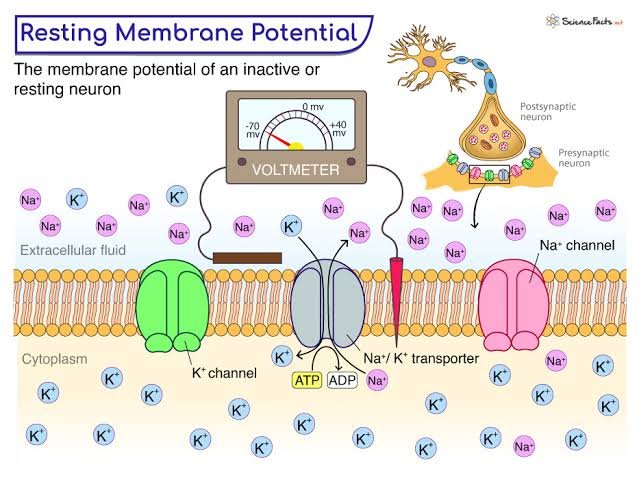
Membrane potential is the difference in electric potential between the inside and outside of a biological cell. It's also known as transmembrane potential or membrane voltage.
Membrane potential is created by the unequal distribution of ions on both sides of the cell. The membrane potential is a potential gradient that forces ions to passively move in one direction. Positive ions are attracted by the "negative" side of the membrane and negative ions by the "positive" one.
Membrane potential is measured using two electrodes:
- A reference electrode is placed in the extracellular solution
- The recording electrode is inserted into the cell body of the neuron
The charge of the membrane can change in response to neurotransmitter molecules released from other neurons and environmental stimuli.