Pixie Cups Lichen
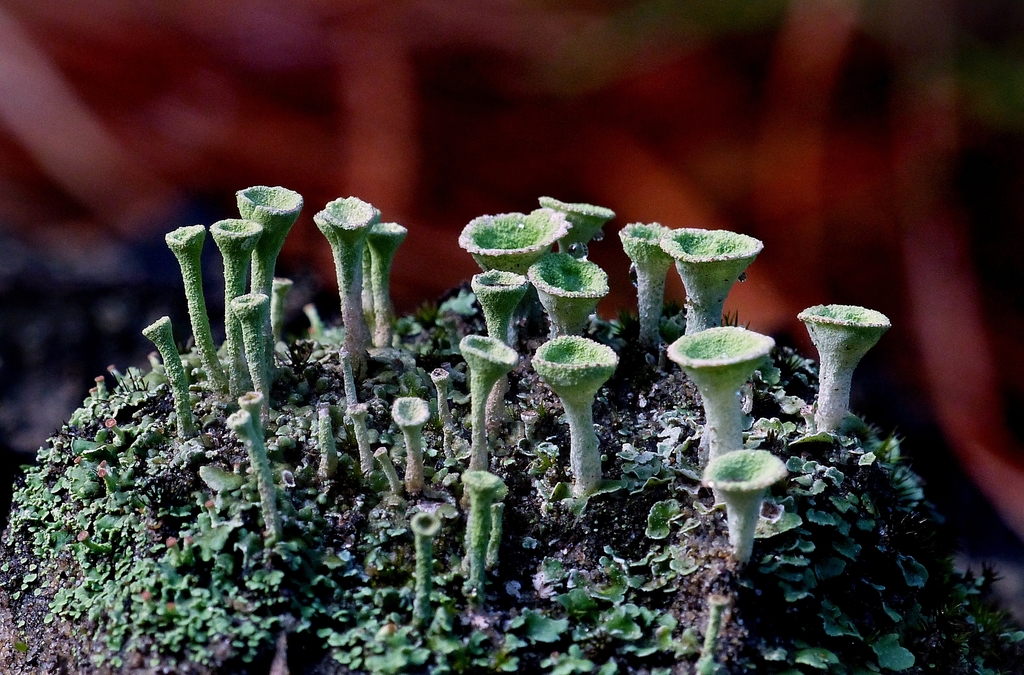
Cladonia asahinae (commonly known as the pixie cup lichen) is a species of lichen in the family Cladoniaceae. It grows on moss, particularly Chorisodontium aciphyllum, Polytrichum strictum, and Andreaea species. C. asahinae occurs in Europe, North America, and the southernmost part of South America. It also grows in the Antarctic
Description
Pixie Cups Lichen is easily recognizable by its distinctive cup-shaped structures, known as podetia. These podetia are typically gray-green in color and can range from a few millimeters to several centimeters in height. The cups are often fringed with small, scale-like structures called squamules, which add to their intricate appearance. The lichen's thallus, or body, is usually a pale green or grayish color and forms a crusty or leafy base from which the podetia arise.
Habitat and Distribution
Cladonia asahinae thrives in a variety of habitats, including forests, heathlands, and rocky outcrops. It is commonly found growing on soil, moss, decaying wood, and even on the bark of trees. This lichen prefers well-drained, acidic soils and is often associated with open, sunny locations. Its widespread distribution includes regions in North America, Europe, and Asia, making it a common sight in many temperate ecosystems.
Ecological Role
Pixie Cups Lichen plays a crucial role in its ecosystem. As a lichen, it is a symbiotic organism composed of a fungus and an alga or cyanobacterium. This symbiotic relationship allows the lichen to photosynthesize and produce its own food, while the fungus provides protection and structure. This mutualistic relationship is essential for the survival of both partners.
In addition to its symbiotic nature, Cladonia asahinae contributes to soil formation and stabilization. The lichen's ability to colonize bare soil and rock surfaces helps prevent erosion and promotes the establishment of other plant species. Furthermore, lichens are known to be bioindicators of air quality, as they are sensitive to pollutants such as sulfur dioxide and heavy metals. The presence of Pixie Cups Lichen in an area can indicate relatively clean air and a healthy environment.
Reproduction and Growth
Pixie Cups Lichen reproduces both sexually and asexually. Sexual reproduction involves the production of spores by the fungal partner, which are then dispersed by wind or water. These spores must find a compatible algal partner to form a new lichen. Asexual reproduction occurs through the fragmentation of the thallus or the production of specialized structures called soredia and isidia. These structures contain both fungal and algal cells and can give rise to new lichens when they land in suitable conditions.
The growth rate of Cladonia asahinae is relatively slow, with some estimates suggesting an increase of only a few millimeters per year. Despite this slow growth, Pixie Cups Lichen can be long-lived, with some individuals surviving for several decades.
Conservation and Threats
While Pixie Cups Lichen is not currently considered endangered, it faces several threats that could impact its populations. Habitat destruction due to urbanization, agriculture, and deforestation can lead to the loss of suitable growing sites. Additionally, air pollution and climate change pose significant risks to lichen communities. Increased levels of pollutants can inhibit growth and reproduction, while changes in temperature and precipitation patterns can alter the delicate balance of their habitats.
Conservation efforts for lichens like Cladonia asahinae often focus on preserving natural habitats and monitoring air quality. Protecting areas where lichens are known to thrive and reducing pollution levels can help ensure the continued survival of these important organisms.
[Effect of Cladonia alpestris on Trichomonas vaginalis in vitro].