Collared Dodder
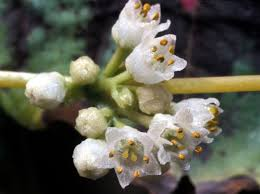
Cuscuta indecora, commonly known as the collared dodder plant, is a parasitic plant that belongs to the Convolvulaceae family. This plant is known for its parasitic nature, as it lacks chlorophyll and relies on other host plants for nutrients and support.
Characteristics of Cuscuta indecora
Cuscuta indecora is a leafless, twining vine that wraps itself around the stems of host plants. It has thin, thread-like stems that range in color from yellow to orange, giving it a distinctive appearance. The dodder plant lacks leaves, roots, and chlorophyll, which are essential features of most plants. Instead, it has specialized structures called haustoria that penetrate the host plant's tissues to extract water and nutrients.
Habitat and Distribution
Cuscuta indecora can be found in a variety of habitats, including grasslands, meadows, and open woodlands. This parasitic plant is native to North America and is commonly found in the central and eastern regions of the United States. It thrives in areas with abundant sunlight and can be seen climbing and entwining itself around the stems of various host plants.
Life Cycle of Cuscuta indecora
The life cycle of Cuscuta indecora begins with the germination of its tiny seeds in the soil. Once the seed germinates, the dodder plant sends out a slender shoot that grows towards nearby host plants. As soon as the shoot makes contact with a suitable host, the dodder plant begins to twine itself around the host's stem and forms haustoria to extract nutrients.
Cuscuta indecora produces small, white or pink flowers that are pollinated by insects. After pollination, the plant produces seeds that are dispersed to new locations, continuing the life cycle of this parasitic plant. The seeds of Cuscuta indecora can remain dormant in the soil for extended periods, waiting for the right conditions to germinate and begin a new cycle of growth.
Ecological Significance
While Cuscuta indecora is considered a parasitic plant that negatively impacts its host plants, it also plays a role in the ecosystem. The dodder plant can serve as a food source for certain insects and birds, contributing to the biodiversity of its habitat. Additionally, Cuscuta indecora can influence the growth and distribution of host plants, shaping the plant community in which it resides.
Despite its parasitic nature, Cuscuta indecora has also been studied for its potential medicinal properties. Some compounds found in the dodder plant have shown promising effects in traditional medicine and may have applications in modern pharmaceutical research.